Printing Estimating Software Free for Teams

printing estimating software free for teams

Award-winning eSignature solution

What printing estimating software free for teams is and how teams use it

printing estimating software free for teams refers to cloud-based tools that let small and mid-size print shops or print teams create, edit, and share cost estimates collaboratively without upfront licensing fees for basic team accounts. These solutions centralize job details, material costs, labor hours, and pricing formulas, and often include role-based access, reusable templates, and exportable quotes. For teams, the emphasis is on shared visibility, faster estimate turnaround, and simplified handoffs to production or invoicing systems while maintaining a low entry cost for basic multi-user workflows.

Why teams choose free printing estimating software

Free team-oriented estimating tools lower adoption barriers and help small teams standardize pricing, speed up quote delivery, and reduce spreadsheet errors while preserving essential collaboration and version control.

Why teams choose free printing estimating software

Common implementation challenges

  • Inconsistent input data from different team members leads to inaccurate estimates and rework.
  • Lack of template management causes repeated manual formatting for similar jobs.
  • Permissions are often too broad, risking accidental edits or deleted pricing formulas.
  • Integrations with accounting or production systems can be limited in free plans.

Representative user profiles

Lead Estimator

A lead estimator manages complex quotes for large print runs, maintains pricing tables for substrates and finishing, and enforces template standards. They require role-based permissions, audit logs for changes, and the ability to export estimates to production systems to avoid manual rekeying and reduce turnaround time.

Sales Coordinator

A sales coordinator uses estimating outputs to prepare customer proposals, applies approved discounts, and shares estimates via email or PDF. They need easy-to-use templates, consistent branding, and visibility into approval status so quotes move quickly to signed agreements or purchase orders.

Typical teams and roles that benefit

Print estimators, operations managers, and sales coordinators commonly rely on collaborative estimating tools to centralize pricing logic and speed up quote response times.

  • Estimators who prepare technical quotes and compare material options across jobs.
  • Sales teams that need consistent, versioned quotes for customers.
  • Production schedulers who require accurate cost and timing details.

When used consistently, team-focused estimating tools reduce errors and accelerate approval cycles across sales and production functions.

Key features that improve team estimating

Essential capabilities for effective team estimating include collaborative templates, pricing libraries, role controls, integrations, audit logs, and automation to reduce manual work and improve accuracy.

Collaborative templates

Shared, versioned templates let teams maintain standardized quote formats and approved pricing logic so estimates are consistent across users and reduce manual formatting time.


Pricing libraries

Centralized material and labor rate tables support quantity breaks, vendor-specific rates, and automatic cost rollups to ensure every estimate uses approved numbers.

Role permissions

Granular roles help limit who can edit pricing tables versus who can create or approve quotes, reducing accidental changes and preserving auditability across the team.

Integration points

Connectors for accounting, CRM, and production systems export finalized quotes or import job specs to avoid duplicate data entry and speed handoffs to invoicing.

Audit trail

Comprehensive logs capture who changed rates or templates and when, providing accountability and an easy way to investigate pricing discrepancies.

Automation rules

Conditional pricing rules and auto-approvals for routine jobs reduce manual steps, apply discounts consistently, and speed the quote-to-order cycle for high-volume clients.

be ready to get more

Choose a better solution

Integrations and template capabilities

Look for integrations with document editors, CRM systems, and cloud storage plus flexible templates that reflect typical print workflows and branding requirements.

Google Docs integration

Two-way export and import allow estimates to be edited in Google Docs and saved back to the estimating system while preserving template fields and formatting for client proposals.

CRM connectivity

Native or API-based CRM links attach customer records to estimates, sync contact details, and push accepted quotes into sales pipelines to maintain single source of truth.

Cloud storage sync

Direct connections to Dropbox, Drive, or S3 keep estimate PDFs and asset files in centralized team folders with consistent naming and version control.

Team templates

Customizable templates with editable fields, line-item grouping, and approved price blocks let teams produce branded estimates quickly and consistently for recurring job types.
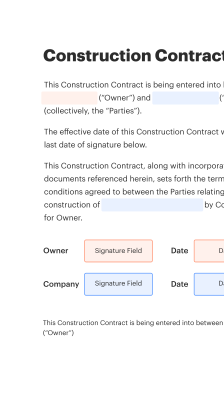
How online estimating works in practice

Estimators enter job parameters, the system applies pricing rules, and teams review, approve, and export finalized quotes to customers or production.

  • Input job details: Dimensions, quantities, and options
  • Apply pricing logic: Automatic material and labor calculations
  • Review and adjust: Team members annotate and revise
  • Export quote: Send as PDF or integrate to ERP
Collect signatures
24x
faster
Reduce costs by
$30
per document
Save up to
40h
per employee / month

Quick setup: starting with a free team account

Create an account, invite team members, import rate tables, and save your first estimate template to begin collaborative quoting.

  • 01
    Create account: Sign up and verify your team email
  • 02
    Invite teammates: Assign roles and permissions
  • 03
    Import rates: Upload material and labor cost lists
  • 04
    Save template: Create reusable estimate templates

Audit trail and transaction review steps

Maintain a routine review cadence and clear procedures to investigate differences in estimates and track approvals or pricing changes.

01

Identify discrepancy:

Locate differing estimate versions
02

Review audit entries:

Check who changed values and when
03

Compare rate libraries:

Confirm current versus prior rates
04

Assess approvals:

Verify authorized sign-offs
05

Correct and reissue:

Update template or rates and resend
06

Document resolution:

Log reason and preventive steps
be ready to get more

Why choose airSlate SignNow

  • Free 7-day trial. Choose the plan you need and try it risk-free.
  • Honest pricing for full-featured plans. airSlate SignNow offers subscription plans with no overages or hidden fees at renewal.
  • Enterprise-grade security. airSlate SignNow helps you comply with global security standards.
illustrations signature

Automation and workflow configuration essentials

Set clear defaults for reminders, approvals, and export behaviors to keep estimates flowing from creation to signing or production without manual follow-up.

Feature Configuration
Default reminder frequency for signers 48 hours
Approval workflow for high-value quotes Two-step approval
Automatic PDF export on approval Enabled
Notification channel for updates Email and in-app
Default estimate validity period 30 days

Supported devices and platform needs

Most modern estimating tools support desktop browsers, tablets, and mobile devices, but browser feature parity and offline access can vary across platforms.

  • Desktop browsers: Chrome, Edge, Safari
  • Mobile and tablet: iOS and Android apps
  • Offline support: Limited or none

For reliable team workflows, confirm which browsers and mobile OS versions are supported, verify PDF export fidelity, and test any required offline or low-bandwidth scenarios before full roll-out.

Security controls to look for

Data encryption: Encryption in transit and at rest
Role-based access: Granular permissions per team member
Audit logging: Comprehensive change history
Two-factor authentication: Optional MFA for accounts
SAML single sign-on: Enterprise identity support
Secure backups: Regular encrypted backups

Industry use cases and practical examples

Below are two representative scenarios showing how teams apply free estimating tools in real operational contexts.

Commercial print shop

A mid-size commercial print shop adopting free team estimates to standardize pricing for offset and digital runs and reduce quote turnaround time by centralizing rate cards and variables

  • Template-driven rate cards for substrates and press setups
  • Faster, consistent quotes and fewer re-requests from sales

Resulting in shorter lead times and more accepted proposals.

In-house marketing team

A corporate marketing team uses shared estimating templates to compare vendor bids and in-house production costs, consolidating print, finishing, and shipping variables into one estimate

  • Unified templates for repetitive campaign jobs
  • Clear side-by-side cost comparisons for stakeholders

Leading to better budget decisions and streamlined vendor selection.

Best practices for accurate team estimates

Adopt consistent templates, control pricing table edits, require approvals for exceptions, and log changes to minimize disputes and maintain auditability.

Maintain centralized rate libraries and version control
Keep a single authoritative rate library with version history and restrict edit rights to a small group to reduce accidental pricing changes and ensure traceability.
Use role-based approvals for high-value quotes
Implement multi-step approval workflows for quotes above predetermined thresholds to ensure oversight and reduce the risk of unapproved discounts or pricing errors.
Standardize templates and include required fields
Design templates with required fields for materials, finishing, and lead time to enforce completeness and simplify handoffs to production and accounting systems.
Automate exports to accounting and production systems
Configure automatic exports or API transfers for approved estimates to eliminate duplicate entry, speed invoicing, and maintain a synchronized job record across systems.

FAQs and common troubleshooting steps

This FAQ covers frequent setup and usage issues teams encounter, plus concise remediation steps to restore normal estimating and sharing workflows.

Feature comparison for team-oriented offerings

A concise comparison of common team features and security options across three leading eSignature and document workflow providers, focused on team needs and free-tier availability.

Security and capabilities comparison table signNow (Recommended) DocuSign Adobe Sign
Availability of a free team plan
Team templates and bulk send support Limited
API access included for teams Available Available Available
HIPAA and enterprise compliance options Available Available Available
be ready to get more

Get legally-binding signatures now!

Document retention and backup policies for estimates

Define retention periods and automated backup schedules to meet operational needs, regulatory requirements, and internal audit practices for estimate records.

Minimum retention period:

Keep finalized estimates for 3 years

Audit log retention:

Retain logs for 5 years

Backup frequency:

Daily encrypted backups

Data export policy:

Quarterly account exports

Disaster recovery planning:

Recovery time objective defined

Regulatory and operational risks

Non-compliance fines: Potential civil penalties
Data breach exposure: Customer data loss risk
Contract disputes: Pricing errors cause claims
Operational downtime: Lost production time
Intellectual property loss: Proprietary cost data at risk
Reputational harm: Customer trust erosion
walmart logo
exonMobil logo
apple logo
comcast logo
facebook logo
FedEx logo
be ready to get more

Get legally-binding signatures now!