Receiving Copy Template for Secure eSignatures

Receiving copy template ensures secure, compliant eSignature processes. Explore how signNow provides a reliable solution for your document needs across various industries.

Award-winning eSignature solution

What a receiving copy template is and why it matters

A receiving copy template defines how executed documents are automatically delivered to designated recipients after signing. It standardizes the recipient list, delivery format, and retention instructions so that every executed agreement, invoice, or form generates the correct post-execution copies without manual steps. Implementing receiving copy templates reduces administrative errors, ensures consistent record distribution across departments, and supports auditability by capturing when and to whom the final document was sent. This template-driven approach is useful for repeatable processes such as client onboarding, vendor agreements, and student records distribution.

Why use receiving copy templates in document workflows

Receiving copy templates reduce manual distribution, ensure consistent delivery to required parties, and preserve a clear record of who received the signed file, improving accuracy and audit readiness for routine processes.

Why use receiving copy templates in document workflows

Common challenges receiving copy templates address

  • Missed recipients when manual distribution is required, causing compliance or operational delays.
  • Inconsistent file versions sent to stakeholders, increasing risk of disputes or confusion.
  • Time lost on after-signing administrative tasks, reducing staff capacity for higher-value work.
  • Difficulty proving delivery and timing of executed documents during audits or legal reviews.

Representative user profiles for receiving copy templates

Corporate Counsel

A corporate counsel configures templates to ensure legal executed copies go to the contract repository and relevant stakeholders. They verify distribution rules, retention tags, and audit settings so signed agreements meet internal policy and external regulatory obligations.

HR Manager

An HR manager sets up receiving copy templates to automatically deliver fully executed offer letters and onboarding documents to the employee file, payroll, and benefits teams, reducing manual emailing and ensuring consistent record-keeping.

Teams and roles that commonly use receiving copy templates

Legal, HR, finance, and customer success teams often rely on receiving copy templates to ensure consistent post-signature distribution and retain accurate records.

  • In-house legal teams managing executed contracts and audit trails for compliance.
  • Human resources distributing offer letters, onboarding forms, and benefits documents.
  • Finance teams sending final invoices and payment confirmations to internal approvers.

Organizations with recurring document types and regulatory requirements gain the most immediate operational benefits from templated receiving copies.

Advanced receiving copy template options for enterprises

Enterprise needs may require extended controls, integrations, and audit features to meet complex compliance and process requirements.

Conditional routing

Route copies based on form responses or signer attributes so only relevant departments receive documents when specific conditions are met.


Retention policies

Apply retention tags and automatic archival rules to ensure documents are retained or deleted according to legal and internal policies.

Secure delivery links

Use time-limited, access-controlled links to provide recipients with secure download access without exposing documents indefinitely.

Metadata inclusion

Attach signing metadata such as signer IP, timestamps, and audit IDs to receiving copies for traceability and audit support.

Integration hooks

Connect templates to CRM, cloud storage, or document management systems to automatically forward executed files where teams need them.

Custom naming

Use variables to create consistent file names that include contract IDs, dates, or client identifiers for easier indexing.

be ready to get more

Choose a better solution

Core receiving copy template capabilities to configure

These foundational features determine how receiving copies are generated, delivered, and retained after signing.

Receiving Copy Settings

Define who receives final executed documents, whether internal stakeholders, external parties, or multiple recipients, and whether to include signer attachments or metadata.

Template Library

Store and manage reusable receiving copy templates so administrators can apply consistent distribution and retention rules across repeat transactions and user groups.

Auto-send Copy

Configure automatic dispatch on completion so every finalized document is delivered via email or secure links without manual intervention, preserving workflow continuity.

Delivery Options

Choose delivery formats such as flattened PDF, multi-file bundle, or ZIP with metadata and specify link expiration and download protections for compliance.
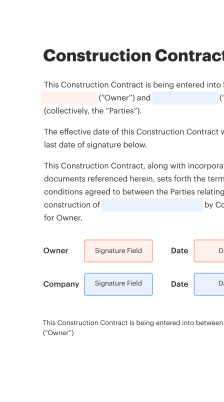
How receiving copy templates operate in a signing flow

Receiving copy templates attach to an envelope or transaction and trigger automatic distribution when the signing process completes.

  • Attach template: Select template when preparing the document.
  • Complete signing: Signers execute the document as configured.
  • Template triggers: System detects completion event.
  • Deliver copies: Copies are sent to configured recipients.
Collect signatures
24x
faster
Reduce costs by
$30
per document
Save up to
40h
per employee / month

Quick setup: create a receiving copy template

Create a receiving copy template to automate delivery of executed documents by defining recipients, copy format, and retention rules.

  • 01
    Create template: Start a new template from the templates area.
  • 02
    Designate recipients: Add roles and specify post-sign copies.
  • 03
    Set delivery options: Choose PDF, ZIP, or metadata attachments.
  • 04
    Save and test: Run a test signing to validate routing.

Detailed completion steps for recipients receiving copies

Recipients should follow defined steps to confirm receipt, verify the document, and store the copy appropriately.

01

Open copy:

Access the secure link or attached file immediately.
02

Verify signatures:

Confirm all required signatures are present and valid.
03

Check metadata:

Review audit details and timestamps for accuracy.
04

Download securely:

Save a local copy to the approved repository.
05

Notify stakeholders:

Confirm delivery to other internal teams if required.
06

Report issues:

Escalate mismatches or missing pages immediately.
be ready to get more

Why choose airSlate SignNow

  • Free 7-day trial. Choose the plan you need and try it risk-free.
  • Honest pricing for full-featured plans. airSlate SignNow offers subscription plans with no overages or hidden fees at renewal.
  • Enterprise-grade security. airSlate SignNow helps you comply with global security standards.
illustrations signature

Typical workflow settings for receiving copy templates

Set these workflow parameters when creating templates to define timing, recipients, and retention behaviors for dispatched copies.

Setting Name Configuration
Delivery timing On completion
Recipient type Internal or external
File format PDF bundle
Retention period 7 years
Notification method Email with secure link

Supported platforms and minimum requirements

Receiving copy templates operate across modern browsers and mobile devices when the eSignature service supports those clients.

  • Desktop browsers: Chrome, Edge, Safari
  • Mobile devices: iOS and Android
  • API clients: RESTful endpoints

Ensure your environment meets browser and API requirements and that mobile users have updated apps to avoid delivery or rendering issues for received copies.

Security and protection features for receiving copy templates

Access controls: Role-based restrictions
Encryption: In transit and at rest
Secure links: Time-limited access
Audit logging: Detailed event records
Two-factor authentication: Optional signer verification
Document redaction: Mask sensitive fields

Real-world scenarios using receiving copy templates

Receiving copy templates streamline distribution for recurring document types across industries, from education to finance.

Higher education enrollment

Admissions teams send enrollment agreements to registrars and student records automatically

  • Template attaches executed PDF
  • Ensures both offices have the same final file

Resulting in consistent student records and simplified FERPA compliance workflows.

Vendor contract management

Procurement templates route completed contracts to vendor management and accounts payable

  • Template includes version metadata
  • Reduces invoice mismatches and manual handoffs

Leading to faster vendor onboarding and clearer audit trails for compliance.

Practical best practices for reliable receiving copy templates

Follow these practical guidelines to ensure receiving copy templates work reliably and meet business, legal, and security expectations.

Clearly designate receiving parties in template settings
Specify exact recipients and roles rather than broad groups to avoid accidental over-sharing. Use distribution lists when appropriate and validate addresses before deployment.
Include retention and classification metadata
Attach document classification and retention tags at the template level to automate archival or disposal and to support legal holds and records management.
Test templates with representative transactions
Run test signings that mirror real-world scenarios, verify final copies and metadata are correct, and confirm delivery to all configured recipients before going live.
Limit access and review audit logs regularly
Restrict who can edit templates and monitor audit trails for changes, delivery events, and access to ensure configuration integrity and compliance.

FAQs and troubleshooting for receiving copy templates

Common questions and resolutions for receiving copy template configuration, delivery issues, and audit needs are listed below for quick reference.

Feature availability: receiving copy templates compared

A concise availability comparison between signNow and DocuSign for common receiving copy template features used in U.S. workflows.

Criteria signNow (Recommended) DocuSign
Automatic recipient copy
Conditional routing
Retention tagging
API-enabled distribution
be ready to get more

Get legally-binding signatures now!

Retention and document deadline considerations

Retention and delivery deadlines for received copies affect compliance, archiving, and legal readiness; set clear timelines in templates.

Immediate delivery requirement:

Send copies upon completion to meet time-sensitive processes.

Short-term retention policy:

Retain copies for required operational periods, e.g., 1 year.

Long-term archival requirement:

Archive executed copies for statutory retention, often 6–7 years.

Legal hold applicability:

Suspend deletion when a legal hold is issued for a matter.

Review and purge schedule:

Regularly review retention tags and purge per policy.

Risks and potential penalties from improper receiving copies

Regulatory noncompliance: Fines possible
Privacy breaches: Data exposure
Contract disputes: Enforceability issues
Operational delays: Processing slowdowns
Loss of trust: Stakeholder impact
Audit failures: Remediation required

Pricing and plan features comparison across eSignature vendors

Comparing selected plan attributes and common receiving copy capabilities across signNow and five alternative eSignature providers to understand cost and included functionality.

Feature signNow (Recommended) DocuSign Adobe Acrobat Sign Dropbox Sign PandaDoc
Receiving copy included Included in all plans Included in most plans Included in enterprise plans Included in paid plans Included in paid plans
Per-user monthly price From $8 per user From $10 per user From $14 per user From $15 per user From $19 per user
API access availability Available on paid plans Available on paid plans Enterprise API access Available on paid plans Available on paid plans
HIPAA compliance option Available with BAAs Available with BAAs Available with BAAs Limited support Available with agreements
Bulk send capacity Bulk send features available Bulk send available Bulk send in enterprise Bulk send available Bulk send available

Understanding the Receiving Copy Template

The receiving copy template is a crucial tool for businesses that need to manage document workflows efficiently. This template allows users to create a standardized format for receiving copies of documents, ensuring that all necessary information is captured consistently. By utilizing this template, organizations can streamline their processes, reduce errors, and enhance communication among team members.

How to Create a Receiving Copy Template

Creating a receiving copy template involves a few straightforward steps. First, gather the essential elements that need to be included in the template, such as recipient details, document type, and any specific instructions. Next, use airSlate SignNow's intuitive interface to design the template, ensuring it is user-friendly and accessible. Once finalized, save the template for future use, allowing for quick access and efficient document management.

Customizing Your Receiving Copy Template

Customization of the receiving copy template is vital to meet the unique needs of your business. Users can modify fields to include specific information relevant to their operations. This could involve adding checkboxes for document types or dropdown menus for selecting recipients. By tailoring the template, businesses can ensure that it aligns perfectly with their workflows, enhancing overall productivity.

Using the Receiving Copy Template for Document Management

The receiving copy template plays a significant role in document management systems. By utilizing this template, users can easily track which documents have been sent and received. This feature is particularly useful for compliance purposes, as it provides a clear record of document exchanges. Additionally, it simplifies the process of following up on outstanding documents, ensuring that nothing falls through the cracks.

Best Practices for Implementing a Receiving Copy Template

To maximize the effectiveness of the receiving copy template, consider implementing best practices. Regularly review and update the template to reflect any changes in your business processes. Encourage team members to provide feedback on the template's usability, making adjustments as necessary. Training staff on how to use the template effectively can also lead to improved adoption and overall efficiency in document handling.

Common Use Cases for the Receiving Copy Template

There are several scenarios where a receiving copy template can be particularly beneficial. For instance, businesses can use it for tracking contracts, invoices, or any legal documents that require acknowledgment of receipt. Additionally, it can be employed in project management to ensure that all stakeholders have received crucial updates or reports. By identifying these use cases, organizations can leverage the template to enhance their operational efficiency.


walmart logo
exonMobil logo
apple logo
comcast logo
facebook logo
FedEx logo
be ready to get more

Get legally-binding signatures now!