Using the SignNow PKI Technology for Secure eSignatures

airSlate SignNow follows the PKI security protocol to provide the highest level of security and global acceptance of digital signatures. Learn how airSlate SignNow empowers users to send documents for safe digital signatures.

Award-winning eSignature solution

What using the signNow pki technology means

Using the signNow pki technology refers to employing public key infrastructure (PKI) within signNow to issue, manage, and verify digital certificates that bind cryptographic keys to signers and documents. PKI in this context supports certificate-based signatures, stronger signer authentication, and tamper-evident signatures by combining asymmetric keys, certificate authorities, and hashing. For U.S. users, this approach can provide auditable evidence of signer identity and document integrity while interoperating with signNow features like audit logs, role-based access, and secure storage to support regulatory needs such as ESIGN and UETA compliance.

Why adopt PKI for your electronic signatures

Using certificate-based signing through the signNow pki technology increases cryptographic assurance, streamlines identity verification, and produces signatures with robust tamper detection, useful for regulated transactions and high-value agreements.

Why adopt PKI for your electronic signatures

Common implementation challenges to anticipate

  • Key and certificate lifecycle management requires defined processes for issuance, renewal, and revocation to avoid expired credentials.
  • Integrating PKI into existing workflows can need coordination with IT, identity providers, and administrative policy updates.
  • User onboarding must include clear instructions and support for installing certificates or hardware tokens to avoid signing delays.
  • Compliance and recordkeeping need careful configuration to ensure audit trails and retention meet legal standards.

Typical user roles when deploying signNow PKI

Compliance Officer

A Compliance Officer configures signature policies and document retention rules, evaluates how certificate-based signatures satisfy ESIGN and UETA, and coordinates audits. They maintain documentation of certificate authorities used and ensure that signature evidence meets internal and external regulatory expectations.

IT Administrator

An IT Administrator integrates the PKI stack with corporate identity systems, manages certificate enrollment and revocation, and supports users with installation of certificates or hardware tokens. They also monitor cryptographic key storage and backup processes to reduce operational risk.

Organizations and teams that commonly use PKI signing

Legal, financial, healthcare, and government teams frequently select certificate-based signing where stringent identity assurance and non-repudiation are required.

  • Legal departments handling contracts and court filings that require strong evidence of signer identity.
  • Financial services teams processing loan documents and account authorizations with heightened auditability and control.
  • Healthcare administrators transmitting regulated records needing secure authentication and access controls.

Smaller teams within these sectors often adopt PKI selectively for high-risk templates while continuing standard eSignatures for routine forms.

Technical capabilities that complement signNow PKI

These features support practical use of certificate-based signatures and help integrate PKI into broader document lifecycle processes.

Role-Based Access

Assign and enforce roles so only authorized users can send or require certificate-backed signatures, reducing the chance of misapplied signature policies.


Template Controls

Create templates with embedded certificate signature fields, preconfigured validation rules, and fixed retention instructions to standardize high-assurance signing workflows.

Secure Storage

Store signed documents and associated certificate metadata in encrypted storage with controlled access and retention settings aligned to compliance obligations.

Detailed Audit Trails

Capture signer certificate fingerprints, validation outcomes, timestamps, and IP metadata to provide forensic evidence of each signing transaction.

API Automation

Automate certificate-based signing operations and integrate with identity providers or enterprise PKI for streamlined enrollment and verification processes.

Revocation Checking

Built-in OCSP or CRL checks ensure signatures are validated against current certificate status at verification time.

be ready to get more

Choose a better solution

Integration features relevant to signNow PKI

Key signNow capabilities help operationalize PKI by simplifying certificate use, validation, and auditability across document workflows and connected systems.

Certificate Enforcement

Policy-based enforcement ensures that specific templates require certificate-backed signatures; administrators can mandate certificate validation, define accepted certificate authorities, and link certificate requirements to signer roles to maintain consistent application across high-risk documents.

Automated Validation

Automated OCSP or CRL checks occur during signature verification to confirm certificate status; this reduces manual validation steps and ensures revoked or expired certificates are detected before accepting a signed document as final.

Audit Log Integration

Detailed audit entries capture certificate metadata, signature hashes, timestamps, and validation results; these logs are stored with the document record to support compliance reviews and legal evidentiary needs without separate manual reporting.

API Support

APIs allow programmatic submission of certificate-based signing requests, retrieval of signature metadata, and integration with identity providers or enterprise PKI systems so certificate workflows can be embedded in existing business processes.
How certificate signing flows in signNow

A simplified flow shows how signNow applies PKI components when a certificate-based signature is requested and verified.

  • Initiate Signing: Sender attaches certificate requirement to request.
  • Authenticate Signer: Signer presents certificate or uses token.
  • Apply Signature: signNow binds signed hash with certificate.
  • Validate Later: Verifier checks cert chain and integrity.
Collect signatures
24x
faster
Reduce costs by
$30
per document
Save up to
40h
per employee / month

Quick setup: Enabling signNow PKI for a template

Follow these concise steps to configure certificate-based signing for a document template in signNow while maintaining compliance and auditability.

  • 01
    Obtain Certificates: Request or issue X.509 certificates for signers.
  • 02
    Configure Template: Mark certificate signature fields on document.
  • 03
    Set Policies: Define signer authentication and retention rules.
  • 04
    Test Workflow: Perform end-to-end test signing and verification.

Managing audit trails for certificate-signed documents

Maintain consistent audit records and searchable metadata for every certificate-based transaction to support compliance and dispute resolution.

01

Capture Metadata:

Record cert thumbprint and issuer
02

Record Validation:

Log OCSP or CRL results
03

Timestamping:

Store signed timestamp data
04

Immutable Storage:

Preserve logs in readonly archives
05

Searchable Index:

Enable metadata indexing
06

Retention Policy:

Apply legal retention rules
be ready to get more

Why choose airSlate SignNow

  • Free 7-day trial. Choose the plan you need and try it risk-free.
  • Honest pricing for full-featured plans. airSlate SignNow offers subscription plans with no overages or hidden fees at renewal.
  • Enterprise-grade security. airSlate SignNow helps you comply with global security standards.
illustrations signature

Workflow settings for certificate-based signing

Configure these workflow settings to ensure certificate requirements, notifications, and validations are applied consistently to templates and signing requests.

Feature Configuration
Certificate Requirement Template enforced
Validation Method OCSP check
Reminder Frequency 48 hours
Certificate Authorities Approved CA list
Retention Period 7 years

Platforms and device requirements for certificate signing

Certificate-based signing typically works across modern desktop and mobile platforms but requires attention to certificate storage and browser or OS support.

  • Windows Desktops: Supports smartcard/token
  • macOS Devices: System keychain support
  • Mobile Platforms: Limited token support

For consistent experience, use managed device policies and supported browsers; when mobile token support is limited, consider alternative authentication methods or managed certificate profiles to maintain security without disrupting signer workflows.

Core security components enabled by PKI

Asymmetric Keys: Public/private key pairs
Digital Certificates: X.509 certificate records
Certificate Authority: Trusted CA issuance
Signature Hashing: Cryptographic hash algorithms
Revocation Lists: CRL or OCSP checks
Tamper Detection: Signature integrity checks

Industry examples of signNow PKI in use

Practical examples help clarify when certificate-based signing is appropriate and how it changes operational detail.

Mortgage Closing

A lender uses certificate-based signing for loan documents to verify each signer's identity against bank records and record signature timestamps.

  • Certificates are issued to verified loan officers and borrowers during onboarding.
  • This reduces the likelihood of later repudiation and strengthens evidentiary weight.

Resulting in clearer audit trails and smoother regulatory review for loan originations.

Medical Records Release

A healthcare provider applies PKI signing when releasing protected health information to third parties to ensure the signer is an authorized clinician.

  • Certificates map to staff credentials managed by the provider's identity system.
  • The benefit is a documented cryptographic link between signer identity and the released record.

Leading to stronger compliance records under HIPAA and easier incident investigation.

Operational best practices for PKI signing

Apply clear policies and consistent technical controls when using the signNow pki technology to reduce risk and simplify compliance.

Define certificate authority and acceptance policy
Specify which certificate authorities are trusted and publish an explicit acceptance policy. Maintain documentation that links certificate sources to approved identity verification procedures and periodically review trusted CA lists to remove deprecated or untrusted issuers.
Implement certificate lifecycle management
Track issuance, expiration, renewal, and revocation of certificates tied to signers. Integrate automated reminders for renewals, and ensure timely revocation when personnel depart or keys are compromised to avoid accepting invalid signatures.
Use layered authentication and access controls
Combine certificate-based signing with device or account-level controls to reduce exposure from stolen keys. Enforce least-privilege access, enable multi-factor authentication for certificate enrollment, and limit template visibility to needed roles.
Preserve verifiable audit records
Ensure audit logs include certificate details, validation results, and checksums of signed content. Store logs and signed documents in a secure, immutable manner for retention periods required by applicable laws or internal policy.

FAQs About using the signNow pki technology

Common questions address certificate handling, verification failures, and compliance concerns to help administrators and signers troubleshoot routine PKI issues.

Digital vs. paper signing: feature comparison

This concise comparison highlights practical differences between certificate-backed electronic signatures and traditional paper signatures across common verification and storage criteria.

Key Feature Comparison Criteria Table signNow (Recommended) Adobe Sign DocuSign
Legal admissibility in U.S. courts
Tamper-evidence and integrity High High High
Certificate-based signer authentication
Off-line physical presence evidence
be ready to get more

Get legally-binding signatures now!

Operational timeline for a PKI deployment

A typical rollout of signNow PKI spans from planning to live operation with distinct phases and milestones to manage risk and user adoption.

01

Planning and Policy

Define trust and certificate policies.

02

CA Selection

Choose internal or external certificate authority.

03

Integration

Connect PKI to signNow and identity systems.

04

Pilot Testing

Run pilot templates and user tests.

05

Training

Train administrators and signers.

06

Go-Live

Switch production templates to PKI.

07

Monitoring

Track certificate status and logs.

08

Review

Audit policies and update as needed.

Operational risks and potential penalties

Expired Certificates: Document signatures may be contested
Improper Revocation: Continued acceptance of invalid keys
Misconfigured Authorities: Weakened trust chains
Poor Key Storage: Increased compromise risk
Insufficient Audit Trails: Noncompliance findings
Regulatory Violations: Financial or legal penalties

Pricing and plan comparison for certificate-capable eSignature providers

Overview of representative entry-level pricing and common plan limitations; actual prices vary by contract and enterprise agreements.

Pricing Comparison Table Header Provider Monthly Price Users Included API Access Typical Use Case
signNow (Featured) Plan signNow From $8/mo 1 user Available SMB document workflows
Adobe Sign Standard Plan Adobe Sign From $24.99/mo 1 user Available Creative and enterprise needs
DocuSign Standard Plan DocuSign From $25/mo 1 user Available Broad enterprise adoption
HelloSign Essentials Plan HelloSign From $15/mo 1 user Available Freelancers and small teams
PandaDoc Business Plan PandaDoc From $49/mo 1 user Available Document-heavy sales teams

Everything you need to know about the airSlate SignNow PKI

What are digital signatures?

Digital signatures are often used in highly regulated industries and regions to ensure that an authorized sender has signed a document and it was not modified in transit. A digital signature is generated using a trusted digital ID, aka a digital certificate or public key certificate. An accredited Certificate Authority (CA) issues a digital certificate after validating the requestor's identity.

How does digital signing work?

Digital signatures use the public-key cryptography method to generate a pair of private and public keys, included in a digital certificate. When a signer adds their digital signature using a private key, the digital certificate is also cryptographically bound to a document. During the verification process, the linked public key decrypts a signature, ensuring its authenticity and validity.

What is a PKI?

Public Key Infrastructure is a security technology that enables digital signature processes. PKI consists of the roles, policies, procedures, and systems needed to create digital signatures, administer digital certificates, and manage public keys. PKI facilitates the trusted electronic identities for individuals or institutions with digital certificates and a Certificate Authority.

How to send a document for signature using PKI

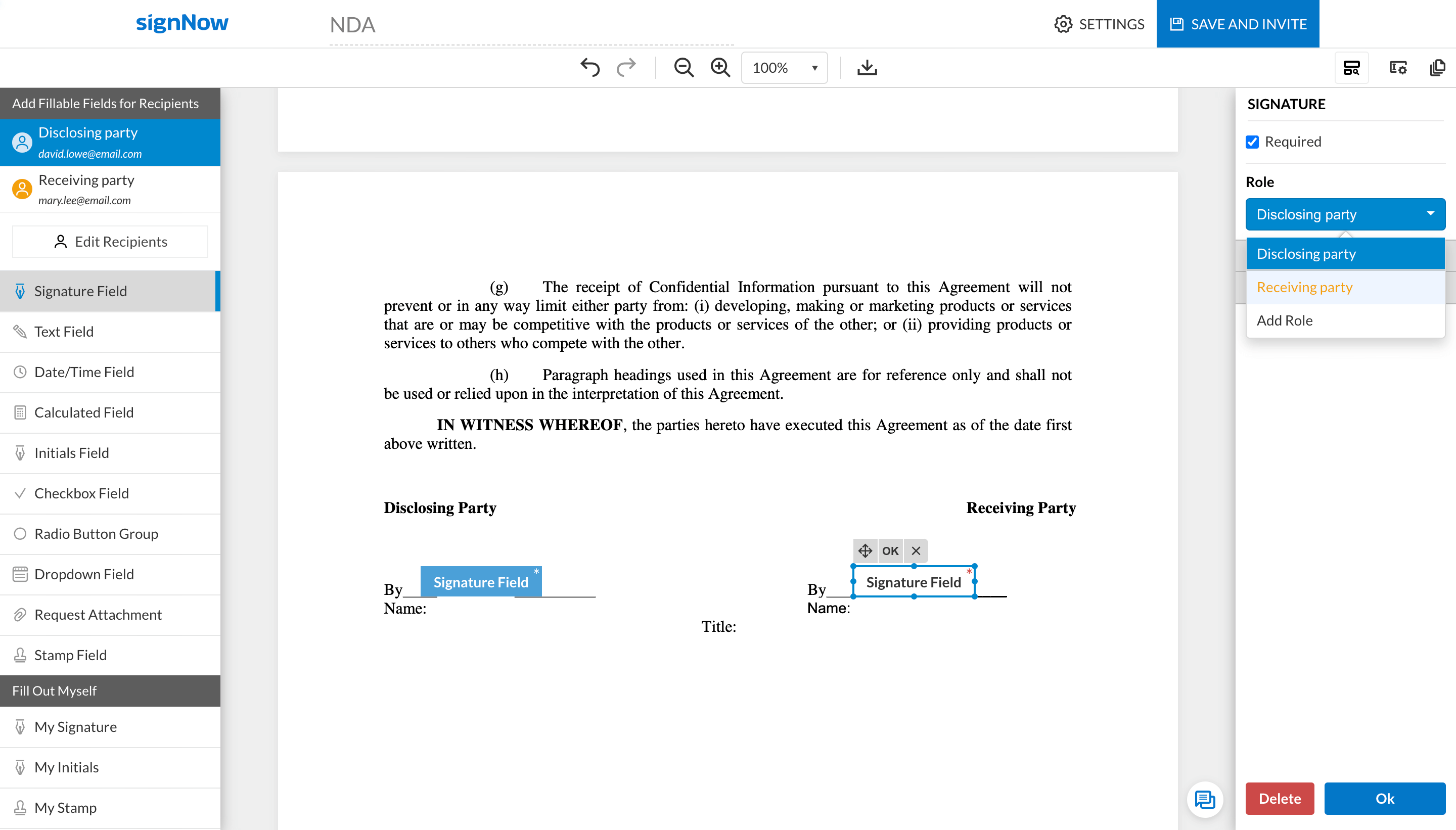
Upload a document to your airSlate SignNow account and open it in the editor. Drag and drop fillable fields and assign roles.
fill-guide-illustration

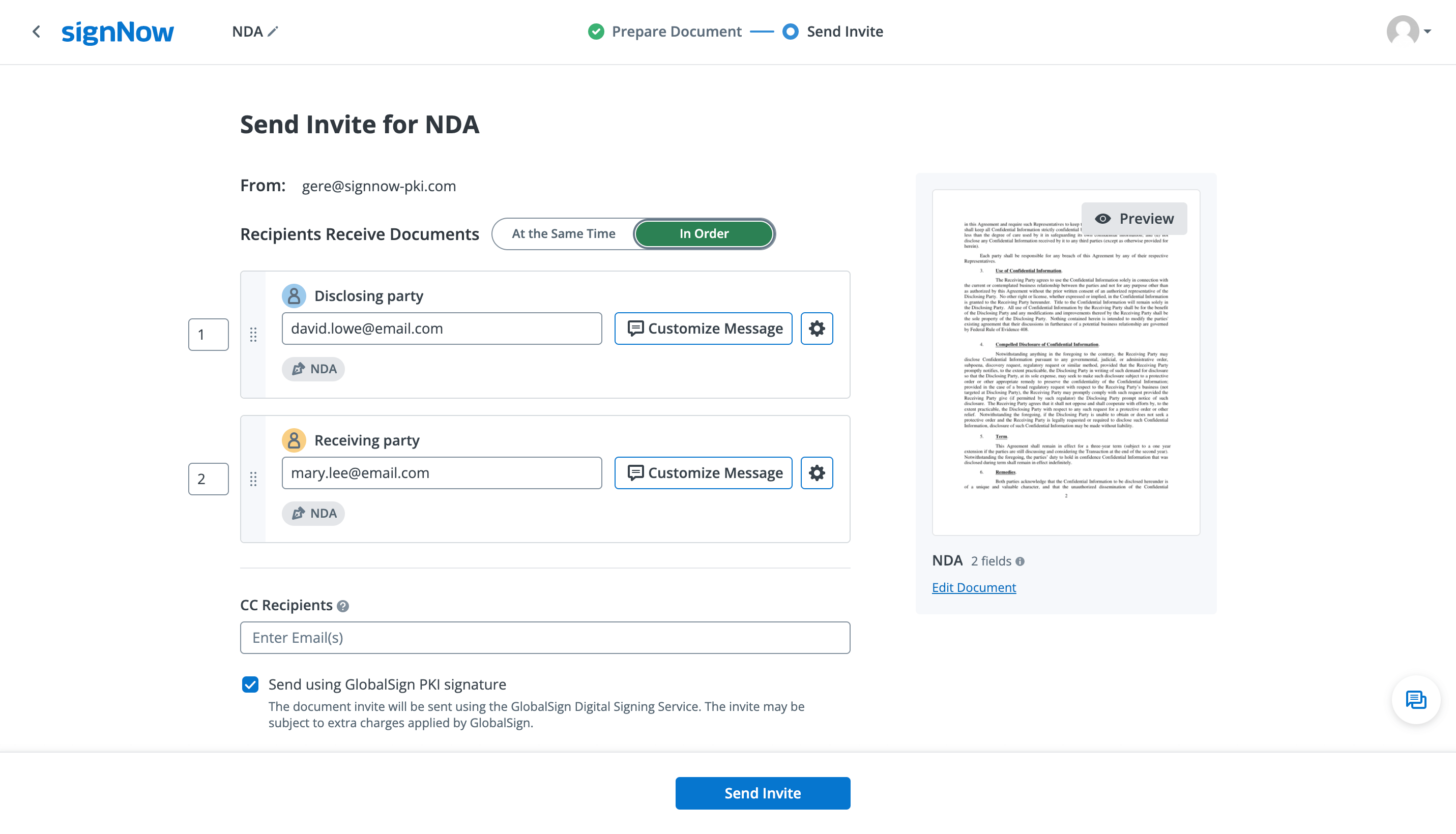
Click SAVE AND INVITE once your document is ready for sending.

Add recipient emails, set the signing order, and check the box Send using GlobalSign PKI signature.
fill-guide-illustration

Note: only eligible organizations can send documents using the PKI technology. Contact us for details.

How to add a secure digital signature under PKI requirements

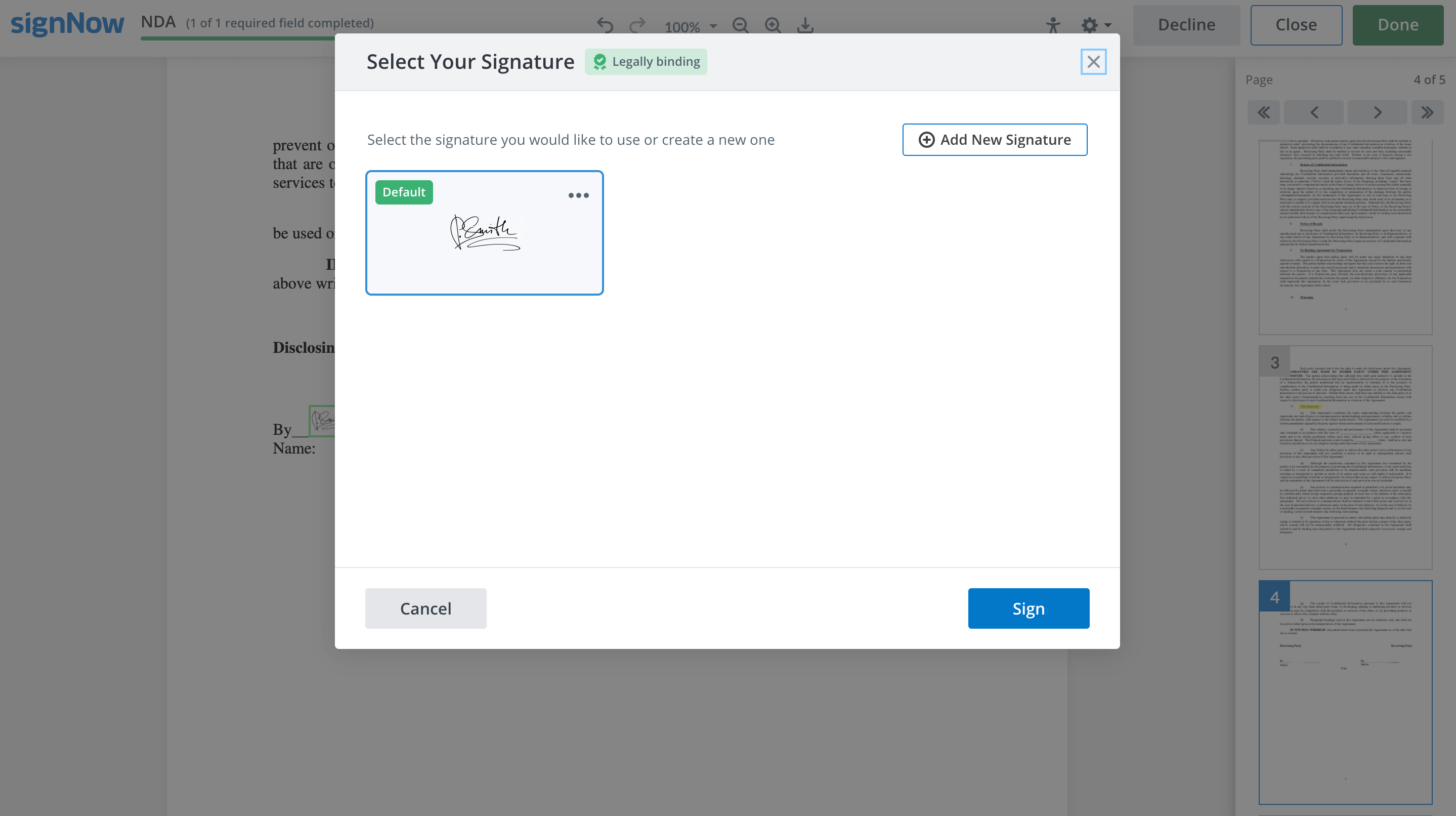
Once you receive a signature request, click to open a document and add your digital signature in seconds. You can draw, type, or upload an image of your signature.
fill-guide-illustration

How to view a digital certificate

Once every signer has signed your document, you can download it and view the digital certificate. To open a digital certificate, open your signed document in Adobe Acrobat Reader®. Click on the digital signature and select Signature Properties > Show Signer’s Certificate.


walmart logo
exonMobil logo
apple logo
comcast logo
facebook logo
FedEx logo
be ready to get more

Get legally-binding signatures now!