Comprendre La Légalité De La Signature électronique Pour Les Documents Aux États-Unis
- Démarrage rapide
- Facile à utiliser
- Support 24/7





Les entreprises qui pensent à l'avance dans le monde entier font confiance à airSlate pour le moment






Votre guide complet
Légalité de la signature électronique pour les documents aux États-Unis
Aux États-Unis, les signatures électroniques ont obtenu une reconnaissance et une acceptation légales, ce qui en fait un moyen pratique et sécurisé de signer des documents. L'une des plateformes de confiance pour les solutions de signature électronique est airSlate SignNow, qui offre une expérience conviviale pour les entreprises et les particuliers. Voici un guide sur la façon d'utiliser airSlate SignNow pour signer et envoyer des documents électroniquement.
Étapes pour signer et envoyer des documents en utilisant airSlate SignNow :
- Lancez la page web airSlate SignNow dans votre navigateur.
- Inscrivez-vous pour un essai gratuit ou connectez-vous.
- Téléchargez un document que vous souhaitez signer ou envoyer pour signature.
- Si vous prévoyez de réutiliser votre document plus tard, transformez-le en modèle.
- Ouvrez votre fichier et apportez des modifications : ajoutez des champs remplissables ou insérez des informations.
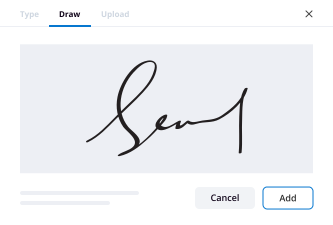
- Signez votre document et ajoutez des champs de signature pour les destinataires.
- Cliquez sur Continuer pour configurer et envoyer une invitation à signer électroniquement.
airSlate SignNow permet aux entreprises d'envoyer et de signer électroniquement des documents avec une solution facile à utiliser et économique. Il offre un excellent retour sur investissement en fournissant un ensemble de fonctionnalités riche, est adapté aux PME et au marché intermédiaire, a des prix transparents sans frais de support cachés, et fournit un support supérieur 24/7 pour tous les plans payants.
Découvrez les avantages d'airSlate SignNow aujourd'hui et rationalisez votre processus de signature de documents de manière efficace.
Comment ça marche
Évaluez votre expérience
What is the electronic signature legality for documents in the United States
The electronic signature legality for documents in the United States is governed by the Electronic Signatures in Global and National Commerce (ESIGN) Act and the Uniform Electronic Transactions Act (UETA). These laws establish that electronic signatures hold the same legal weight as traditional handwritten signatures, provided certain conditions are met. This means that individuals and businesses can confidently use eSignatures for various documents, including contracts, agreements, and forms, without worrying about their enforceability.
Key elements of the electronic signature legality for documents in the United States
To ensure the legality of electronic signatures, several key elements must be present:
- Intent to sign: The signer must demonstrate a clear intention to authenticate the document.
- Consent to do business electronically: All parties involved must agree to conduct transactions using electronic means.
- Association with the record: The electronic signature must be logically associated with the document being signed.
- Secure and reliable methods: The eSignature process should utilize secure technology to protect the integrity of the signature and the document.
Steps to complete the electronic signature legality for documents in the United States
Completing a document with an electronic signature involves a straightforward process:
- Prepare the document: Upload the document you wish to sign into the airSlate SignNow platform.
- Fill out the necessary fields: Use the platform's tools to complete any required information in the document.
- Request signatures: Send the document to the relevant parties for their electronic signatures.
- Sign the document: Once all parties have received the document, they can eSign it using their unique credentials.
- Store and manage: After signing, securely store the completed document within the airSlate SignNow platform for easy access and management.
State-specific rules for the electronic signature legality for documents in the United States
While the ESIGN Act and UETA provide a federal framework for electronic signatures, individual states may have specific regulations that apply. It is essential to review state laws to ensure compliance, particularly in areas such as:
- Types of documents that can be signed electronically.
- Requirements for consent and intent.
- Specific security measures that may be mandated.
Understanding these nuances can help users navigate the eSignature landscape effectively.
Examples of using the electronic signature legality for documents in the United States
Electronic signatures are versatile and can be used across various industries and document types. Common examples include:
- Real estate transactions, such as lease agreements and purchase contracts.
- Business contracts, including service agreements and partnership contracts.
- Human resources documents, such as employment contracts and policy acknowledgments.
- Financial documents, including loan agreements and tax forms.
These examples illustrate the broad applicability of electronic signatures in facilitating efficient and legally binding transactions.
Security & Compliance Guidelines
Ensuring the security and compliance of electronic signatures is crucial for maintaining their legality. Users should adhere to the following guidelines:
- Use secure platforms: Choose reputable eSignature solutions like airSlate SignNow that comply with industry standards.
- Implement authentication measures: Utilize multi-factor authentication and unique user credentials to verify signers' identities.
- Maintain audit trails: Keep detailed logs of the signing process to provide evidence of consent and intent.
- Regularly review compliance: Stay updated on legal changes and ensure your practices align with both federal and state regulations.
Solution eSignature primée




Obtenez dès maintenant des signatures juridiquement contraignantes !
-
Meilleur ROI. Nos clients obtiennent un ROI 7 fois en moyenne au cours des six premiers mois.
-
Échelle avec vos cas d'utilisation. De SMB à moyen marché, airSlate SignNow fournit des résultats pour les entreprises de toutes tailles.
-
Interface utilisateur intuitive et API. Signez et envoyez des documents depuis vos applications en quelques minutes.
Signature en ligne de la FAQ
-
What is the electronic signature legality for documents in the United States?
The electronic signature legality for documents in the United States is governed by the ESIGN Act and UETA, which recognize electronic signatures as legally binding. This means that eSignatures hold the same weight as traditional handwritten signatures, provided that both parties consent to use electronic means for signing. -
How does airSlate SignNow ensure compliance with electronic signature legality for documents in the United States?
airSlate SignNow complies with the electronic signature legality for documents in the United States by adhering to the standards set by the ESIGN Act and UETA. Our platform includes features like audit trails and secure authentication to ensure that all signed documents are legally enforceable. -
Are there any specific types of documents that cannot be signed electronically in the United States?
While most documents can be signed electronically, certain types, such as wills, trusts, and some court documents, may have restrictions. It's important to verify the electronic signature legality for documents in the United States for specific cases to ensure compliance. -
What are the benefits of using airSlate SignNow for electronic signatures?
Using airSlate SignNow for electronic signatures offers numerous benefits, including increased efficiency, reduced paper usage, and enhanced security. Our platform simplifies the signing process, making it easy for users to send and receive documents while ensuring compliance with electronic signature legality for documents in the United States. -
How much does airSlate SignNow cost for businesses looking to use electronic signatures?
airSlate SignNow offers flexible pricing plans tailored to meet the needs of businesses of all sizes. Our cost-effective solution allows you to utilize electronic signature legality for documents in the United States without breaking the bank, with options for monthly or annual subscriptions. -
Can airSlate SignNow integrate with other software applications?
Yes, airSlate SignNow seamlessly integrates with various software applications, enhancing your workflow. This integration capability supports the electronic signature legality for documents in the United States by allowing you to manage documents efficiently across different platforms. -
Is airSlate SignNow user-friendly for those unfamiliar with electronic signatures?
Absolutely! airSlate SignNow is designed with user experience in mind, making it easy for anyone to navigate and use. Our intuitive interface ensures that even those unfamiliar with electronic signature legality for documents in the United States can quickly learn how to send and sign documents.





