Préremplissage
Récupération automatique de données depuis profils et CRM pour remplir les champs du modèle.




Créer des modèles sur Android réduit le temps de préparation des documents, améliore l'exactitude des informations et assure une expérience de signature uniforme sur mobile.

Un représentant terrain configure des modèles de proposition et contrats sur son appareil Android, envoie des demandes de signature et suit le statut depuis l'application, réduisant les délais de clôture des ventes.
Un responsable RH crée des modèles d'onboarding et d'accords employés, préremplit les champs standard et collecte des signatures électroniques sécurisées tout en respectant les politiques de rétention documentaire.
Les modèles sur Android servent aux professionnels mobiles qui finalisent des contrats, recueillent des informations et signent des documents hors bureau.
En centralisant les modèles, les organisations réduisent les erreurs et accélèrent les cycles d'approbation, tout en conservant des traces pour conformité.
Récupération automatique de données depuis profils et CRM pour remplir les champs du modèle.
Utilisation de balises dynamiques pour personnaliser chaque envoi sans modifier le modèle.
Historique des modifications et restauration de versions antérieures du modèle.
Édition et signature sans connexion, synchronisation automatique ultérieure.
Historique des actions sur le modèle et preuves horodatées des signatures.
Partage contrôlé entre équipes avec niveaux d'autorisation distincts.
Interface tactile pour placer champs texte, cases à cocher, dates et zones signature qui s'adaptent automatiquement aux tailles d'écran Android.
Stockage centralisé de modèles réutilisables avec permissions, balises et versions pour garantir cohérence et gouvernance.
Logique conditionnelle appliquée aux champs pour afficher ou masquer sections selon les réponses de l'utilisateur.
Connexion native avec Google Drive, Dropbox et CRM pour importer documents et sauvegarder copies signées.

| Setting Name | Default Configuration |
|---|---|
| Reminder Frequency | 48 hours |
| Template Expiration | 30 days |
| Approval Required | Yes |
| Auto-archive Signed | 7 days |
Vérifiez la version Android, l'espace de stockage et les autorisations d'application avant de créer des modèles.
Pour un fonctionnement optimal, maintenez l'application et le système à jour, activez la synchronisation cloud et validez les paramètres de sécurité de l'entreprise.
Un agent crée un modèle de mandat de vente pour Android avec champs préremplis pour adresse et prix
Résultant en processus de vente plus rapide et traçabilité des accords.
Un responsable RH configure un modèle d'accord d'embauche accessible sur Android
Menant à une conformité documentaire plus rigoureuse et un onboarding homogène.
| Criteria | Template on Android | Bulk Send |
|---|---|---|
| signNow (Recommended) | ||
| DocuSign | ||
| Adobe Sign | ||
| HelloSign |
| Criteria | Free Plan | Starting Price/mo | Android Templates | Mobile App | Enterprise Plan |
|---|---|---|---|---|---|
| signNow (Recommended) | Yes | $8/mo | Full support | Android app | Available |
| DocuSign | No | $10/mo | Full support | Android app | Available |
| Adobe Sign | No | $12.99/mo | Full support | Android app | Available |
| HelloSign | Yes | $15/mo | Limited support | Android app | Available |
| PandaDoc | No | $19/mo | Templates via web | Android app | Available |
Notre application mobile pour Android vous permet de créer des modèles à partir de n'importe quel document stocké sur votre compte airSlate SignNow. Vous pouvez modifier les modèles à tout moment et en tout lieu, les transformer en formulaires remplissables, et les envoyer facilement pour signature depuis votre smartphone ou tablette.
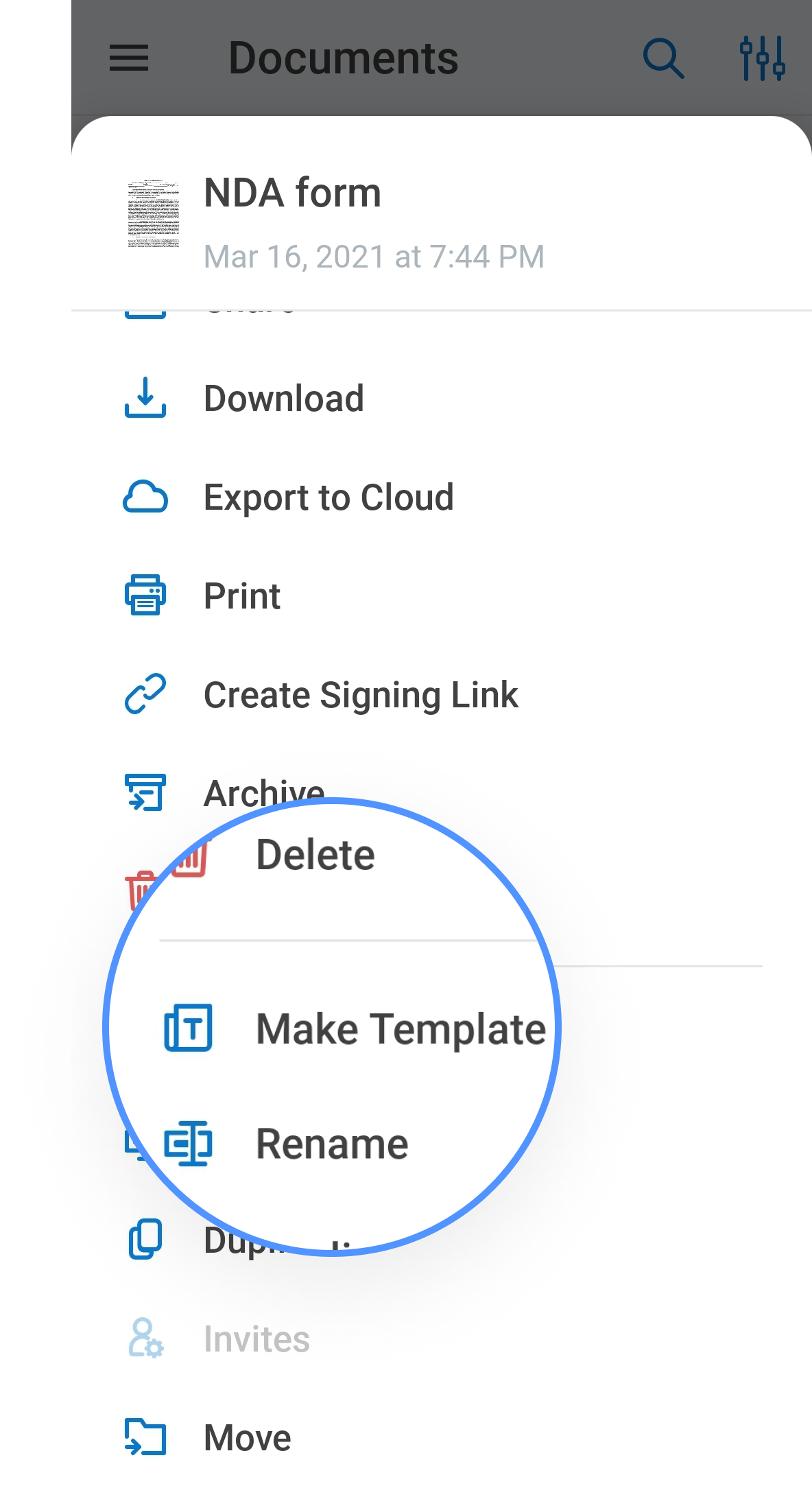
Appuyez sur n'importe quel document dans votre application mobile airSlate SignNow. Le menu d'options apparaîtra. Sélectionnez Faire un modèle. Vous devrez peut-être faire défiler un peu jusqu'à voir cette option dans la liste.
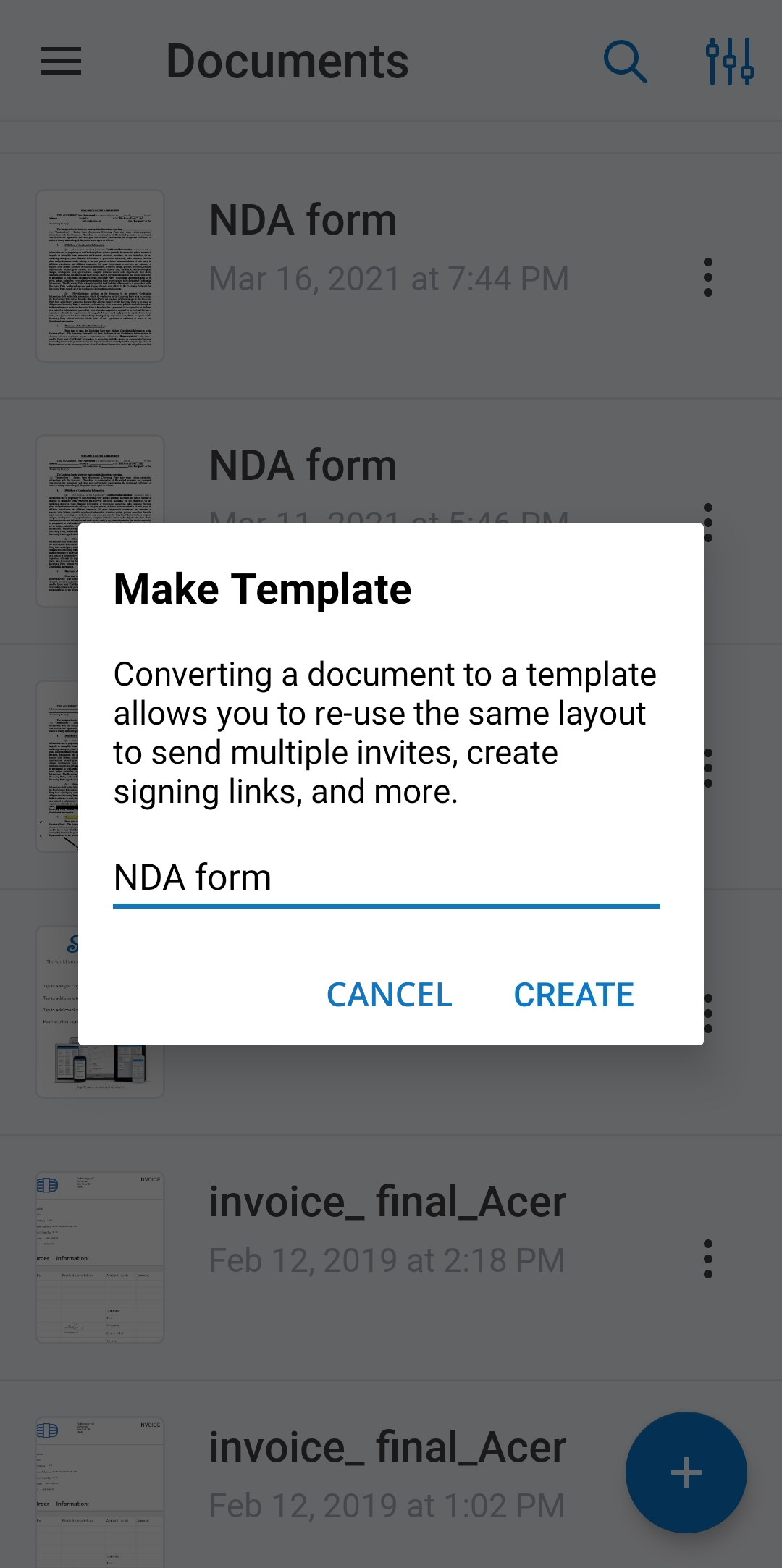
Saisissez un nom pour le modèle dans la fenêtre contextuelle et appuyez sur Créer. Votre modèle est maintenant prêt.
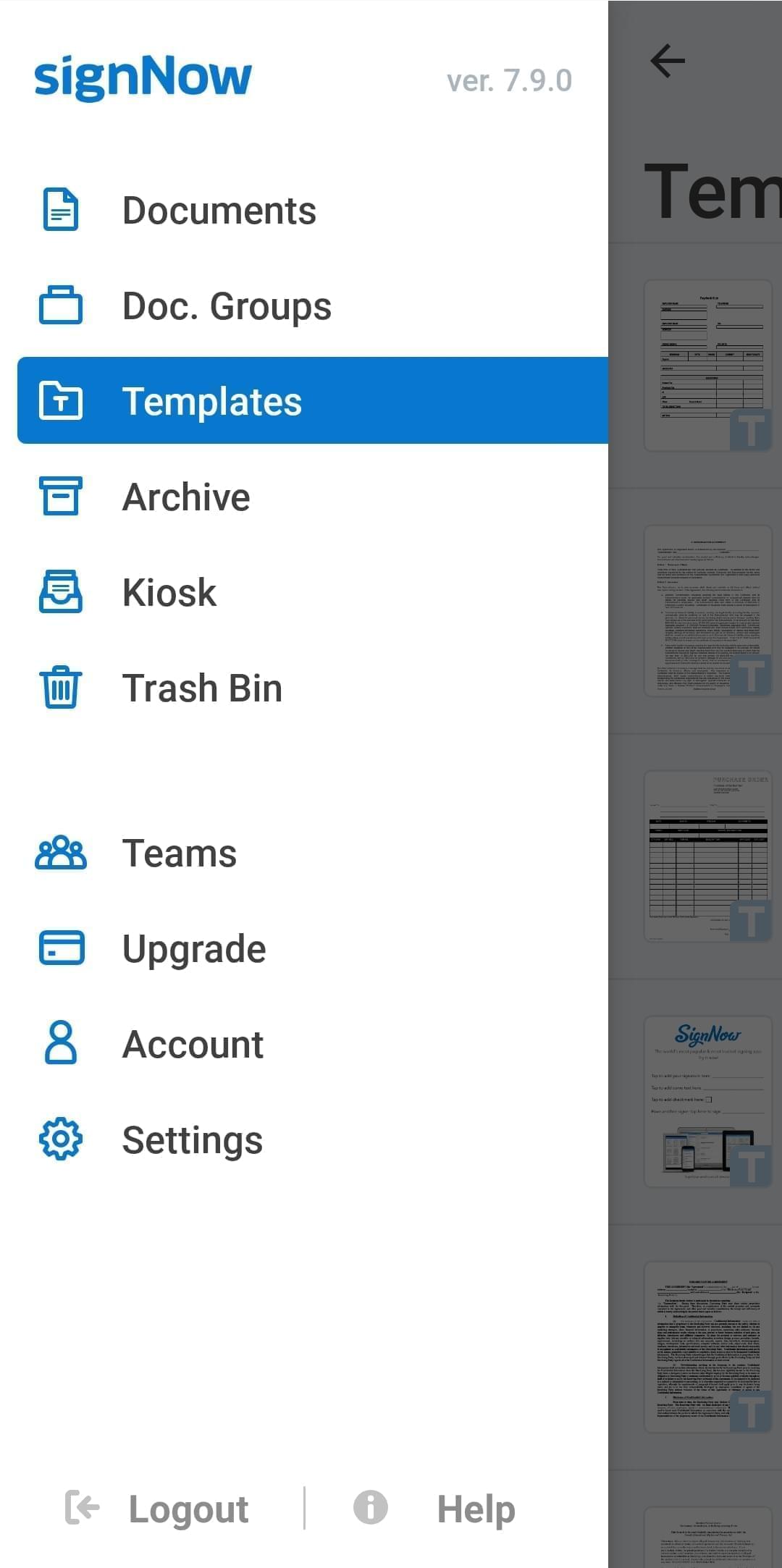
Recherchez vos modèles dans le dossier Modèles. Pour y accéder, appuyez sur l'icône du menu hamburger en haut à gauche de l'écran d'accueil de l'application et sélectionnez Modèles.
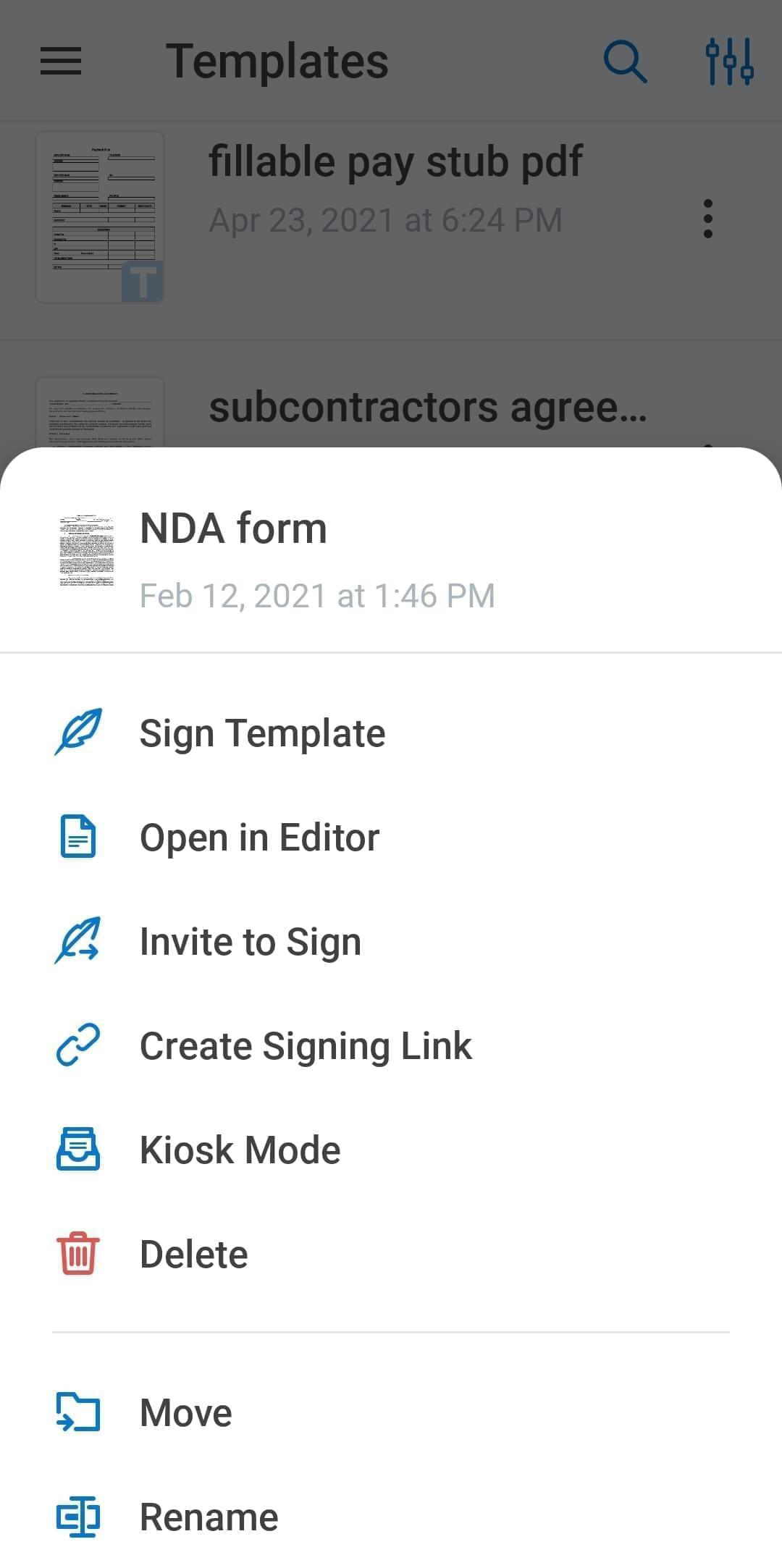
Signez ou envoyez une copie du modèle pour la signature électronique, générez un lien de signature ou ouvrez un modèle dans l'éditeur en appuyant sur un document et en sélectionnant l'option correspondante dans le menu.