Modèles
Modèles réutilisables qui pré-configurent les règles de délégation, champs obligatoires, notifications et niveaux d'authentification adaptés aux types de documents et aux flux métiers.




La délégation via let your addressee assign signer augmente la flexibilité opérationnelle en réduisant les délais de signature et en évitant les blocages lorsque le signataire initial n'est pas disponible, tout en conservant une traçabilité complète.

Le gestionnaire RH prépare et envoie des contrats d'embauche et autorise parfois des assistants administratifs à assigner des signataires pour des signatures collectives, en conservant l'historique des délégations et en vérifiant les identités selon les politiques internes.
Le responsable des ventes envoie des accords commerciaux et peut permettre à un coordinateur régional d'assigner un signataire local lorsque le client ou le représentant principal est indisponible, tout en respectant les règles de conformité et d'audit de l'entreprise.
Organisations de vente, ressources humaines et services juridiques adoptent souvent la délégation pour accélérer la clôture des dossiers et réduire les interruptions opérationnelles.
Ces cas d'utilisation montrent comment la fonctionnalité s'intègre dans des processus existants sans compromettre la conformité ou la sécurité.
Modèles réutilisables qui pré-configurent les règles de délégation, champs obligatoires, notifications et niveaux d'authentification adaptés aux types de documents et aux flux métiers.
API RESTful pour intégrer la délégation dans CRM, ERP ou plateformes internes, permettant de contrôler programmatique les règles d'assignation et de récupérer les journaux d'audit.
Possibilité d'envoyer en masse des documents avec règles de délégation différentes par lot, utile pour campagnes contractuelles ou envois RH.
Connecteurs préconstruits pour Google Workspace, Salesforce et Dropbox afin d'automatiser la génération et l'archivage des documents délégués.
Tableaux de bord et exports pour suivre taux d'acceptation, délais de signature et incidents liés aux délégations.
Paramètres pour appliquer clauses contractuelles, approbations supplémentaires et validations légales avant acceptation finale.
Contrôles granulaires permettant de définir qui peut activer la délégation, quels documents y sont éligibles et quelles actions sont consignées, afin de préserver la séparation des fonctions et de limiter les risques de délégation abusive.
Options d'authentification multifacteur et vérification d'identité qui s'appliquent au signataire désigné, garantissant que la personne qui appose la signature est correctement identifiée et que la chaîne de responsabilité est claire.
Modèles de documents qui incluent des règles de délégation préconfigurées, champs obligatoires et instructions claires pour le destinataire afin d'assurer une délégation cohérente et conforme à la politique.
Enregistrement horodaté de chaque action liée à la délégation, incluant les identifiants, adresses IP et preuves d'authentification, afin de constituer une piste d'audit exploitable en cas de contrôle ou litige.

| Configuration | Default |
|---|---|
| Reminder Frequency | 48 hours |
| Delegation Window | 14 days |
| Authentication Level | MFA required |
| Audit Retention | 7 years |
Les accès modernes via navigateur, applications mobiles et intégrations API requièrent des navigateurs à jour, connexions sécurisées et options d'authentification compatibles.
Vérifiez la configuration réseau, les certificats TLS et les règles d'authentification pour garantir l'interopérabilité entre la plateforme eSignature, vos systèmes internes et les dispositifs mobiles des utilisateurs.
Le service RH envoie un lot de contrats à un responsable régional qui peut assigner un gestionnaire local pour la signature
Résultant en une exécution plus rapide des contrats et une piste d'audit complète pour conformité.
Un acheteur initie un bon de commande et permet au destinataire de désigner un comptable pour finaliser la signature
Menant à des cycles d'approbation plus courts et à des enregistrements d'audit exploitables pour contrôles internes.
| Criteria | Digital | Paper |
|---|---|---|
| signNow (Recommended U.S. eSignature vendor) | ||
| DocuSign (Market-leading eSignature platform for enterprise) | ||
| Adobe Sign (Integrated Adobe Document Cloud solution) | ||
| Dropbox Sign (Developer-friendly API and integrations) |
7 ans recommandé
Copies chiffrées en cloud
30 jours restauration rapide
Politique configurable
Formats PDF et CSV
PowerForms vous permet de rationaliser le processus de signature en autorisant les destinataires à définir les signataires de votre document. PowerForms est utile si vous avez un processus de signature avec plusieurs signataires et que vous devez signer un document à la dernière étape, en tant qu'approbateur final.
Cas d'utilisation courant : Un CFO doit signer tous les contrats fournisseurs. Un CFO crée un PowerForm pour un contrat fournisseur et le partage avec les responsables commerciaux du département. Les responsables commerciaux examinent ou signent le contrat et l'envoient aux fournisseurs. Une fois qu'un fournisseur a signé le contrat, il est envoyé au CFO pour approbation finale.
Remarque : PowerForms ne fonctionne qu'avec des modèles et doit comporter au moins trois rôles attribués. Pour partager un PowerForm, l'expéditeur génère un lien de signature vers le document.
Sélectionnez le document que vous souhaitez envoyer et ouvrez-le dans l'éditeur airSlate SignNow où vous pouvez le préparer pour la signature.
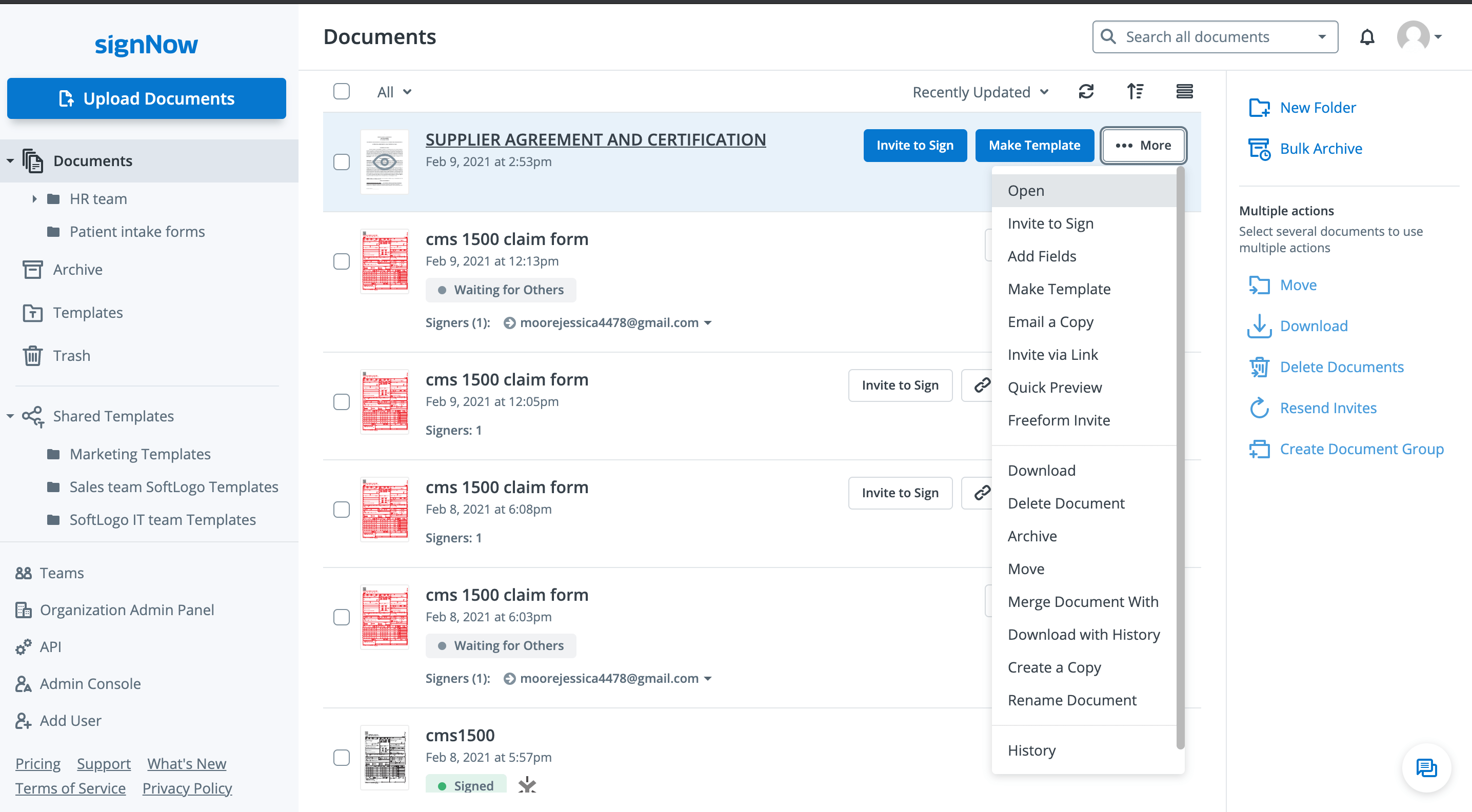
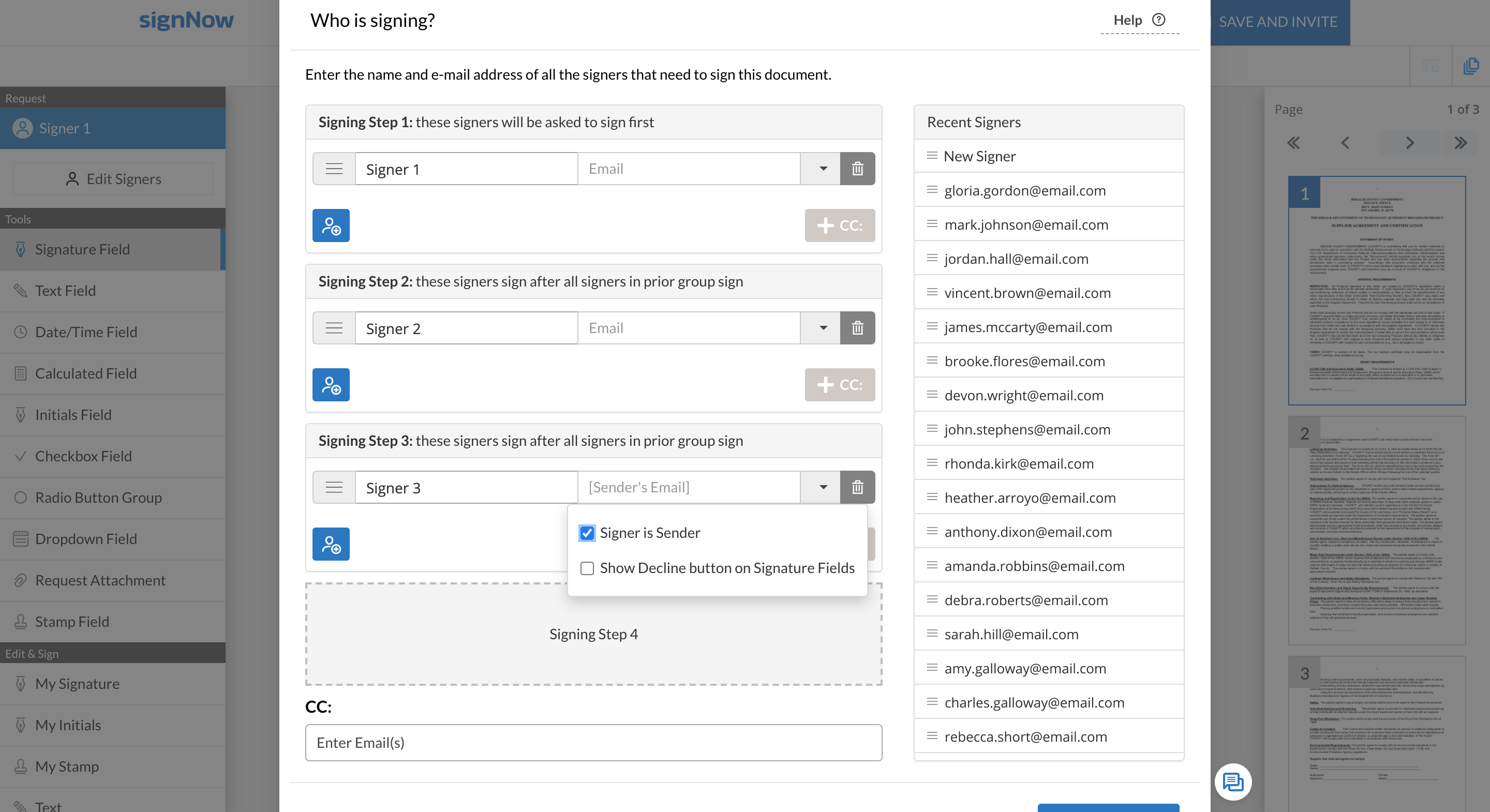
Cliquez sur Modifier les signataires pour créer des rôles de signature et définir un ordre de signature. Pour le dernier signataire, cliquez sur le menu déroulant dans le champ e-mail et cochez Signataire est Expéditeur. Laissez les champs e-mail des autres signataires vides.
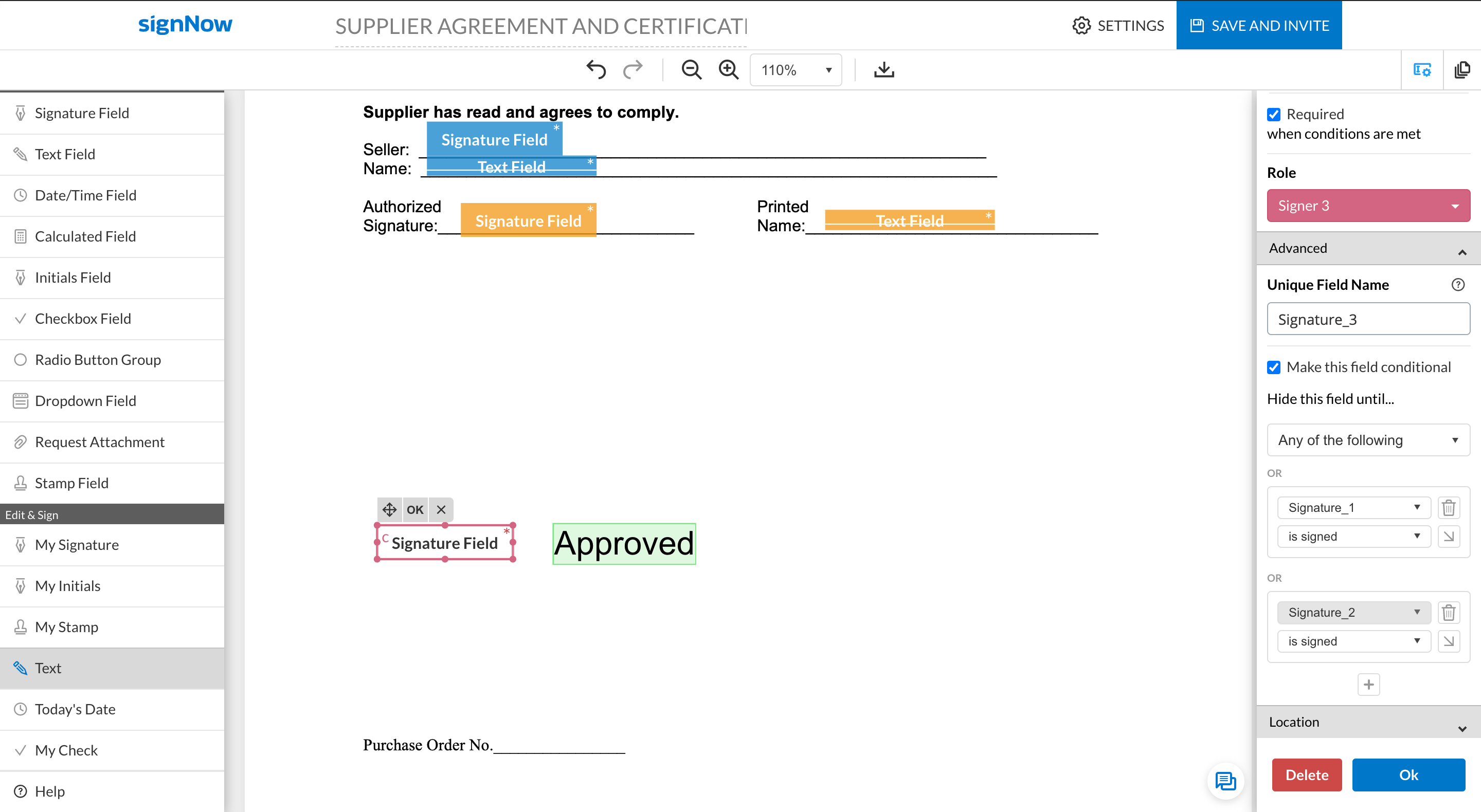
Ajoutez des champs remplissables au document, attribuez des champs à des rôles, configurez des conditions, etc. Rendre le processus de signature fluide et facile pour les destinataires.
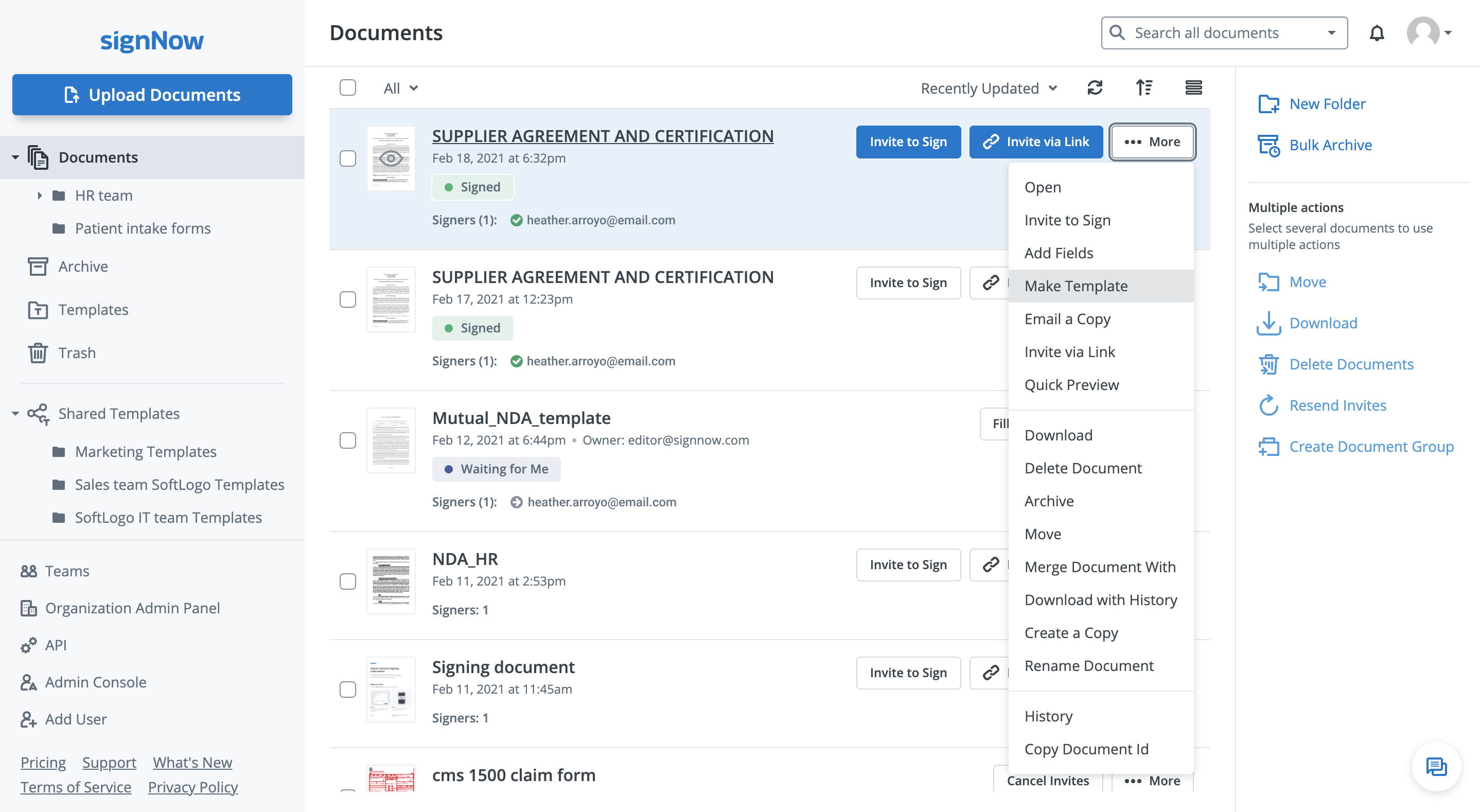
Cliquez sur ENREGISTRER ET FERMER pour enregistrer les modifications de votre document. Sélectionnez le document modifié et cliquez sur Créer un modèle.
Sélectionnez le modèle nouvellement créé et cliquez sur Inviter via un lien pour créer un lien de signature vers votre document. Cochez Le destinataire signera en tant qu'invité via l'étape de signature 1 pour permettre au premier destinataire de signer un document.
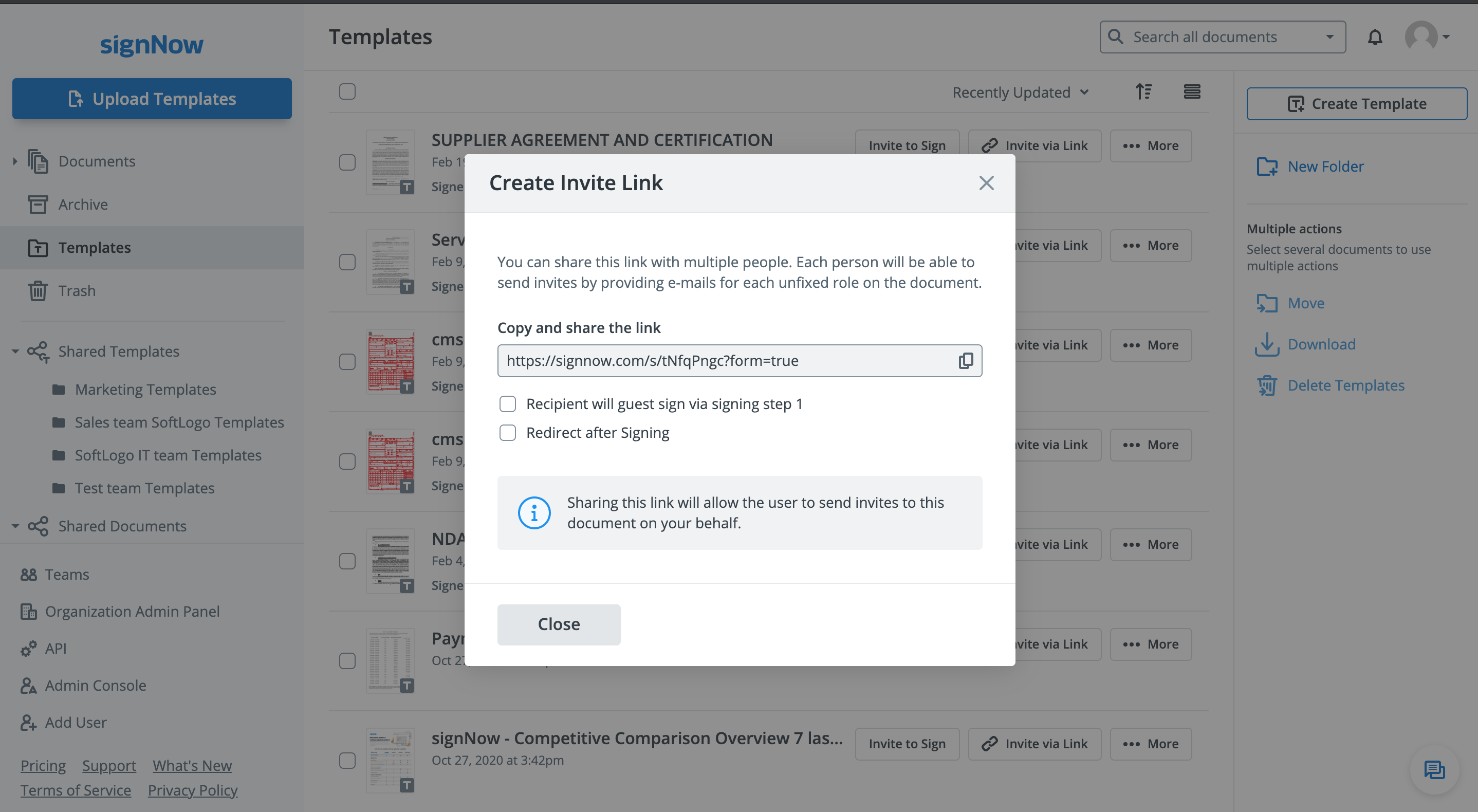
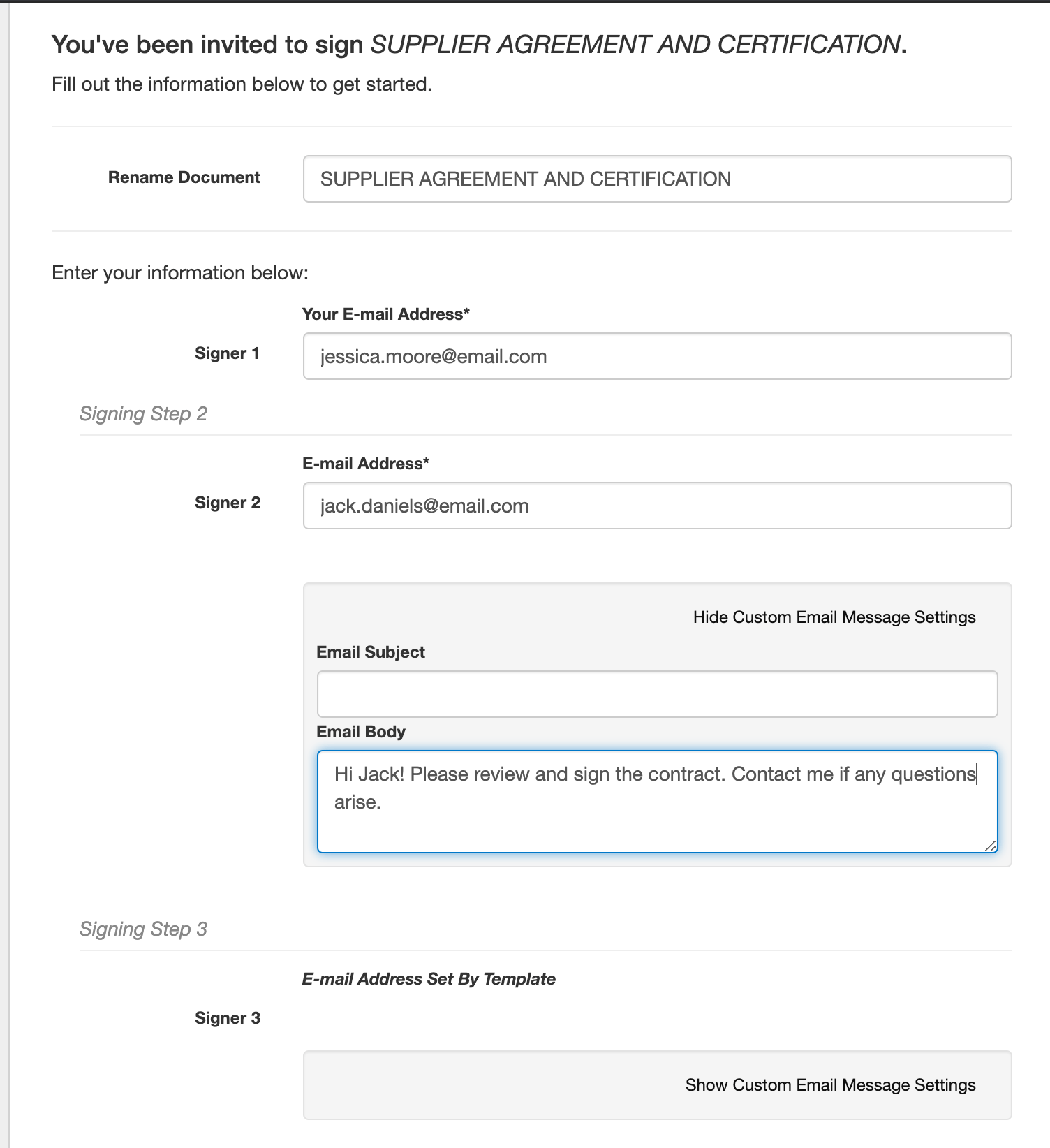
Partagez le lien vers votre document avec autant de personnes que nécessaire. Ils peuvent facilement personnaliser l'invitation à signer et ajouter les e-mails des prochains signataires.
Une fois que tous les signataires ont signé le document, l'expéditeur du document peut le remplir et le signer directement dans son compte airSlate SignNow.
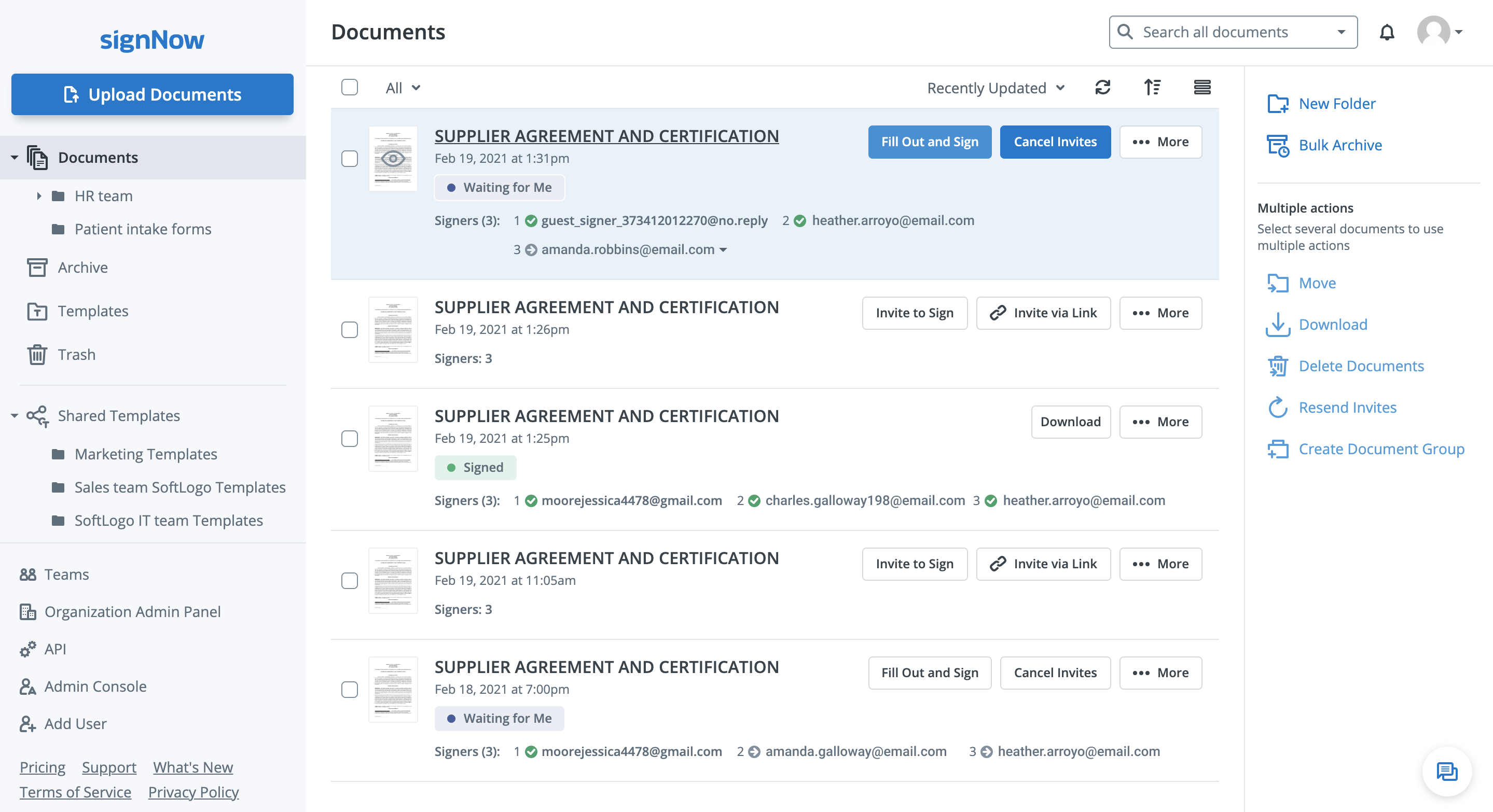
C'est tout, votre document sera signé et stocké en toute sécurité dans votre compte.











