Intégration API
APIs REST pour déclencher appels, récupérer statuts et intégrer les événements d'authentification dans les systèmes tiers comme CRM ou ERP.




L'authentification par appel téléphonique renforce la confiance dans l'identité d'un signataire en offrant une vérification supplémentaire simple et traçable, utile pour les transactions sensibles ou soumises à conformité sectorielle.

Le responsable juridique supervise la conformité et définit les exigences d'authentification selon ESIGN et UETA; il documente les politiques, valide les niveaux d'identification et supervise les preuves électroniques conservées.
Le responsable des opérations configure les flux de travail, s'assure de la disponibilité des appels téléphoniques, gère les paramètres de rappel et coordonne l'intégration avec CRM et systèmes de gestion documentaire.
Les équipes juridiques et de conformité utilisent souvent cette méthode pour renforcer l'authentification lors de signatures sensibles.
Les PME et les équipes opérationnelles l'adoptent également pour des workflows simples où un second facteur par voix est pratique et rapide.
APIs REST pour déclencher appels, récupérer statuts et intégrer les événements d'authentification dans les systèmes tiers comme CRM ou ERP.
Support de messages dynamiques basés sur les champs du document pour fournir un contexte précis et améliorer l'expérience du signataire.
Routage automatique vers SMS ou email si l'appel échoue, avec suivi des tentatives et options de reprise.
Visualisation des taux de réussite, latence d'appel et diagnostics pour améliorer la configuration et la performance.
Support de stockage des preuves et exportation pour audits ESIGN et UETA.
Paramètres RBAC pour limiter qui peut activer ou modifier l'authentification par appel.
Permet la personnalisation du message vocal délivré lors de l'appel, incluant instructions, code de vérification ou informations contractuelles, afin de contextualiser l'authentification pour le signataire.
Configuration de rappels automatiques et tentatives multiples sur des intervalles définis pour maximiser le taux de vérification sans intervention manuelle et réduire les échecs dus à indisponibilité temporaire.
Support d'options comme appui sur touche, reconnaissance vocale ou code lu, offrant une flexibilité pour adapter le niveau d'assurance requis selon la nature du document.
Enregistrement horodaté des appels, résultats et métadonnées liées au numéro et à l'interaction, fournissant une preuve exploitable en cas de contestation ou d'audit de conformité.
| Setting Name | Configuration |
|---|---|
| Fréquence de rappel automatique des destinataires | 48 heures |
| Nombre maximal de tentatives d'appel | 3 tentatives |
| Durée d'expiration du code vocal | 10 minutes |
| Routage d'échec vers alternative | Activer SMS |
Vérifiez compatibilité de plateforme, paramètres réseau et exigences d'API avant de déployer l'authentification par appel téléphonique.
Une évaluation pré-déploiement doit inclure tests sur appareils réels, validation des routes d'appel internationales et vérification des politiques de confidentialité applicables.
Un emprunteur reçoit un appel automatisé pour confirmer sa présence et son numéro de téléphone avant de signer un contrat de prêt
Résultant en une preuve complémentaire d'acceptation formelle et d'horodatage fiable dans le dossier
Un patient est contacté par appel vocal pour valider l'autorisation de traitement et confirmer les informations de contact
Menant à une piste d'audit complète qui soutient la conformité et la responsabilité en cas de contrôle
| Criteria | Product | Phone call authentication | Mobile support |
|---|---|---|---|
| signNow (Recommended) | signNow | Support natif | Oui |
| DocuSign | DocuSign | Option MFA vocale | Oui |
| Adobe Sign | Adobe Sign | Intégration possible | Oui |
| HelloSign | HelloSign | Limitée | Oui |
Au moins plusieurs années
Conserver logs selon politique
Conserver jusqu'à résolution
Supprimer selon calendrier
Formats immuables disponibles
| Criteria | Product | Starting monthly price | Free tier | Phone call auth availability | Enterprise support |
|---|---|---|---|---|---|
| signNow (Recommended) | signNow | À partir de 8 USD/mois (abonnement annuel) | Essai gratuit disponible | Authentification par appel disponible selon forfait | Support entreprise dédié |
| DocuSign | DocuSign | À partir de 10 USD/mois | Essai limité | Options d'authentification avancées payantes | Support entreprise global |
| Adobe Sign | Adobe Sign | À partir de 12,99 USD/mois | Inclus avec certains plans | Intégration d'authentification via modules | Support entreprise Adobe |
| HelloSign | HelloSign | À partir de 15 USD/mois | Plan gratuit limité | Fonctionnalité vocale limitée | Support PME |
| PandaDoc | PandaDoc | À partir de 19 USD/mois | Essai gratuit | Authentification téléphonique via intégration | Support et onboarding payants |
Assurez-vous que vos documents sont signés uniquement par des parties autorisées. Avec l'authentification par appel téléphonique, vos destinataires ne pourront signer vos documents qu'après avoir reçu un appel téléphonique automatisé à leur numéro.
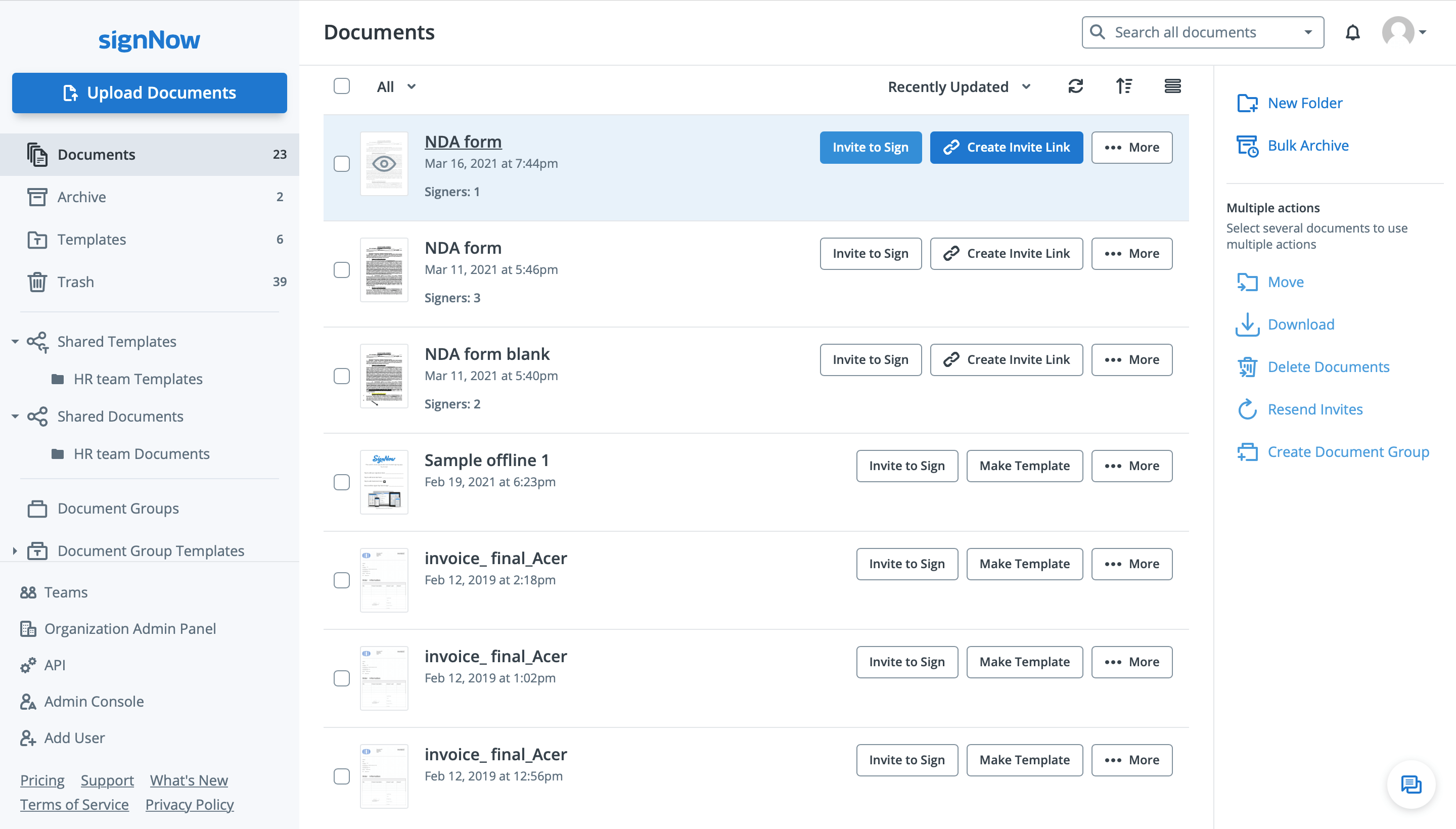
Cliquez sur Inviter à signer à côté d'un document que vous devez envoyer pour la signature électronique.
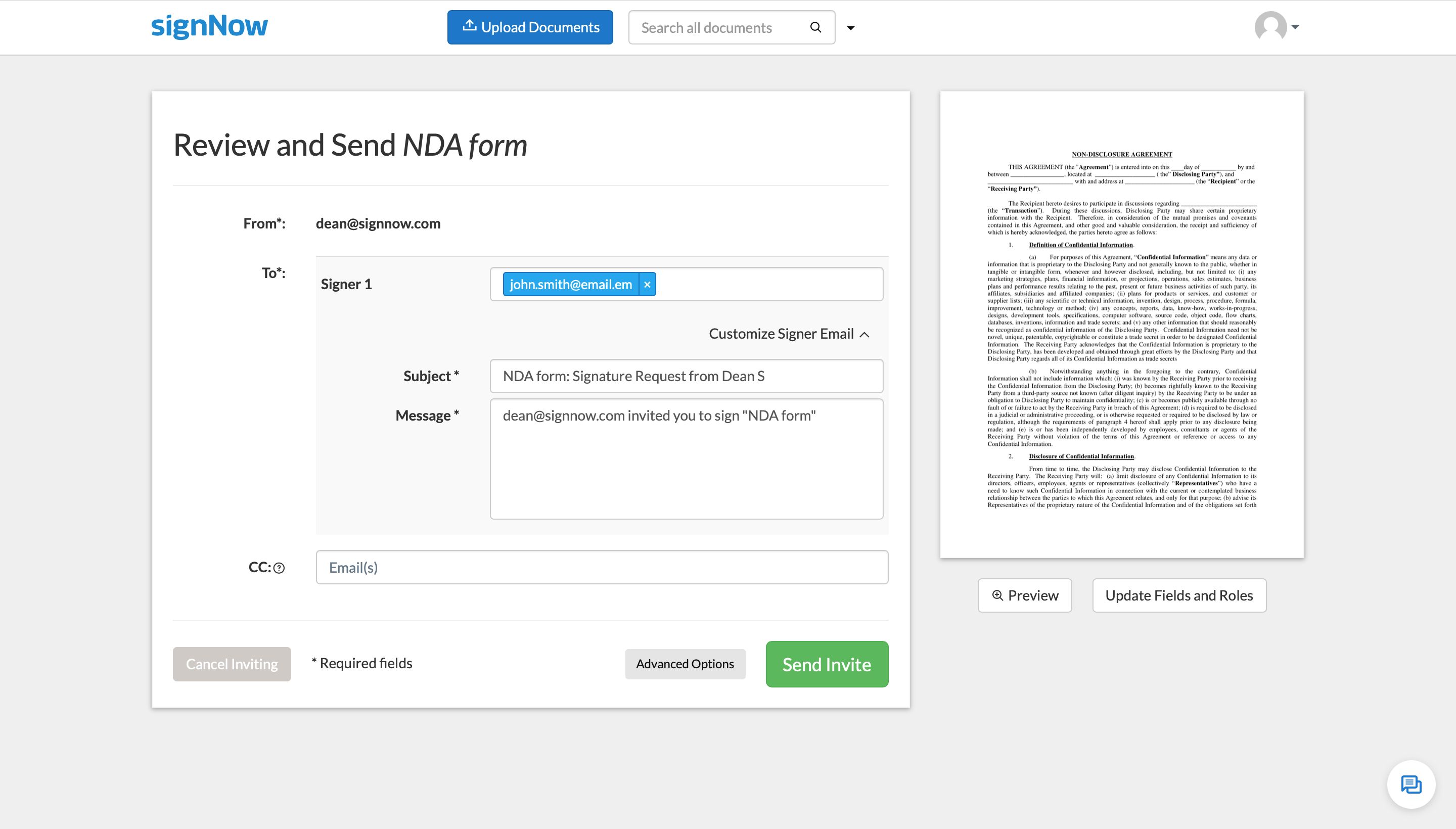
Entrez l'adresse e-mail de votre signataire et personnalisez le sujet et le message de l'invitation. Ajoutez des destinataires en copie carbone (CC) si vous souhaitez que d'autres parties reçoivent des copies signées de votre document. Ensuite, cliquez sur Options avancées.
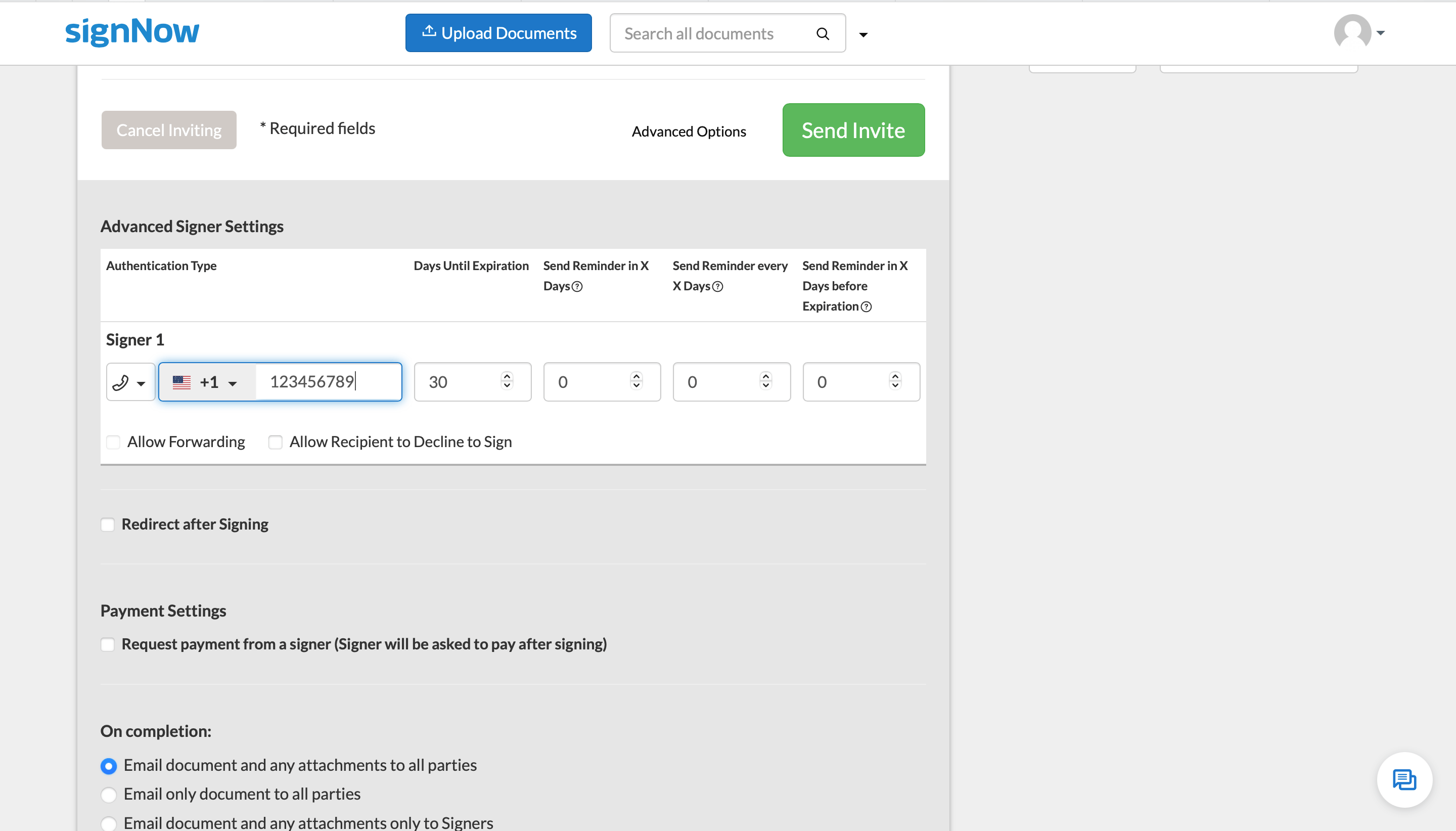
Dans la section Paramètres avancés du signataire, cliquez sur le menu déroulant Aucune authentification et sélectionnez Appel téléphonique.
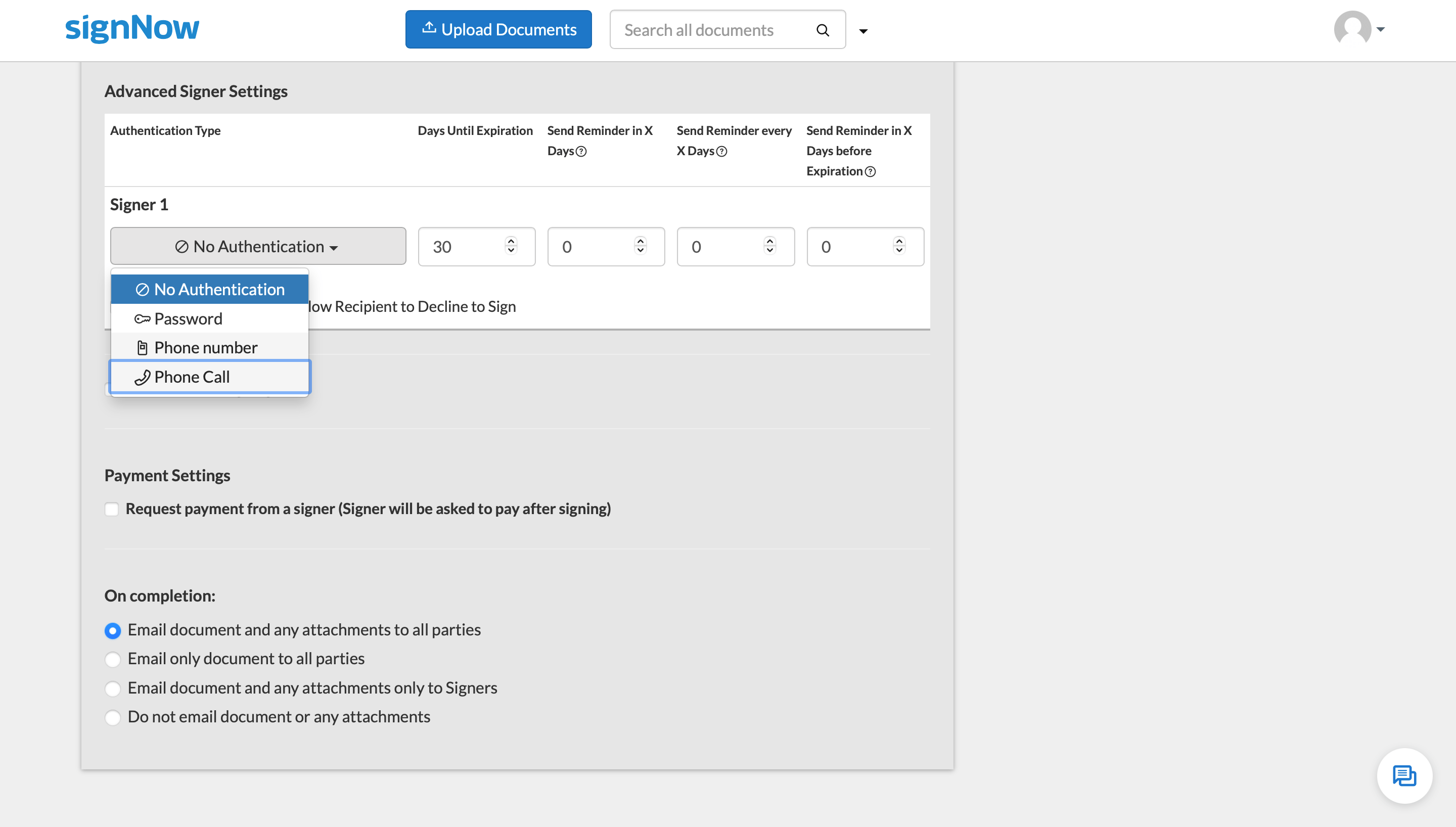
Entrez le numéro de téléphone de votre signataire et définissez la date d'expiration du document. Vous pouvez également planifier des rappels pour le signataire afin de vous assurer que votre document est signé à temps. Une fois terminé, cliquez sur Envoyer l'invitation pour envoyer votre demande de signature.