Establishing secure connection…Loading editor…Preparing document…

Letter Acknowledging Change in Meeting Date

This template is fully customizable. Edit the text, fill out the fields, and send it for signature. Give it a try!
Letter Acknowledging Change in Meeting Date

What the Letter Acknowledging Change in Meeting Date Is

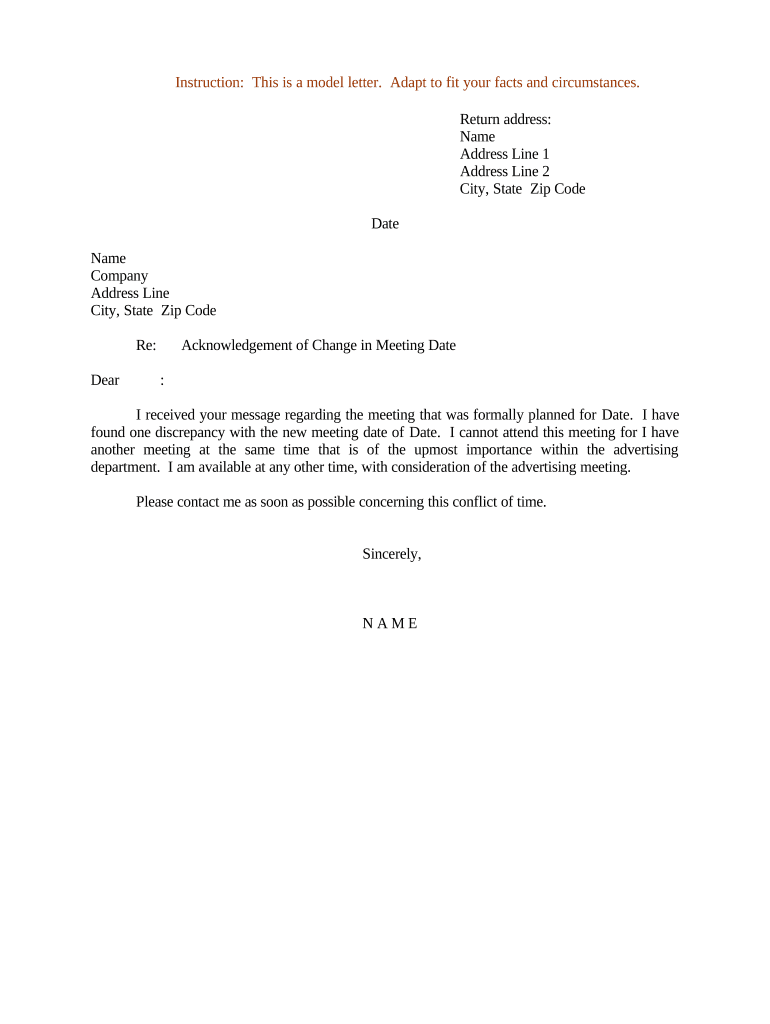
A Letter Acknowledging Change in Meeting Date is a concise written confirmation that notifies meeting organizers and attendees that a previously scheduled meeting has been moved to a new date and time. It records the changed details, notes any updated location or virtual access instructions, and confirms that key parties received and accepted the change. The letter can serve as evidence of notice for governance, contract, or administrative purposes and is commonly used by businesses, boards, associations, schools, and service providers to avoid confusion over scheduling.

Why a Clear Acknowledgement Letter Matters

A formal acknowledgement reduces misunderstanding, preserves records of notice, and helps ensure meeting quorum and compliance with internal rules or statutory notice requirements. It documents who received the change, the new meeting particulars, and any actions required by attendees.

Why a Clear Acknowledgement Letter Matters

Who Typically Issues or Signs This Letter

Organizations and individuals who need to confirm scheduling changes rely on this letter to create an auditable record and to align expectations among participants.

  • Board secretaries and corporate officers who manage official meeting notices and corporate governance schedules.
  • Administrative staff and event coordinators responsible for attendee communications and logistics.
  • School administrators, committee chairs, or association managers who must document notice changes for members.

Use an acknowledgement letter any time a meeting date or time changes and the organizer needs proof the change was communicated and accepted.

How to Complete the Letter, Step by Step

Follow these sequential steps to prepare an effective acknowledgement that is clear, dated, and actionable.

  • 01
    Prepare Details: Confirm original and new meeting details before drafting.
  • 02
    Include Context: Explain reason for change succinctly if appropriate.
  • 03
    Send with Proof: Deliver by a method that captures delivery and receipt.
  • 04
    Obtain Acknowledgement: Request signature or written confirmation from recipients.

Essential Elements of a Professional Acknowledgement Letter

A professional acknowledgement should be concise, clearly dated, and include both original and revised meeting details, routing information, signature blocks, and any instructions that affect participation.

Header

Organization name, sender contact, and date. Makes the letter immediately identifiable and provides a contact for questions.
Reference

Cite the original meeting notice or agenda line. This links the acknowledgement to the prior communication and clarifies context.

Original Date

State the original scheduled date/time. This documents what changed and supports any governance or contractual review.

New Date

Provide new date/time, time zone, and any location or virtual access instructions to prevent confusion.

Action Items

Note required replies (RSVP), materials to bring, or any changes to agenda items that attendees must prepare for.

Signature Block

Include signatory name, title, signature line, and date. Consider an acceptance line for recipients to sign and return.

Required Information to Include

Sender Contact: Phone/email
Recipient: Name/Group
Old Date: MM/DD/YYYY
New Date: MM/DD/YYYY
Access Details: Location/Link
Signature: Signed/dated

Set Up a Digital Workflow for This Letter

Configure a simple routing workflow to prepare, send, and capture acknowledgements electronically with clear recipient authentication and audit trails.

Template Field Mapping Create reusable placeholders for dates, times, and location details
Signer Order Define primary sender then recipient acknowledgement
Authentication Use email link or SMS code for signer verification
Notifications Set reminders and escalation for overdue acknowledgements
Retention Policy Automatically archive signed copies to a records folder

Where to Send or File the Acknowledgement

Decide destination and method based on governance rules and the importance of an auditable receipt.

  • Direct to Recipients: Email to all attendees with read and delivery receipts
  • Internal Records: Store signed copy in meeting or corporate records
  • Board/Committee Files: Place in governance binder or shared drive
  • Regulatory Filing: File with agency only if notice change has statutory impact

Distribution Channels and Technical Options

Choose distribution methods that create reliable delivery evidence and preserve signed acknowledgements for records.

  • Email Delivery: Standard and trackable
  • eSignature: Legally binding with audit trail
  • Certified Mail: Physical proof of delivery

For many organizations, combining electronic delivery with an audit trail (time stamp, IP, signer identity) provides sufficient proof of notice while reducing administrative burden.

Timing Considerations and Recommended Deadlines

Timely notice avoids quorum failures and ensures participants have adequate time to prepare. Follow internal bylaws or statutory notice requirements where they apply.

Immediate Acknowledgement:

Send acknowledgement as soon as change is confirmed

Minimum Notice:

Provide the notice required by bylaws or contract; common practice is 48–72 hours for minor schedule changes

Board/Statutory Notice:

Follow corporate bylaws or state statutes for formal meeting notices when applicable

RSVP Deadline:

Set a clear response deadline to verify attendance

Archive Date:

Save signed acknowledgement immediately and retain per records policy

Common Mistakes to Avoid

  • Failing to include the original meeting date and time makes it difficult to confirm what changed and can lead to disputes about proper notice.
  • Using informal language or omitting a signature line reduces the letter's value as proof of acceptance or receipt.
  • Not specifying time zone or virtual access details results in missed attendance, especially for participants in different regions.
  • Relying on untracked delivery methods without read receipts or audit trails can leave the sender without proof that recipients received the change.

Consequences of an Incorrect or Missing Acknowledgement

Quorum Failure: Decisions may be invalid
Contract Risk: Noncompliance with notice terms
Regulatory Risk: Statutory notice breaches
Operational Delay: Postponed actions or projects
Reputational Harm: Erodes stakeholder trust
Record Gaps: Difficulty proving proper notice

Practical Examples of Using an Acknowledgement Letter

Two brief examples show how organizations record and use acknowledgements when moving meeting dates.

Martin Properties

When a closing meeting moved due to title delays, staff sent a signed acknowledgement to all parties to confirm the new date.

  • The change was accepted by all parties.
  • "I can process and execute all of these documents online with 100% compliance and built-in security. Whether on mobile or working offline, I can get forms back to their necessary parties efficiently."

Fertility Centers

A clinic rescheduled an advisory board meeting and captured electronic acknowledgements to confirm new attendance.

  • All participants returned signed confirmations quickly.
  • "The airSlate SignNow team has been exceptional, responsive, the API has been great, and we're extremely happy that we chose airSlate SignNow as a company."

How This Letter Differs from Similar Documents

Compare the Letter Acknowledging Change in Meeting Date against related documents to choose the right form and ensure required formalities are met.

Document Type Purpose Formality
Acknowledgement Letter confirm date change low formality
Meeting Notice initial meeting call may require statutory notice
Meeting Minutes record of proceedings formal record post-meeting
Rescheduling Order court/official reschedule high formality

eSignature Pricing Comparison for Signing and Tracking Acknowledgement Letters

Common vendor pricing and feature differences for eSignature tools used to send and capture signed meeting-date acknowledgements. Place signNow first per vendor comparison guidance.

signNow DocuSign Adobe Sign PandaDoc HelloSign
Starting Price $8/user/mo $15/user/mo $14/user/mo $19/user/mo $15/user/mo
Free Trial 7-day free trial Varies Varies Varies Varies
Bulk Send Yes Yes Yes Yes No
Audit Trail Yes Yes Yes Yes Yes
HIPAA Compliant Yes Yes Yes No No

Typical Signatories and Their Roles

Board Secretary

The Board Secretary often issues or records meeting schedule changes and has authority to send formal acknowledgements to directors and shareholders; the secretary maintains the official meeting file and ensures notice requirements are satisfied.

Office Administrator

An administrator or coordinator typically drafts the acknowledgement, confirms logistics, and circulates the letter to attendees; they gather signed acknowledgements and file them in the organization’s records system for audit purposes.

Frequently Asked Questions

[INTRO] Answers to common questions about using and validating a Letter Acknowledging Change in Meeting Date.


Need help? Contact support

be ready to get more
Join over 28 million airSlate SignNow users