Establishing secure connection…Loading editor…Preparing document…

Affidavit of Confirmation

This template is fully customizable. Edit the text, fill out the fields, and send it for signature. Give it a try!
Affidavit of Confirmation

What an Affidavit of Confirmation Is and when it’s used

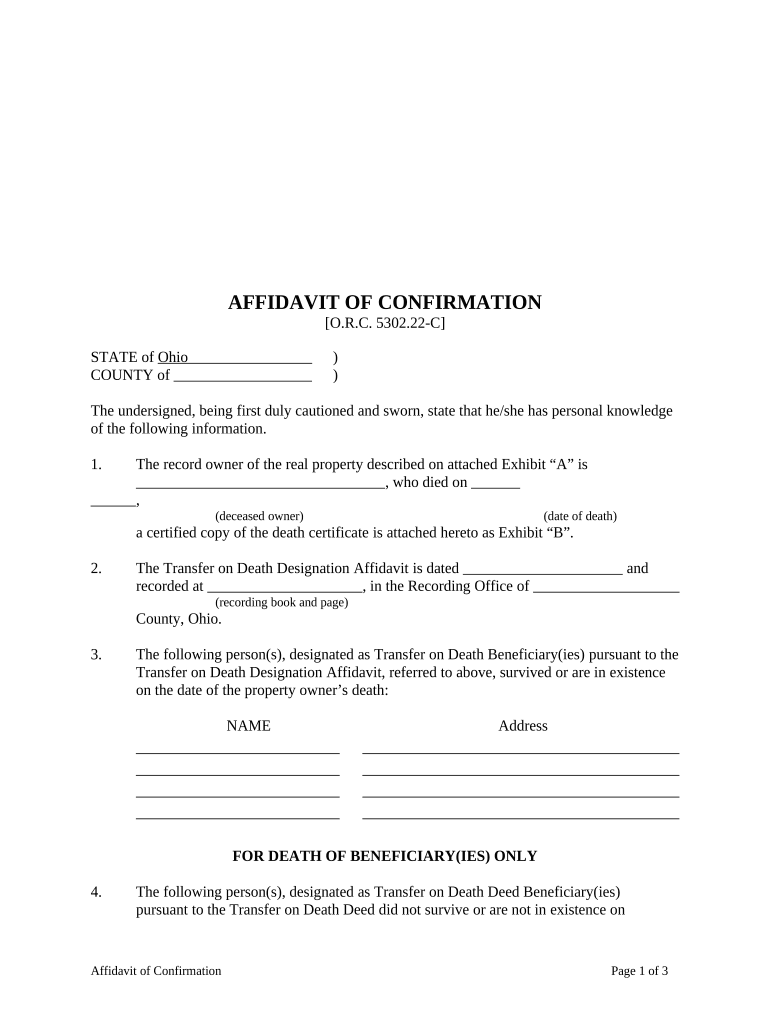
An Affidavit of Confirmation is a sworn written statement used to confirm facts, correct a prior record, or affirm identity or signature authenticity in a pending matter. Commonly used in real estate, probate, administrative filings, and transactions where a party must verify that earlier information is accurate or to correct clerical errors. The affidavit is signed under oath and typically notarized or submitted with an official acknowledgement; the form’s exact language and required attachments vary by jurisdiction and use.

Why an Affidavit of Confirmation matters for legal certainty

The document preserves a declarant’s sworn statement that a record, signature, or fact is true and correct, helping courts, clerks, and third parties rely on the asserted information. It can remove disputes caused by typographical errors, update record metadata, and provide an evidentiary foundation that complements other filings.

Why an Affidavit of Confirmation matters for legal certainty

Core parts you’ll find in a professional Affidavit of Confirmation

A well-prepared affidavit follows a clear structure so it can be admitted as evidence and accepted by filing offices. Each component supports authentication, identifies the declarant, and ties the sworn statement to specific records or events.

Caption

Court or agency heading that identifies the case or matter and shows where the affidavit belongs; consistent captioning avoids filing rejections and helps clerks match records.
Declarant Identity

Full legal name, role or relationship to the matter, and contact information; identity must match identification presented at notarization to avoid questions of authenticity.

Statement of Facts

Clear numbered paragraphs describing the specific facts being confirmed, including dates, document titles, and reference numbers so the affidavit plainly ties to the record it corrects.

Oath or Affirmation

A jurat or affirmation clause indicating the declarant swore or affirmed the statement under penalty of perjury under the laws of the governing state or federal jurisdiction.

Attachments

Copies of the record being confirmed, identification, or supporting documents referenced by the affidavit to provide context and evidence for the declarant’s statements.

Notary Block

Notary acknowledgment, remote online notarization notes if used, and signer authentication details required by the jurisdiction for the affidavit to be accepted.

Step-by-step: completing and notarizing the affidavit

Follow these steps to prepare, authenticate, and submit an Affidavit of Confirmation so it meets common filing and evidentiary requirements.

  • 01
    Prepare Draft: Collect the record references and supporting documents you will attach.
  • 02
    Fill Fields: Complete full name, facts, reference numbers, and dates in the fillable fields.
  • 03
    Authenticate Identity: Sign before a notary or use approved remote notarization with ID verification.
  • 04
    File or Send: Submit to the clerk, recorder, or opposing counsel with attachments and retain a copy.

Typical eSubmission workflow settings for online completion

Configure these settings when digitizing the affidavit to ensure proper routing, signer authentication, and record retention.

Field Configuration
Signature Field Required; signer must complete in presence of notary or via RON
Date Field Auto-fill with signer date but allow manual override
Attachment Field PDF upload required for supporting documents
Audit Trail Enable full event logging with IP and timestamps

How online eSubmission typically flows

Remote and in-person workflows share core steps: identity, sign, notarize (if required), and file. Configure each step to match local rules.

  • Upload: Sender uploads affidavit and attachments as a single PDF.
  • Place Fields: Add signature, date, and attachment fields where required.
  • Signer Authentication: Use email link plus SMS or KBA for stronger identity verification.
  • Notarization: Perform in-person or RON depending on jurisdiction.

Technical requirements for digital signing and notarization

Use integrations with case management or document storage to store completed affidavits and audit records securely.

  • Authentication Methods: Email, SMS, KBA, or multi-factor for higher assurance
  • Notarization Modes: In-person notarization or RON where permitted
  • File Formats: PDF and DOCX supported for upload and signed output

Security and compliance considerations for electronic affidavits

Encryption: TLS 1.2/1.3; AES-256 at rest
Authentication: Multi-factor options recommended
Audit Trail: IP, timestamps, and action log
HIPAA Support: BAA available where required
21 CFR Part 11: Support for e-records in regulated workflows
SOC 2 / ISO: SOC 2 Type II and ISO 27001 certifications

Risks and legal consequences of incorrect affidavits

Perjury Risk: Criminal penalties possible
Filing Rejection: Clerks may refuse defective filings
Delay Costs: Corrective filings extend timelines
Liability Exposure: Civil claims from false statements
Notary Errors: Can invalidate acknowledgement
Incorrect Identity: May trigger fraud review

Common preparation pitfalls to avoid

  • Using informal or vague language that fails to tie the affidavit to a specific recorded instrument or case creates ambiguity and may cause rejection.
  • Entering inconsistent names, dates, or reference numbers between the affidavit text and attached records increases the risk of clerical disputes and delays.
  • Skipping the notary or using an unapproved remote notarization method where RON is not permitted results in a defective filing and possible refusal.
  • Failing to include required attachments—such as the referenced document copy or identification—can require re-submission and additional notarization.

Timing considerations and typical processing expectations

Allow time for identity verification, notarization, clerical review, and any recording or court processing. Remote workflows can shorten physical delays if allowed by law.

Identity Verification Time:

Immediate to 48 hours depending on method

Notarization Scheduling:

Same-day for walk-ins; 24–72 hours for appointments

Clerk Review:

A few business days to several weeks depending on jurisdiction

Recording Delay:

Electronic recorders may process within days; manual entries take longer

Correction Cycle:

Allow one to three weeks for amended filings and re-notarization

Real-world examples of how an affidavit of confirmation is used

These concise examples show typical scenarios and how the affidavit resolves specific issues.

Title Correction

A homeowner found a typographical error in a recorded deed and executed an affidavit of confirmation that referenced the instrument number.

  • The affidavit identified the correct name and date.
  • The county recorder accepted the affidavit and re-indexed the record, avoiding a quiet-title action and reducing legal expense.

Probate Identity

An executor needed to confirm a beneficiary’s signature on a will-related document and used an affidavit of confirmation to state the facts.

  • The executor swore to witnessing the signature.
  • The probate court admitted the affidavit as corroborative evidence, which streamlined distribution and minimized court testimony.

Typical vendor pricing and capability comparison for affidavit workflows

Compare entry pricing, basic capabilities, and compliance posture across common eSignature vendors. signNow is listed first per comparison conventions.

signNow DocuSign Adobe Sign PandaDoc HelloSign
Starting Price $8/user/mo $15/user/mo $14/user/mo $19/user/mo $15/user/mo
Free Trial 7-day free trial Varies by plan Varies by plan Varies by plan Varies by plan
Bulk Send Yes Yes Yes Yes No
Audit Trail Yes Yes Yes Yes Yes
HIPAA Compliant Yes Yes Yes No No

Frequently asked questions about Affidavits of Confirmation

Answers to common procedural and legal questions about drafting, notarizing, and submitting affidavits, with attention to electronic options and risks.


Need help? Contact support

be ready to get more
Join over 28 million airSlate SignNow users