Establishing secure connection…Loading editor…Preparing document…

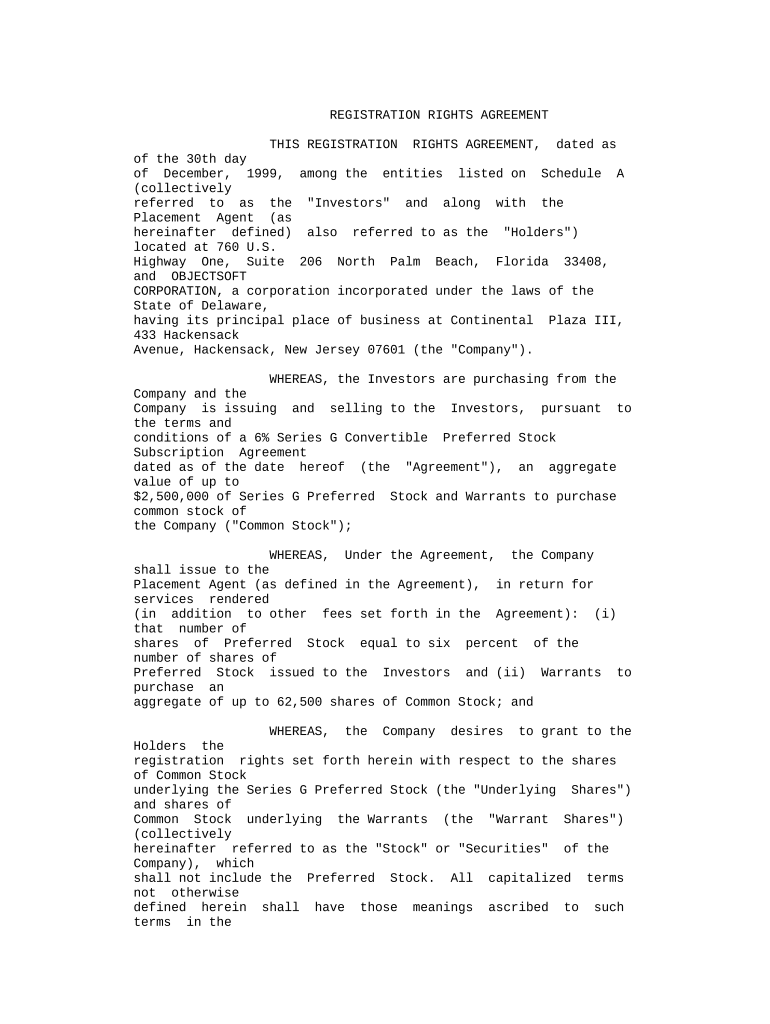
Registration Rights Agreement

This template is fully customizable. Edit the text, fill out the fields, and send it for signature. Give it a try!
Registration Rights Agreement

What a Registration Rights Agreement Is and when it matters

A Registration Rights Agreement is a contract between an issuer and its investors that sets out when and how the issuer must register securities for public resale. Common in private financings, it defines demand, piggyback, and shelf registration rights, allocation of offering expenses, and procedures for giving notice and cooperating with underwriters. The agreement preserves investor liquidity options and allocates the costs and responsibilities of preparing and filing registration statements with the SEC. Electronic execution is generally valid under ESIGN and state UETA statutes where adopted.

Why this agreement matters for issuers and investors

Registration rights protect investor liquidity, set clear filing obligations for the issuer, and allocate registration costs and indemnities. For issuers, they limit unexpected dilution or underwriting obligations and define timelines for SEC-driven processes.

Why this agreement matters for issuers and investors

Who commonly negotiates and signs these agreements

The agreement is typically reviewed by outside securities counsel before execution to align rights, costs, and timelines.

  • Venture capital and private equity investors who need a path to secondary liquidity or IPO exits.
  • Issuers and founding teams that must balance fundraising with future public offering obligations.
  • Corporate counsel and securities attorneys who draft registration mechanics and investor protections.

Typical signers and their roles

Lead Investor

An institutional lead investor negotiates registration thresholds and notice rights and often controls the decision to demand registration or exercise piggyback rights; counsel reviews indemnity and underwriting allocation provisions.

Issuer / CEO

The issuer or its authorized officer commits to filing required registration statements, coordinating with underwriters, and paying agreed expenses; the CEO or GC usually signs on behalf of the corporation.

Essential data fields found in the agreement

Parties: Full legal names
Securities Covered: Number and class
Registration Types: Demand | Piggyback | Shelf
Notice Periods: Days required
Expense Allocation: Who pays which fees
Governing Law: State selected

Legal and commercial risks of incomplete or incorrect agreements

Breach Exposure: Contract damages and specific performance
Indemnity Costs: Underwriting and claim liabilities
SEC Compliance: Delays or deficiencies in registration
Tax Consequences: Unexpected withholding or reporting
Investor Disputes: Litigation or arbitration risk
Reputation Harm: Market credibility impact

Common drafting and execution mistakes

  • Unclear definitions for which securities are covered, leading to later disputes about eligibility.
  • Missing or inconsistent notice procedures that create ambiguity about when a registration demand is properly given.
  • Failing to specify allocation of underwriting discounts and offering expenses, resulting in unexpected costs.
  • Not aligning governing law, forum selection, and arbitration clauses with investor expectations and enforceability.

Step-by-step: preparing and executing a Registration Rights Agreement

Follow a sequential process to ensure parties agree on triggers, timing, and cost allocation before signing.

  • 01
    Gather Documents: Collect cap table, stock certificates, and prior financing documents.
  • 02
    Define Triggers: Agree on demand, piggyback, and shelf registration triggers.
  • 03
    Allocate Costs: Specify who pays SEC, printing, and underwriting expenses.
  • 04
    Execute: Obtain authorized signatures and record the agreement in corporate books.

How the registration process typically proceeds after a demand

A demand triggers coordinated steps between issuer, counsel, and underwriters to prepare a registration statement and manage the offering process.

  • Demand Notice: Investor delivers written notice per the agreement's procedure.
  • Draft Registration: Issuer and counsel prepare an S-1 or other registration form.
  • SEC Review: SEC may issue comments; issuer responds and amends filings.
  • Effective Registration: Once effective, investors may sell subject to lock-up and underwriting terms.

Key clauses to include in a professional Registration Rights Agreement

A robust agreement balances investor liquidity with issuer flexibility by addressing triggers, procedures, and cost-sharing in clear, enforceable terms.

Demand Rights

Specify number of demands permitted, minimum holder thresholds, notice format, and timing to compel the issuer to file a registration statement.
Piggyback Rights

Allow holders to include shares in an issuer-initiated offering, with clear mechanics for participation and treatment of underwriter cutbacks.

Shelf Registrations

Define eligibility for shelf registration, criteria for takedown, and how underwriting and filing expenses are allocated.

Expenses and Indemnities

Allocate responsibility for registration, underwriting discounts, legal fees, and include mutual indemnities for misstatements or omissions.

Lock-up and Trading

Address post-registration lock-up periods, integration with underwriting agreements, and any transfer restrictions.

Remedies and Governing Law

State available remedies (injunctive relief, specific performance), choice of law, and dispute resolution mechanisms.

Typical e-document workflow settings for online completion

Configure the digital workflow to capture required approvals, signatures, and supporting attachments before recording the executed agreement.

Field Configuration
Signature Order Sequential signing by issuer then investors
Authentication Email + SMS code for investor verification
Attachments Cap table and stock certificates required
Audit Trail Retain IP, timestamp, and action log

Digital signing and platform requirements

Ensure the chosen eSignature provider complies with ESIGN and UETA, supports audit trails, and can export court-admissible evidence of consent and signer attribution.

  • File formats: PDF and DOCX accepted
  • Integrations: CRM and cloud storage
  • Authentication: Email, SMS, or KBA

Typical timelines and response periods in practice

Agreements usually set explicit notice and response periods; standard durations help avoid disputes during the SEC filing process.

Demand Notice Period:

Commonly 60–90 days for issuer to file after notice

SEC Comment Cycle:

SEC review often takes 30–90 days depending on complexity

Underwriting Lock-up:

Lock-ups typically 90–180 days post-offering close

Piggyback Cutback:

Pro rata or underwriter-directed allocation applied immediately

Document Retention:

Retain signed agreements for at least 3–7 years

Key milestones from notice to effective registration

A concise milestone sequence helps parties track obligations from demand to post-registration activities.

01

Execution

Agreement signed and recorded in corporate records.

02

Demand Notice

Investor delivers written demand per clause requirements.

03

SEC Filing

Issuer prepares and files registration statement with SEC.

04

Registration Effective

Once effective, holders may sell pursuant to offering terms.

Frequently asked questions about Registration Rights Agreements

Answers to common legal and practical questions encountered when negotiating, signing, and enforcing registration rights.


Need help? Contact support

be ready to get more
Join over 28 million airSlate SignNow users