Establishing secure connection…Loading editor…Preparing document…

Arkansas Personal Representative Form

This template is fully customizable. Edit the text, fill out the fields, and send it for signature. Give it a try!
Arkansas Personal Representative Form

What the Arkansas Personal Representative Form Is and When It’s Used

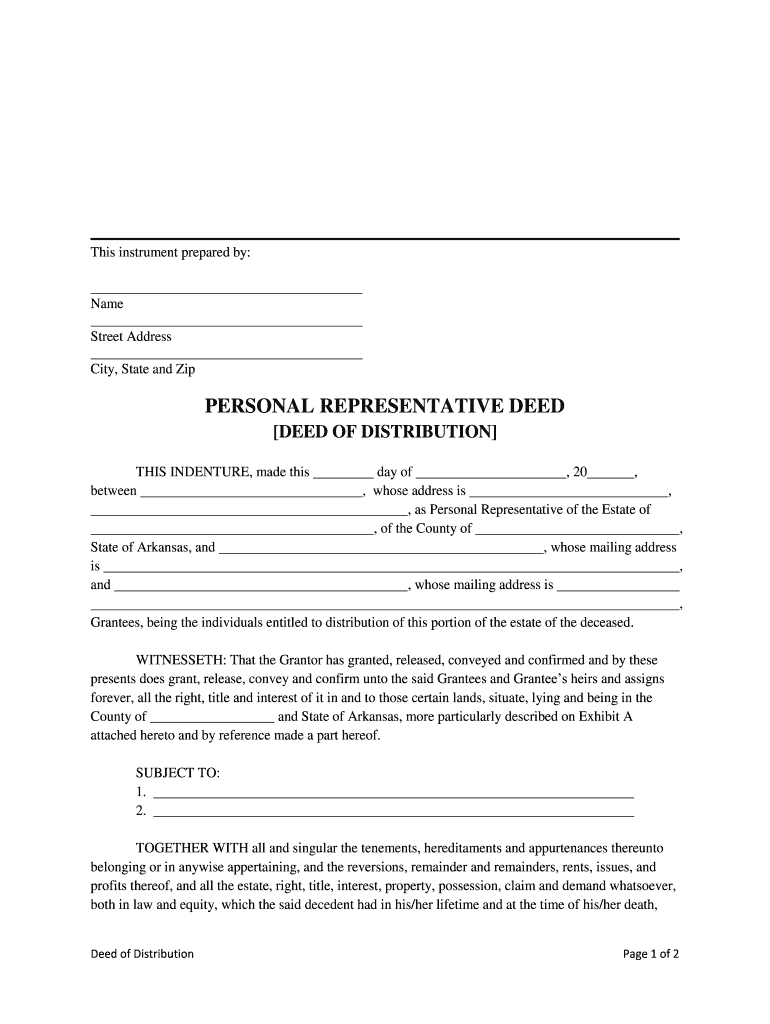
The Arkansas Personal Representative Form is a probate filing used to identify and document the person appointed to administer a decedent’s estate in Arkansas courts. It captures the decedent’s identifying details, the appointed personal representative’s contact information, and the case or docket reference so the county probate clerk can open or continue administration. This form is commonly filed after a will is presented or when an interested party petitions the court to appoint an administrator where no will exists; local clerk procedures determine acceptance and subsequent steps.

Why Completing This Form Matters

Completing the Arkansas Personal Representative Form correctly establishes legal authority to act for an estate, enables access to assets, and triggers required notices and inventory duties under Arkansas probate rules.

Why Completing This Form Matters

Who Typically Prepares and Submits the Form

The form is usually prepared by the nominated personal representative, probate attorneys, or an estate executor acting for the decedent’s beneficiaries.

  • Personal representatives or family members initiating probate or estate administration on behalf of a decedent.
  • Estate or probate attorneys filing documents and managing court communications for clients.
  • Court clerks and title companies that require proof of appointment to transfer assets or clear title.

Confirm local county clerk requirements before filing: counties may have additional cover sheets, fee schedules, or required supporting documents.

Representative Roles Who Interact with the Form

Personal Representative

An appointed individual (executor or administrator) authorized by the court to collect assets, pay debts, and distribute property according to the will or intestacy rules; duties include filing inventories, receipts, and accountings during estate administration.

Estate Attorney

A lawyer preparing the petition, personal representative form, and related filings; the attorney ensures compliance with Arkansas probate procedures, helps schedule hearings, and assists with creditor notice and estate accounting matters.

Security and Compliance Basics for Form Handling

Encryption in transit: TLS 1.2/1.3
Encryption at rest: AES-256
Audit trail: Signed event log
HIPAA readiness: BAA available
Record integrity: Tamper-evident PDF
Authentication options: Email, SMS, KBA

Step-by-Step: Completing and Submitting the Form

Follow these sequential actions to prepare the Arkansas Personal Representative Form and move it through probate intake efficiently.

  • 01
    Gather documents: Collect death certificate, will (if any), and identification for the proposed representative.
  • 02
    Complete form: Enter decedent details, representative information, and case/county data accurately.
  • 03
    Notarize/sign: Sign before a notary if the county requires notarized affidavits or self-proving affidavits.
  • 04
    File with clerk: Submit to the county probate clerk with required filing fee and supporting documents.

How the Filing and Approval Process Typically Proceeds

The filing moves through a short sequence: clerk intake, docketing, possible hearing, and issuance of letters testamentary or administration grant.

  • Intake and docketing: Clerk accepts documents and assigns a case number.
  • Initial review: Clerk checks for completeness and required attachments.
  • Probate hearing: Court may schedule a hearing if contested or required by statute.
  • Issuance: Court issues official letters granting authority to the representative.

Digital Workflow Settings for Online Completion and eSubmission

Configure your digital workflow to match county requirements and safeguard signer identity when submitting electronically.

Field | Setting Purpose | Configuration
Authentication Email link + SMS code recommended
Signature type Allow drawn or typed signatures; require signer attribution
Notary handling Reserve for in-person or RON session per state rules
Delivery copies Auto-send completed PDF + audit trail to parties

Technical and Integration Considerations for eFiling

Use a platform that supports the file formats and authentication levels accepted by your county clerk and local counsel.

  • Accepted formats: PDF and DOCX
  • Integrations: Common with case management
  • Authentication: Email, SMS, or KBA

Ensure the platform can produce a tamper-evident PDF with an audit trail and supports notarization workflows (in-person or RON) if the clerk requires notarized originals.

Typical Timelines and Clerk Processing Expectations

Processing times and deadlines vary by county; file promptly and check the local probate clerk’s published timelines for intake, hearing scheduling, and required follow-up filings.

Initial intake time:

County clerks typically review and docket filings within business days; exact timing varies locally.

Hearing scheduling:

If a hearing is required, scheduling depends on court calendars and may take several weeks.

Inventory deadlines:

Statutory inventory deadlines differ by jurisdiction; consult local rules or counsel.

Notice periods:

Creditors and beneficiaries have statutory notice windows per state probate law.

Final accounting:

Accountings and closing schedules follow local probate rules and may require court approval.

Key Milestones from Filing to Authority Issuance

Track these milestones to monitor progress and meet subsequent obligations during estate administration.

01

Document Preparation

Complete form accurately and assemble certified death certificate and will.

02

Notarization

Obtain notary or RON session if required by county rules.

03

Filing with Clerk

Submit form, pay fees, and receive a case number.

04

Issuance of Letters

Court issues letters testamentary or of administration granting authority.

Common Preparation Errors to Avoid

  • Using informal or nickname variations of names that do not match death certificates or IDs causes clerk inquiries and delays.
  • Failing to attach the certified death certificate or the original will when required may result in rejection at intake.
  • Missing notarization or incorrect notary acknowledgements create processing errors that often require re-filing or supplemental affidavits.
  • Incorrect county or court information directs the file to the wrong jurisdiction and can require transfer or re-filing.

Consequences of Incorrect or Late Filings

Processing Delay: Administration postponed
Contested Appointment: Increased litigation risk
Creditor Claims: Missed notices raise exposure
Bond Requirements: Court may require bond
Fee Forfeiture: Additional filing fees
Record Rejection: Clerk may refuse acceptance

Core Sections Found on a Professional Arkansas Personal Representative Form

A complete form organizes decedent details, appointment data, representative contact information, and attestation elements so the court can evaluate authority and jurisdiction.

Decedent Identification

Full legal name, last residence, date of death, and any aliases used; these fields confirm identity and link the case to official death records and assets.
Case and Venue

County, court name, and docket or petition number if already assigned; accurate venue information ensures the filing is routed to the correct probate clerk.

Representative Details

Appointee’s full name, contact information, relationship to decedent, and mailing address for notices and estate correspondence during administration.

Appointment Basis

Declaration whether appointment is under a will (executor) or intestacy (administrator), and any related statutory citations or authority references.

Security and Bond

Space to note bond amount or surety requirements if the court orders a bond to protect creditors and beneficiaries during administration.

Attestation and Notary

Signature blocks, dates, and notary acknowledgment area when the county requires notarized affidavits or self-proving affidavits attached to the filing.

Supporting Documents Commonly Filed with the Form

Attach required supporting materials to reduce clerk follow-up and accelerate docketing; confirm county-specific attachments in advance.

Certified Death Certificate

A certified copy evidencing date of death; nearly all probate filings require this document to verify the decedent’s passing.

Original Will

If one exists, file the original will or an attested copy as required by the court so the judge can determine testamentary appointments.

Letters Testamentary/Administration

Issued by the court after appointment, these letters prove the representative’s authority to access bank accounts and transfer assets.

Inventory and Appraisals

Preliminary inventory or schedules of assets may be requested; include appraisals for valuable items to support estate valuation.

Practical Tips for Accurate and Efficient Completion

Apply these best practices to reduce errors, avoid re-filing, and support timely probate administration.

Use verified names
Match names exactly to the death certificate and legal ID. Consistency reduces clerk queries and identity verification delays during probate intake.
Include certified copies
Attach certified death certificate and original will where required. Certified documents prevent requests for re-submission and speed docketing.
Confirm notarization
Verify whether the county requires notarized signatures or accepts RON sessions; missing notarization is a common cause of rejection.
Keep clear records
Retain a dated copy of everything filed and ensure the representative has certified copies of issued letters for third-party transactions.

eSignature Vendor Comparison for Completing and Filing the Form

Compare starting cost and core capabilities for high-level vendor selection when choosing an eSignature platform to complete, notarize, or distribute estate documents.

signNow DocuSign Adobe Sign PandaDoc HelloSign
Starting Price $8/user/mo $15/user/mo $14/user/mo $19/user/mo $15/user/mo
Free Trial 7-day free trial Varies by plan Varies by plan Varies by plan Varies by plan
Bulk Send Yes Yes Yes Yes No
Audit Trail Yes Yes Yes Yes Yes
Envelope Cap No cap 100 envelopes/user/year Varies Varies Varies

Frequently Asked Questions About the Arkansas Personal Representative Form

Answers to common questions about completion, notarization, filing, and next steps to help avoid frequent errors and processing delays.


Need help? Contact support

be ready to get more
Join over 28 million airSlate SignNow users