Establishing secure connection…Loading editor…Preparing document…

Assumption Agreement

This template is fully customizable. Edit the text, fill out the fields, and send it for signature. Give it a try!
Assumption Agreement

What an Assumption Agreement Is and when it applies

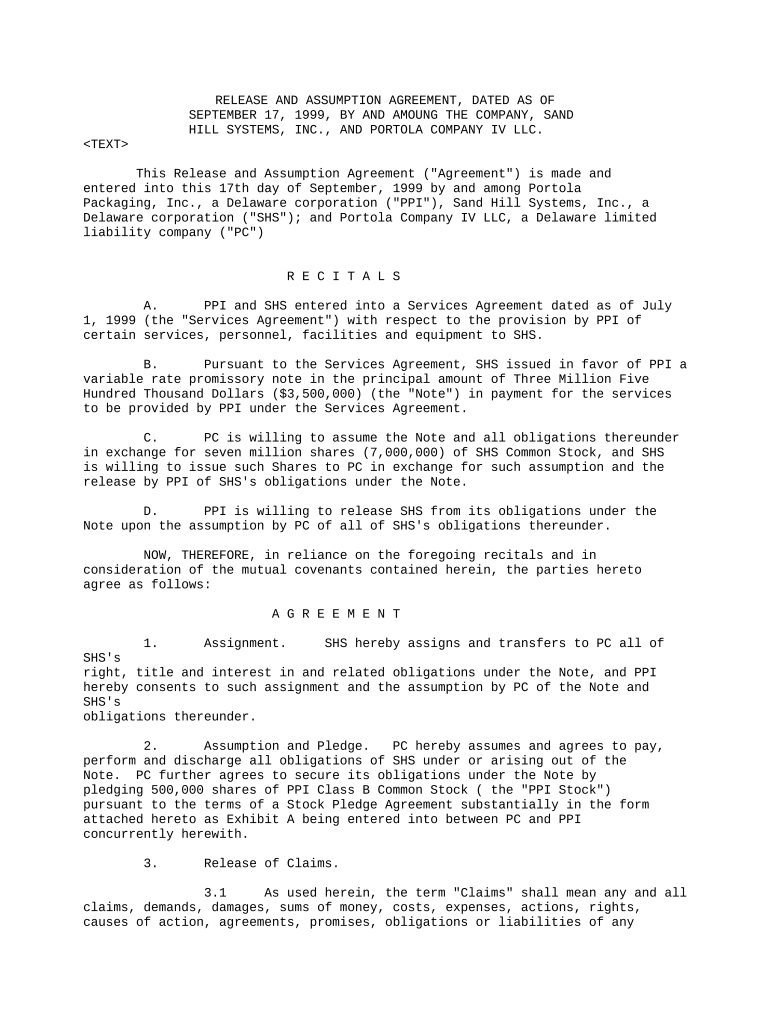
An Assumption Agreement is a written contract that transfers one party's contractual obligations and related rights to another party while leaving the original contract in effect. Commonly used for lease assignments, loan assumptions, and service contracts, it identifies the original obligor, the assignee, and the obligee or creditor; specifies which obligations are assumed; and records any consideration, lender or counterparty consent, and effective date. The agreement typically addresses representations, warranties, indemnities, conditions precedent, and remedies for breach. It may require notarization or creditor approval depending on the contract type and jurisdiction.

Why an Assumption Agreement matters for parties and creditors

An Assumption Agreement clarifies who will perform contractual duties and who bears liability after a transfer, reduces ambiguity for creditors, and documents consent and consideration. It protects all parties by recording the scope of assumed obligations and any release or continuing liability provisions.

Why an Assumption Agreement matters for parties and creditors

Typical parties and stakeholders who use Assumption Agreements

Assumption Agreements are used by persons and organizations transferring contract responsibility, their counterparties, and creditors who must approve the transfer.

  • Transferring party (assignor) — the original obligor who wants to transfer duties to another party.
  • Assuming party (assignee) — the entity accepting obligations and any related contingent liabilities.
  • Counterparty or creditor — landlord, lender, or service recipient whose consent and release may be required.

Essential elements to include in a professional Assumption Agreement

A complete Assumption Agreement names the parties, defines the scope of obligations assumed, sets the effective date, states consideration and releases, includes representations, and details indemnity and remedies.

Parties

Full legal names and entity types for assignor, assignee, and obligee; include state of formation and authority to sign.
Assumed Obligations

A precise list or clear reference to the original contract sections being assumed, including payment terms, performance duties, and deadlines.

Effective Date

Exact date when obligations transfer and who is responsible for performance and notices from that date forward.

Consideration

Money, indemnity, or other value provided for the assumption; specify amounts, payment schedule, and tax treatment if applicable.

Representations

Statements that parties are authorized, the original contract is in force, and no defaults exist unless disclosed and accepted.

Indemnity & Release

Terms allocating post-transfer liability, any release of assignor, and surviving obligations or guaranties retained by original parties.

Core data points required on the Assumption Agreement

Signatories: Authorized names and titles
Dates: Execution and effective dates
Original Obligor: Contract ID and original party
Creditor Consent: Written approval status
Consideration: Amount or description
Notary Block: Acknowledgement if required

Principal risks and legal consequences to watch for

Unenforceability: Missing consent may void transfer
Tax Exposure: Unreported consideration can trigger tax audits
Liability Shift: Assignee may inherit unknown claims
Lender Acceleration: Loan terms may permit immediate default remedies
Fraud Allegations: Misstatements can lead to civil or criminal claims
Recording Issues: Real estate transfers may need recording

Common drafting and execution mistakes to avoid

  • Failing to obtain written consent from a lender or landlord, which can leave the assignor liable despite an apparent transfer.
  • Using vague language to describe assumed obligations instead of referencing specific contract sections and dates, which leads to disputes over scope.
  • Neglecting to confirm signatory authority or corporate approvals, creating challenges to enforceability and possible invalidation.
  • Overlooking recording or filing requirements for property-related obligations, which can defeat priority or notice to third parties.

Step-by-step: completing an Assumption Agreement

Follow these sequential steps to prepare, review, and execute an enforceable Assumption Agreement.

  • 01
    Identify contract: Reference original agreement and key dates
  • 02
    Describe obligations: List specific duties and liabilities to be assumed
  • 03
    Obtain consents: Get written creditor or counterparty approval
  • 04
    Execute and retain: Sign, notarize if required, and distribute copies

How the assumption process typically proceeds

Execution involves coordination between assignor, assignee, and the counterparty; these steps summarize the practical flow.

  • Drafting: Prepare agreement aligned to original contract terms
  • Review: Counterparty and counsel review terms and risks
  • Consent: Obtain written approvals or lender waivers
  • Completion: Sign, notarize if needed, and provide executed copies

Execution and record-keeping features to include

Design the document for clear execution, evidence, and future retrieval to reduce disputes and support enforcement.

Execution Blocks

Include signature lines with printed names, titles, corporate seals if required, and spaces for dates to show when each party executed the agreement.

Notary and Witness

If state or contract requires, add a notary acknowledgement and witness lines. Real property assumptions commonly need recording and notarization.

Distribution Log

Record who received executed copies, including counsel and any registering authority, to establish notice and mitigate later disputes.

Version Control

Mark draft status, track revisions, and retain a signed final file in PDF/A or other stable format for long-term accessibility.

Drafting tips to reduce risk and speed approvals

Use plain language, precise references, and clear consent mechanics to avoid ambiguity and accelerate counterparty acceptance.

Reference original contract sections
Cite specific sections, dates, and exhibit numbers so there is no confusion about which duties and payment terms transfer to the assignee.
Get express creditor consent
Secure written waivers or consents that explicitly release or limit the assignor’s continuing liability to prevent later acceleration or claims.
Address future defaults
Specify whether the assignor remains liable for pre-existing defaults and whether the assignee assumes cure obligations or indemnifies for past breaches.
Confirm authority and corporate approvals
Document board or member approvals for business entities and attach resolutions or certificates where needed to prove signatory authority.

Typical timing and deadlines to track during an assumption

Monitor deadlines for consent, effective date, recording, and any regulatory filings to ensure a smooth transfer and avoid penalties.

Consent Deadline:

Obtain creditor or landlord approval before the effective date of assumption

Effective Date:

Agree and record the date when obligations and notices transfer

Recording Deadline:

Record deeds or finance documents as required by jurisdictional rules

Tax Reporting:

Report consideration or transfers per tax rules; consult IRC for filing timing

Notice Periods:

Comply with contract notice windows for assignment or transfer communications

Comparing signNow and other eSignature vendors for Assumption Agreements

Basic pricing and compliance capabilities vary across eSignature vendors; the table shows core plan and feature differences relevant to legally sensitive documents.

signNow DocuSign Adobe Sign PandaDoc HelloSign
Starting Price $8/user/mo $15/user/mo $14/user/mo $19/user/mo $15/user/mo
Free Trial 7-day free trial Varies by plan Varies by plan Varies by plan Varies by plan
Bulk Send Yes Varies by plan Varies by plan Varies by plan Varies by plan
Audit Trail Yes Yes Yes Yes Yes
HIPAA Compliant Yes Yes Yes No No

Frequently asked questions about Assumption Agreements

Answers to common questions about enforceability, consents, electronic signing, notarization, and steps to revoke or amend assumptions.


Need help? Contact support

be ready to get more
Join over 28 million airSlate SignNow users