Establishing secure connection…Loading editor…Preparing document…

Authority Letter

This template is fully customizable. Edit the text, fill out the fields, and send it for signature. Give it a try!
Authority Letter

What an Authority Letter Is and when it’s used

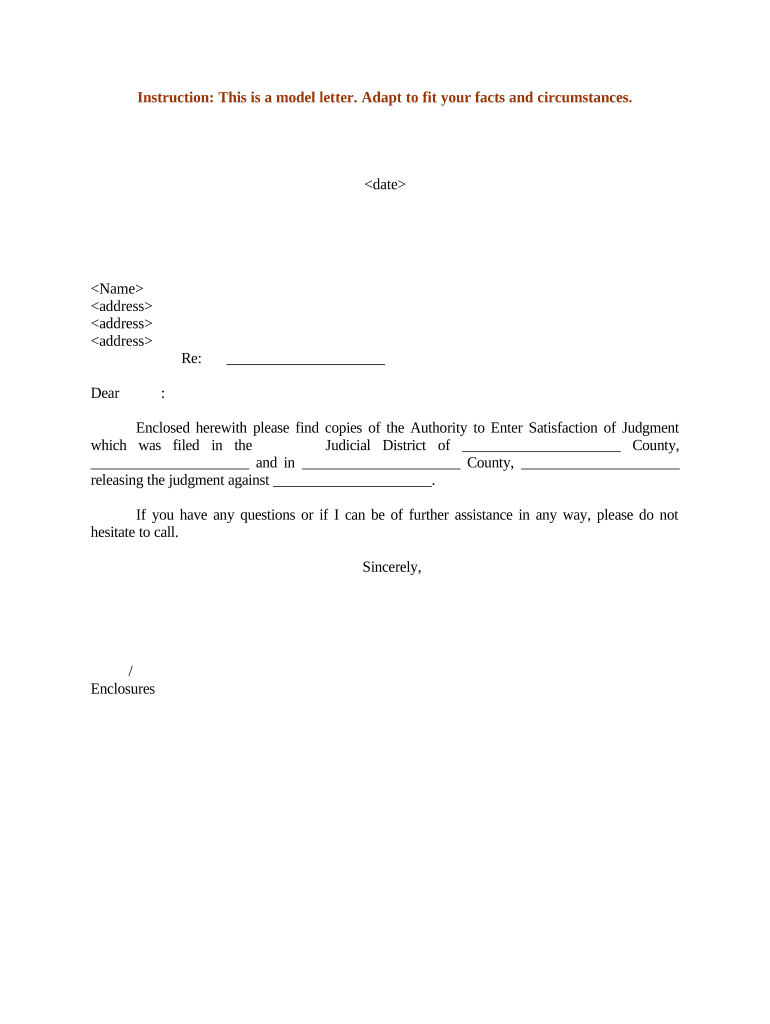
An Authority Letter is a written document that authorizes a named person or organization to act on behalf of the signer for specified tasks, transactions, or communications. Typical uses include authorizing an agent to collect documents, represent the signer before a government agency or financial institution, or perform limited business transactions. Authority Letters range from narrowly scoped authorization to broad agency powers but are not the same as a durable power of attorney unless expressly drafted as such. Electronic execution is generally accepted under federal ESIGN law (15 U.S.C. ch. 96) and state UETA statutes when intent, consent, attribution, and retention requirements are met.

Why an Authority Letter matters for transactions and recordkeeping

An Authority Letter creates clear, written permission for third parties to act on a signer’s behalf, reducing delays and enabling faster completion of administrative tasks, banking requests, and formal submissions.

Why an Authority Letter matters for transactions and recordkeeping

Who commonly issues and receives Authority Letters

Authority Letters are used by individuals and organizations across finance, real estate, legal, and healthcare settings; they make delegation explicit and auditable.

  • Individuals and small-business owners granting access to banks, post offices, or government agencies to act on their behalf.
  • Corporate administrators and in-house legal teams delegating limited duties to vendors, consultants, or contractors.
  • Banks, title companies, and government offices that require a written authorization to release records, process transactions, or accept instructions.

Representative signer and recipient profiles

Grantor — Individual

A private person granting limited handling authority (for example, to collect personal documents). Ensure the grantor’s full legal name and date of birth match government ID to prevent rejection by banks or government agencies.

Grantor — Business

An authorized officer or manager signs on behalf of a company. Include the signer’s job title, corporate capacity, and a company letterhead or corporate stamp where required to prove authority.

Core parts of a professional Authority Letter

A complete Authority Letter combines identity, scope, timing, and execution details to make delegation precise and enforceable.

Grant of Authority

A clear sentence naming the authorized party and the exact actions they may perform, using specific verbs (e.g., 'collect', 'sign', 'represent') to avoid ambiguity.
Scope and Limits

Define geographic, transactional, and subject-matter limits (for example, 'for tax year 2025 only' or 'for closing documents related to 123 Main St.'), plus any monetary caps.

Effective and Expiration Dates

State the date the letter begins and ends. Include a condition-based end if applicable (for example, 'until revoked in writing' or 'until transaction completed').

Identification

Provide full legal names, addresses, and a government ID reference (driver’s license or passport number) for the grantor and authorized agent to ease authentication.

Signature and Execution

Include a signature block for the grantor with printed name, capacity, date, and a place for witness or notary information where required by the recipient.

Notary Acknowledgement

If the recipient requires notarization, include a standard notary block or space for an online notarization record; specify whether RON is acceptable if used.

Security and compliance considerations to include

Encryption: TLS 1.2/1.3 in transit; AES-256 at rest
Audit Trail: Timestamp, IP, and action log for each signer
HIPAA Support: BAA available where protected health data is present
ESIGN / UETA: Meets ESIGN and UETA legal-validity tests
Certifications: SOC 2 Type II, ISO 27001, PCI DSS
Accessibility: WCAG 2.0 Level AA compatibility

Step-by-step: completing and delivering an Authority Letter

Follow these practical steps to prepare, execute, and deliver an Authority Letter so recipients can accept and act on it without delay.

  • 01
    Prepare Document: Draft the letter with clear scope, dates, and identification fields.
  • 02
    Verify Identity: Collect government ID details for the grantor and authorized party to include in the letter.
  • 03
    Sign and Notarize: Sign in presence of required witness or notary; use RON if the recipient accepts it.
  • 04
    Deliver to Recipient: Send the executed letter to the institution with any required supporting documents.

How to set up a digital signing workflow for an Authority Letter

Configure an online workflow so signers authenticate correctly, the document is stored securely, and recipients receive a verifiable record.

Field Configuration
Authentication Email link plus optional SMS code or knowledge-based verification
Signer Order Set grantor to sign first, then optional witnesses/notary
Template Create reusable template with fixed fields for ID and notary
Notifications Enable email confirmations and recipient delivery receipts

Where to send an executed Authority Letter and how recipients process it

Different recipients accept Authority Letters under different verification policies; prepare the package to match recipient requirements.

  • Bank or Title Company: Submit original or notarized copy per their policy; some accept e-signed PDFs with audit trail.
  • Government Agency: Follow agency-specific submission channels and identification rules; include referenced case or account numbers.
  • Counterparty or Vendor: Deliver signed copy and retain proof of delivery to avoid later dispute about authority.
  • Notary/Remote Notary: If notarization required, schedule in-person or remote online notarization per state rules.

Digital signing and file format considerations

When eSigning an Authority Letter, use secure platforms that support standard audit trails and common file formats.

  • File Formats: PDF and DOCX widely accepted; PDF/A for archival
  • Integrations: Works with Salesforce, Microsoft 365, NetSuite, Google Workspace
  • eSign Capability: Audit trail, conditional fields, and optional advanced signer auth

Typical timing and processing expectations for Authority Letters

Processing times depend on recipient validation requirements; plan for identity checks, notarization, and internal approval steps.

Immediate Use:

Some recipients accept immediately upon receipt and verification

Bank Processing Time:

Often 1–3 business days after validation

Notarization Scheduling:

Allow 1–5 business days to schedule in-person or RON session

Agency Response:

Government agency action may take weeks depending on complexity

Revocation Notice:

Effective on receipt unless the letter specifies otherwise

Key milestones from drafting to acceptance

Track these stages to ensure the Authority Letter is valid, delivered, and relied upon correctly by recipients.

01

Draft Complete

Document includes names, scope, dates, and ID details for signers.

02

Execution and Notarization

Sign in front of required witness or notary; complete any RON session recordings.

03

Delivery to Recipient

Send the executed letter and supporting IDs or corporate resolutions as requested.

04

Recipient Verification

Recipient confirms authority and processes the requested action or transaction.

Common mistakes to avoid when preparing an Authority Letter

  • Vague scope language that allows unintended actions; always list specific permitted acts and exclusions.
  • Mismatched names or missing ID details leading to recipient rejection or delays in processing.
  • Skipping notarization when the recipient requires it, or using an unsupported RON provider without recipient approval.
  • Failing to record revocation instructions or forgetting to notify all parties when authority is rescinded.

Consequences of an incorrect or improperly executed Authority Letter

Rejection: Document refused by recipient
Transaction Delay: Processing or closing postponed
Financial Liability: Losses if agent acts beyond authority
Tax Penalties: $60–$330 per form for late 1099 filings
Legal Challenge: Court disputes over authority
Recordkeeping Failure: Noncompliance with retention rules

Real use examples showing how Authority Letters work in practice

These short examples show typical scenarios and practical outcomes when a clear Authority Letter is used.

Optica Ventures — Document Pickup

A founder authorized a third party to collect corporate filings

  • Agent presented signed letter and ID
  • The county office accepted the authorization and processed filings same day, avoiding a missed deadline and extra travel costs.

Martin Properties — Closing Representation

A property owner granted authority to a property manager to sign closing documents

  • Manager signed under a notarized authority letter
  • The title company accepted the notarized letter and completed the closing without owner presence.

Typical eSignature vendor comparison for executing Authority Letters

Common procurement criteria for eSignature tools, shown with signNow first. Confirm each vendor’s current plan details before purchase.

signNow DocuSign Adobe Sign PandaDoc HelloSign
Starting Price $8/user/mo $15/user/mo $14/user/mo $19/user/mo $15/user/mo
Free Trial 7-day free trial, no credit card Varies by vendor Varies by vendor Varies by vendor Varies by vendor
Bulk Send Yes (Premium plan) Varies Varies Varies Varies
Audit Trail Yes Yes Yes Yes Yes
HIPAA Compliant Yes (BAA available) Varies Varies Varies Varies

Frequently asked questions about Authority Letters

Answers to common questions about validity, notarization, eSigning, revocation, and supporting evidence for Authority Letters.


Need help? Contact support

be ready to get more
Join over 28 million airSlate SignNow users