Establishing secure connection…Loading editor…Preparing document…

California Statutory Form

This template is fully customizable. Edit the text, fill out the fields, and send it for signature. Give it a try!
California Statutory Form

What the California Statutory Form Is

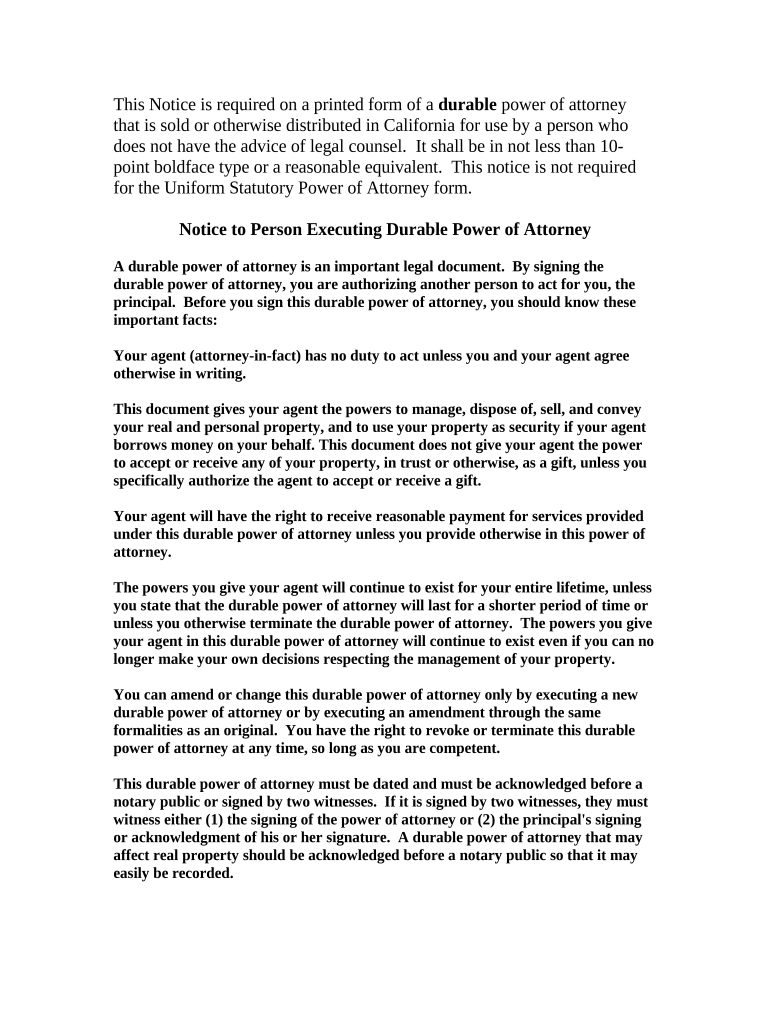
The California Statutory Form is a standardized, state-specific legal document used to record statutory disclosures, acknowledgments, or filings required under California law. It provides a consistent format for data elements such as party names, effective dates, notices, and prescribed language that satisfy statutory requirements. Agencies, courts, businesses, and individuals may use it for compliance, recordkeeping, or transactional purposes when California statute or regulation prescribes a particular form or content. Proper completion ensures clearer agency processing, reduces avoidable rejections, and supports legal enforceability under ESIGN and California statutes when completed and retained correctly.

Why Accurate Completion Matters

Using a California Statutory Form helps ensure statutory language and data are presented in the required format, reducing administrative delays and legal uncertainty. It clarifies obligations, captures required disclosures, and supports proper retention and auditing for compliance with ESIGN and state recordkeeping rules.

Why Accurate Completion Matters

Who Commonly Uses This Form

Government agencies, regulated businesses, attorneys, and private individuals complete California Statutory Forms for statutory compliance and recordkeeping.

  • State and local agencies that require standardized submissions for licensing, enforcement, or reporting purposes.
  • Businesses subject to California statutes needing standardized disclosures, notices, or formal acknowledgments.
  • Attorneys and compliance teams preparing filings, certifications, or client acknowledgments under California law.

Key Roles That Interact With the Form

Agency Official

A county or state official authorized to accept statutory filings. Responsibilities include verifying required fields, confirming statutory language, and recording submissions in official files. Accuracy prevents administrative rejection and supports legal enforceability during audits or enforcement actions.

Authorized Signatory

An individual with authority to execute statutory forms on behalf of an organization. Must match corporate records or power-of-attorney documentation; mismatched signatures can trigger rejection or require resubmission and may affect statutory deadlines and legal effectiveness.

Step-by-Step: Completing the Form

Follow these sequential steps to prepare, authenticate, sign, and submit a California Statutory Form correctly.

  • 01
    Gather Data: Collect names, addresses, IDs, and any statutory text required.
  • 02
    Populate Form: Enter required fields and attach supporting exhibits.
  • 03
    Authenticate: Verify signer identity using chosen authentication methods.
  • 04
    Submit: Sign, timestamp, and file with the appropriate agency or counterparty.

Typical Electronic Submission Workflow

This overview shows typical steps to complete and submit a California Statutory Form electronically, including authentication and record capture.

  • Upload: Submit the form PDF or DOCX to the signing platform.
  • Prepare: Place required fields, checkboxes, and signature blocks.
  • Authenticate: Use email, SMS, or advanced authentication as required.
  • Finalize: Sign, timestamp, and deliver copies with audit trail.

Online Configuration Checklist

Typical online configuration settings for completing, authenticating, and routing a California Statutory Form through a signing platform.

Field Configuration
Signers Add roles and signing order, email or guest links.
Authentication Select email, SMS code, or KBA as required.
Conditional Fields Show or hide sections based on answers.
Retention Policy Set automatic archival and access controls.

Platform and Integration Considerations

Ensure the platform supports the document format, required authentication, and retention for statutory compliance.

  • Formats: PDF and DOCX file formats supported.
  • Integrations: Salesforce, NetSuite, Google Workspace integrations.
  • Authentication: Email, SMS, SSO, or KBA options.

Core Sections a Professional Form Should Include

A professional California Statutory Form includes specific sections that match statutory requirements, capture required data points, and assist agencies and parties in efficient processing.

Prescribed Language

Include exact statutory or regulatory wording when required by statute; altering mandated language can invalidate the submission or prompt mandatory corrections by the receiving agency.
Party Identification

Full legal names, business entities, and contact information should match government records to avoid identity mismatches and filing rejections during verification.

Effective Date

Record the date obligations begin using MM/DD/YYYY format; this date can affect statutory timelines, notice periods, and limitation triggers.

Notice Sections

Clear notice text and checkboxes for statutory disclosures ensure recipients receive required information and that the form meets compliance thresholds.

Signature Blocks

Designate signatory roles, printed names, titles, and dates; ensure signatures align with authority documents or corporate records for enforceability.

Attachments

Attach exhibits, affidavits, or supporting documents referenced in the form; omitted attachments commonly cause processing delays or rejection.

Support Features That Improve Reliability

Support features such as templates, conditional logic, and exportable records improve completion accuracy, reuse, and legal defensibility in electronic workflows.

Template Controls

Lock required fields, preset mandated statutory language, and enforce template versioning controls to prevent unauthorized edits and ensure consistent submissions across users and locations.

Conditional Logic

Use conditional fields to display relevant sections only when criteria are met, reducing signer confusion and preventing improper or incomplete answers that could invalidate the filing.

Audit Export

Provide an exportable audit trail that includes timestamps, IP addresses, signer identity, and a certificate of completion to support legal enforceability and compliance audits.

Format Support

Accept and produce standardized PDF/A and DOCX outputs to meet agency submission formats and maintain a reproducible record suitable for long-term archival.

Best Practices to Reduce Errors and Delays

Follow these practical steps to reduce errors and ensure the California Statutory Form is accepted and legally effective.

Verify statutory language before editing
Confirm that any language required by statute appears verbatim. Do not paraphrase or abbreviate mandatory phrases. If the statute prescribes exact wording, altering text may render the form noncompliant and subject to return or rejection.
Match names to official records
Enter the full legal names exactly as they appear on registrations, tax records, or government-issued identification. Minor differences or abbreviations can trigger identity verification failures and processing delays.
Use correct dates and formats
Enter dates using MM/DD/YYYY and ensure consistency across the document. The effective date affects notice periods and statutory deadlines; mistakes can change legal rights or require corrective filings.
Retain completed originals securely
Store signed originals and exportable audit logs in secure systems with access controls. Retain per applicable federal and state retention schedules to support audits, litigation, or regulatory inquiries.

Common Preparation Challenges

  • Failing to include prescribed statutory language or checkboxes often causes agency rejection and requires resubmission, adding processing time and potential administrative penalties.
  • Using inconsistent party names or abbreviations creates mismatches with official records, which can delay acceptance and complicate legal enforcement.
  • Missing dates, unsigned sections, or incomplete attachments commonly trigger requests for clarification and prolong the approval or filing process.
  • Relying on unverified electronic signing methods without consent disclosures risks noncompliance with ESIGN requirements for consumer-facing transactions.

Potential Penalties and Legal Risks

Form Rejection: Processing delayed or returned.
Civil Penalties: Statutory fines may apply.
Tax Penalties: IRC §6721 penalties for late information returns.
I-9 Violations: Fines $281–$2,789 per violation.
HIPAA Exposure: 6-year retention obligations trigger penalties.
Invalid Execution: May void legal effect.

Key Filing and Reporting Deadlines

Key filing and response deadlines that commonly apply when statutory forms trigger tax or reporting obligations.

W-9 Provision:

Provide to payer upon request; no fixed filing deadline.

1099-NEC Filing:

Recipient and IRS due Jan 31 each year.

1099-MISC Filing:

Recipient due Jan 31; IRS paper Feb 28, electronic Mar 31.

Individual Tax Return:

Form 1040 due April 15; extension to Oct 15 with Form 4868.

I-9 Retention:

Keep for 3 years after hire or 1 year after termination.

Milestones From Preparation to Retention

Sequential milestones show the typical lifecycle from preparing a California Statutory Form through final filing and long-term retention.

01

Prepare Document

Collect required data, statutory language, and attachments.

02

Internal Review

Legal or compliance review for accuracy and completeness.

03

Authenticate and Sign

Signatures collected, authentication verified, and audit captured.

04

File and Retain

Submit to agency or counterparty and archive per policy.

eSignature Vendor Comparison

Pricing and feature overview for common eSignature vendors to consider for California Statutory Form workflows, with signNow listed first.

signNow DocuSign Adobe Sign PandaDoc HelloSign
Starting Price $8/user/mo $15/user/mo $14/user/mo $19/user/mo $15/user/mo
Free Trial 7-day free trial; no credit card required Free trial availability varies by region and plan Free trial options vary by plan and license Free trial available on select plans Limited free trial or free tier varies
Bulk Send Yes; available on Business Premium plan Yes; available on many paid plans Yes; available on enterprise plans Yes; built-in bulk send features Limited or add-on features only
Audit Trail Yes; audit trails and completion certificates Yes; audit trails and certificates Yes; audit trails and certificates Yes; audit trails and certificates Yes; audit trails and certificates
HIPAA Compliant Yes; HIPAA capable with BAA Yes; HIPAA capable with BAA Yes; HIPAA capable with BAA No; HIPAA support not offered No; HIPAA support not offered
Envelope Cap No envelope cap; unlimited per plan Limited to 100 envelopes per user per year Varies by plan and license limits Varies by plan and usage allowances Varies; consult vendor plan details

Practical Examples From Organizations

Real-world examples illustrate common workflows and outcomes when organizations use an eSignature platform for statutory forms.

Optica Ventures

Optica Ventures streamlined statutory acknowledgments using an electronic workflow to reduce paper handling and turnaround times.

  • Immediate customer accessibility reduced turnaround times.
  • COO Brian Fitzgibbons said the interface was simple and easy-to-use for staff and equally straightforward for external signers, improving customer experience while maintaining compliance.

Martin Properties

Martin Properties moved lease and statutory disclosures online to enable remote closings and consistent recordkeeping.

  • Mobile signing allowed on-site execution.
  • Founder Tim Martin reported being able to execute documents online with full compliance and security, shortening closing cycles and reducing in-person steps.

Security and Compliance Highlights

Encryption: TLS 1.2/1.3 in transit; AES-256 at rest.
Certifications: SOC 2 Type II, ISO 27001, PCI DSS.
Privacy Laws: GDPR handling and CCPA compliance available.
Healthcare: HIPAA compliant when BAA executed.
Audit Trail: Immutable timestamps, IP, and action logs.
Accessibility: WCAG 2.0 Level AA support.

Frequently Asked Questions

Answers to common questions about completing, signing, and filing California Statutory Forms.


Need help? Contact support

be ready to get more
Join over 28 million airSlate SignNow users