Establishing secure connection…Loading editor…Preparing document…

Commercial Bill of Sale

This template is fully customizable. Edit the text, fill out the fields, and send it for signature. Give it a try!
Commercial Bill of Sale

What a Commercial Bill of Sale Is and When It’s Used

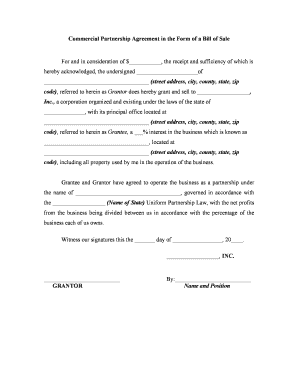
A Commercial Bill of Sale is a written record that documents the transfer of ownership of commercial assets, inventory, equipment, or business goodwill from a seller to a buyer. It identifies the parties, describes the assets transferred, states the consideration paid, and establishes the effective date of transfer. The document serves as evidence of title for the parties, supports accounting and tax reporting, and can be used to resolve disputes or clear liens when properly executed and retained.

Why a Clear Commercial Bill of Sale Matters

A precise Bill of Sale reduces ownership disputes, documents taxable events, and preserves lien clearance rights; electronic execution is acceptable under the federal ESIGN Act (15 U.S.C. ch. 96) and state UETA laws where adopted.

Why a Clear Commercial Bill of Sale Matters

Who Commonly Prepares and Signs Commercial Bills of Sale

Sellers, buyers, lenders, and accountants use Commercial Bills of Sale to document transfers of business assets and to support tax and lien filings.

  • Business buyers and sellers — Document terms of purchase, allocate purchase price, and record assets for accounting.
  • Lenders and secured parties — Track collateral transfers and confirm lien releases or continuations.
  • Accountants and tax professionals — Use the document to support tax reporting, depreciation basis, and sale proceeds.

Keep copies with corporate records and provide a signed copy to all parties, the borrower (if applicable), and tax counsel.

Essential Elements of a Professional Commercial Bill of Sale

A well-drafted Commercial Bill of Sale is concise but complete, clarifies what transfers and what does not, and includes signatures and authentication to prove transfer.

Parties

Full legal names and entity types for seller and buyer, including state of formation for companies and authority of signers to bind the entity.
Asset Description

Clear, specific descriptions of each asset transferred, including quantities, serial numbers, VINs, model numbers, and any included accessories or software rights.

Consideration

The exact monetary amount or non-cash consideration exchanged, payment terms, and allocation of price among asset classes when relevant for tax treatment.

Representations

Seller warranties about ownership, absence of undisclosed liens, authority to sell, and condition of goods; disclose known defects and encumbrances.

Liens & Encumbrances

Statement whether assets are free of liens or whether the sale is subject to existing security interests and how lien release will be handled.

Signatures

Signature blocks with printed names, titles, dates, and space for notarization or witness statements where required by law or parties.

Step-by-Step: Filling Out a Commercial Bill of Sale

A straightforward sequence helps avoid omissions and ensures the document is enforceable and usable for accounting and title purposes.

  • 01
    Prepare Parties: Confirm legal names and authority to sign.
  • 02
    Describe Assets: List items, serial numbers, and conditions.
  • 03
    Record Consideration: Enter price, payment terms, and allocation.
  • 04
    Sign and Authenticate: Sign, date, and notarize or witness if required.

How to Set Up an Online Bill of Sale Workflow

Configure an eSignature workflow that assigns roles, secures authentication, and captures an audit trail for each signing step.

Upload Template Add a PDF or DOCX Bill of Sale template to the platform.
Place Fields Add name, date, signature, and conditional fields where needed.
Authentication Select email link, SMS code, or stronger ID verification as required.
Signer Roles Assign buyer, seller, and any witness or notary roles.
Send & Track Route for signatures, monitor status, and retain the audit trail.

Where to Send and How to Distribute Executed Bills of Sale

After execution, distribute copies and retain originals in business records so parties and relevant third parties can rely on the transfer.

  • To the Buyer: Provide an executed original or certified copy for asset records.
  • To the Seller: Retain an executed copy in corporate or personal files.
  • To Lenders: Send to any secured creditors to update collateral records.
  • To Tax Advisor: Share with accountants for reporting and basis allocation.

Digital Signing and File Format Requirements

Use a platform that supports common document formats and captures a detailed audit trail for each signing event.

  • Supported Formats: PDF, DOCX, HTML supported for upload and final signed copies.
  • Authentication Options: Email link, SMS code, two-factor, or advanced ID verification.
  • Integrations: Integrate with CRM, ERP, cloud storage like Salesforce and NetSuite.

Required Information and Core Fields Summary

Seller Name: Full legal name
Buyer Name: Full legal name
Asset Details: Description and IDs
Sale Price: Amount paid
Effective Date: MM/DD/YYYY
Signatures: Signed and dated

Common Mistakes to Avoid When Preparing a Bill of Sale

  • Vague asset descriptions leave room for dispute; always include serial numbers, VINs, and model details to tie the document to specific property.
  • Failing to allocate purchase price by asset class can complicate depreciation and tax reporting and may trigger disputes during audits.
  • Omitting lien or encumbrance language can cause creditor conflicts; disclose existing security interests and state how they will be handled.
  • Missing or inconsistent signer authority (e.g., agent without power) can invalidate the transfer; confirm corporate resolutions or authority documentation beforehand.

Risks and Penalties from an Incorrect or Incomplete Bill of Sale

Tax Penalties: IRC §6721 penalties may apply
Title Disputes: Buyer may lack clear ownership
Liens Survive: Existing security interests persist
Contract Voidance: Transfer may be challenged
Agent Liability: Unauthorized signers risk personal liability
Notarization Errors: Missing acknowledgements reduce weight

Timelines and Expected Processing Steps

Key timing checkpoints guide parties from signing through recordkeeping and tax reporting; some tasks are immediate while others align with tax deadlines.

Effective Immediately:

Ownership transfers on the effective date specified.

Provide Copies:

Deliver executed copies to all parties immediately after signing.

File with Lender:

Notify secured creditors within 30 days if collateral changes.

Tax Reporting:

Include sale on relevant year tax return filed by April 15.

Retain Records:

Keep originals for the retention period required by law.

Real-World Examples: How Companies Use Bills of Sale

Practical examples show how a clear Bill of Sale supports closing transactions, accounting, and post‑closing obligations.

Martin Properties — Equipment Sale

A property management firm needed remote execution for equipment transfers at multiple sites

  • The team used standardized Bills of Sale to allocate costs across properties
  • Tim Martin, Founder of Martin Properties, reported processing and executing documents online with full compliance, enabling timely transfer of assets without in-person meetings.

Optica Ventures — Business Asset Transfer

A small investor sold specialized lab equipment to a buyer in another state

  • The Bill of Sale listed serial numbers and payment terms to avoid title issues
  • Brian Fitzgibbons, COO at Optica Ventures LLC, emphasized that a simple, clear interface made it easy for both their team and customers to complete the transaction efficiently.

Comparison: Typical eSignature Pricing and Capabilities

Common vendor pricing and capabilities for electronic signing platforms, shown for baseline feature comparisons and envelope limits.

signNow DocuSign Adobe Sign PandaDoc HelloSign
Starting Price $8/user/mo $15/user/mo $14/user/mo $19/user/mo $15/user/mo
Free Trial 7-day trial Varies by plan Varies by plan Varies by plan Varies by plan
Bulk Send Yes (plan dependent) Yes Yes Yes No
Audit Trail Yes Yes Yes Yes Yes
Envelope Cap No envelope cap 100 envelopes/user/year Varies by plan Varies by plan Varies by plan

Frequently Asked Questions About Commercial Bills of Sale

Answers to common questions about validity, notarization, eSigning, recordkeeping, and correcting errors in a Bill of Sale.


Need help? Contact support

be ready to get more
Join over 28 million airSlate SignNow users