Establishing secure connection…Loading editor…Preparing document…

Dog Bite Complaint

This template is fully customizable. Edit the text, fill out the fields, and send it for signature. Give it a try!
Dog Bite Complaint

What a Dog Bite Complaint Is and When It’s Used

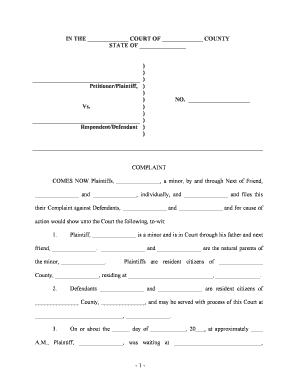
A Dog Bite Complaint is a civil court pleading a person files to assert legal claims against a dog owner or custodian for injuries and related losses caused by an animal attack. The complaint states the parties, alleged facts, applicable legal theories (for example negligence or strict liability), the jurisdiction and venue, and the specific damages requested. Filing the complaint initiates formal litigation, preserves a claim before the statute of limitations runs, and begins the clock for service, discovery, and potential settlement discussions in the chosen court.

Why a Properly Drafted Complaint Matters

A clear Dog Bite Complaint frames your legal theory, preserves time-sensitive rights, and creates a formal record that supports discovery and settlement. Accurate pleadings reduce procedural risk, give defendants notice of claims, and make it easier to quantify damages. When e-submitted or signed electronically, follow ESIGN and state e-signature law requirements to ensure admissibility and enforceability.

Why a Properly Drafted Complaint Matters

Who Prepares or Signs a Dog Bite Complaint

Plaintiffs, personal-injury attorneys, paralegals, and claims adjusters commonly prepare or sign complaints; municipalities may file related enforcement or nuisance claims.

  • Individual plaintiffs — injured persons or guardians representing minors, seeking compensation for medical costs, lost wages, and pain and suffering.
  • Attorneys and law firms — draft complaints, manage filings, and serve defendants using court rules and e-filing portals.
  • Insurers and adjusters — review complaints to evaluate coverage, liability, and potential subrogation rights while coordinating defenses.

Ensure the signer has authority to act for the named plaintiff and that any guardian or corporate representative is properly identified and documented.

Core Components of a Professional Dog Bite Complaint

A complete complaint contains modular sections so courts, defendants, and insurers can quickly identify liability bases, factual allegations, and relief sought.

Caption

Court name, case number (if assigned), and formal caption identifying plaintiff and defendant so the court can index the matter correctly.
Parties

Full legal names, capacities (individual, owner, landlord), and contact or counsel information to ensure proper service and legal notice.

Jurisdiction

Statement of subject-matter and personal jurisdiction plus venue facts explaining why the selected court is proper for the dispute.

Factual Allegations

Concise, chronological facts describing the incident, dog behavior, owner knowledge or negligence, and any prior incidents that support the claim.

Causes of Action

Legal theories pleaded (for example negligence, strict liability, negligent entrustment) with elements tied to the factual allegations.

Prayer for Relief

Specific damages requested — medical expenses, lost earnings, pain and suffering, punitive damages if pleadable, and any statutory fees or costs.

Essential Information to Include

Plaintiff Name: Full legal name
Defendant Name: Full legal name
Incident Date: MM/DD/YYYY
Incident Location: Street, city, state
Injury Summary: Brief description
Relief Sought: Specific damages

Step-by-Step: From Draft to Filing

Follow a clear sequence to collect evidence, draft, file, and serve the complaint to avoid procedural defects or missed deadlines.

  • 01
    Gather Evidence: Collect photos, witness statements, and medical records before drafting.
  • 02
    Draft Complaint: Allege facts and causes of action with specific damages requested.
  • 03
    File with Court: Use local e-filing or clerk’s office procedures for submission.
  • 04
    Serve Defendant: Complete proper service of process per state rules immediately after filing.

Where to File and How the Process Proceeds

Filing routes and subsequent steps differ by jurisdiction; understand local clerk requirements and e-filing options to ensure an accepted submission.

  • File Complaint: Submit to the county or district court handling civil matters.
  • Clerk Review: Clerk assigns a case number and docket entry after acceptance.
  • Summons Issued: Court clerk issues summons for service on the defendant.
  • Service of Process: Serve via sheriff, process server, or permitted alternative methods.

Configuring an Online Complaint Workflow

Set up the digital workflow to match court requirements and signer authentication while preserving the signed record and exhibits for later proof.

Field Configuration
E-filing Portal Select the court’s accepted portal or upload method
Signature Method Choose e-signature, wet signature, or notarized e-signature
Attachments Attach medical records and photos as PDF exhibits
Service Method Plan for sheriff, process server, or certified mail

Technical Requirements for eSubmission and Signing

Ensure document format, authentication level, and integration needs match court and client requirements before e-submission.

  • File formats: PDF, DOCX accepted
  • Integrations: Google Workspace, Microsoft 365, NetSuite
  • Authentication: Email, SMS, or knowledge-based options

Confirm the court’s e-filing rules and retention obligations; preserve audit trails showing signer identity, timestamps, and document history.

Key Timing Rules to Track

Timely action is critical: medical treatment documentation, preservation of evidence, and filing before the statute of limitations are the primary time-sensitive items.

Seek Medical Care:

Document injuries promptly; treatment dates support causation and damages.

Preserve Evidence:

Secure photos and witness contacts immediately after the incident.

Statute of Limitations:

Varies by state, commonly between one and six years; verify local law.

File Complaint:

File before the applicable limitations period expires to avoid dismissal.

Defendant Response:

Defendants typically have about 20–30 days to respond, depending on jurisdiction.

Milestone Timeline from Incident to Resolution

A high-level sequence helps track deliverables and court expectations from the incident through case disposition.

01

Incident Occurs

Immediate medical care and evidence collection should be the top priority.

02

Complaint Preparation

Draft factual allegations, attach exhibits, and quantify damages.

03

Filing and Service

File with the clerk, obtain a case number, and effect service on the defendant.

04

Discovery and Resolution

Proceed through discovery, mediation, or trial toward settlement or judgment.

Common Mistakes to Avoid When Preparing a Complaint

  • Incomplete facts or missing dates that make it hard to prove causation or liability and invite early motions to dismiss.
  • Failing to attach or preserve medical records and bills that substantiate the amount of damages claimed.
  • Serving the defendant improperly or missing state-specific service rules, which can lead to dismissal or re-filing requirements.
  • Using vague or conclusory language instead of specific allegations tying the defendant’s conduct to the injury and damages.

Consequences of Procedural Errors or Late Filing

Dismissal: Case may be dismissed if filed after the statute of limitations
Default Judgment: Failure to serve properly can lead to re-filings and expense
Sanctions: Court sanctions possible for discovery abuses or false statements
Evidence Loss: Late preservation risks exclusion of critical proof
Increased Costs: Procedural defects increase attorney and court costs
Insurance Complications: Untimely claims may reduce insurer willingness to settle

Comparison: eSignature Pricing and Key Features

A vendor comparison can help select an e-signature solution for document assembly and court-oriented workflows; signNow appears first per standard comparison format.

signNow DocuSign Adobe Sign PandaDoc HelloSign
Starting Price $8/user/mo $15/user/mo $14/user/mo $19/user/mo $15/user/mo
Free Trial 7-day trial Varies Varies Varies Varies
Bulk Send Yes Yes Yes Yes No
Audit Trail Yes Yes Yes Yes Yes
HIPAA Compliant Yes Yes Yes No No

Frequently Asked Questions About Dog Bite Complaints

Answers to common procedural and technical questions about preparing, filing, and electronically submitting a Dog Bite Complaint.


Need help? Contact support

be ready to get more
Join over 28 million airSlate SignNow users