Establishing secure connection…Loading editor…Preparing document…

Condolence Letter

This template is fully customizable. Edit the text, fill out the fields, and send it for signature. Give it a try!
Condolence Letter

What a Condolence Letter Is and When It’s Used

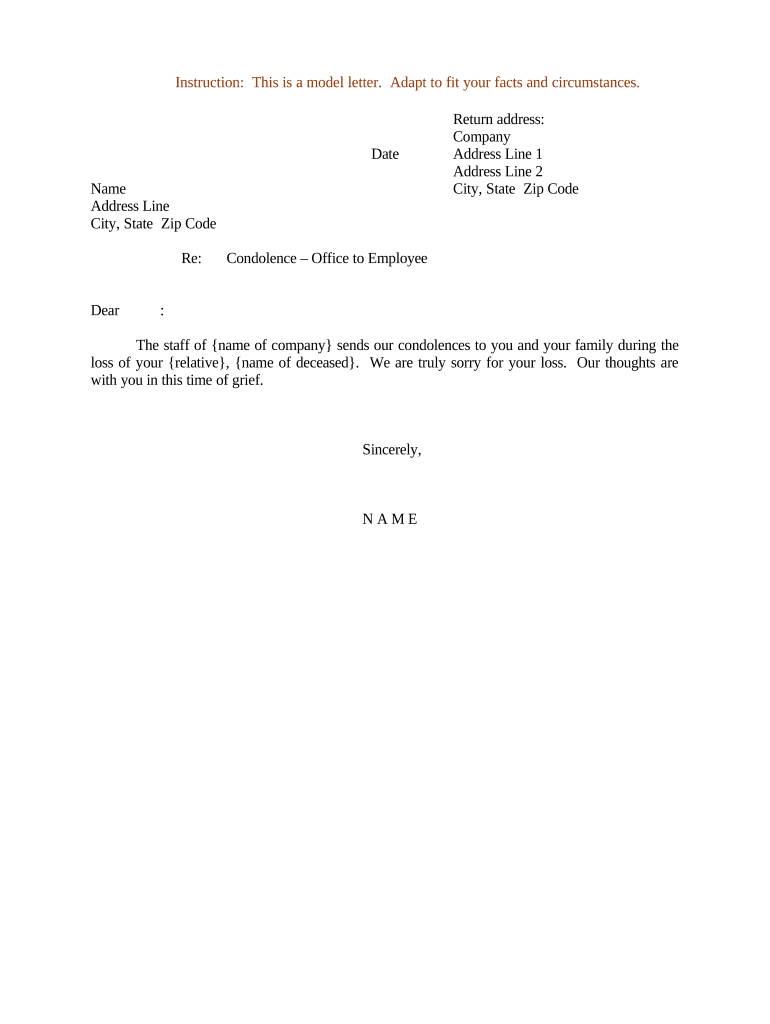
A Condolence Letter is a personal written message expressing sympathy for someone’s loss. It is used by colleagues, friends, employers, institutions, and community leaders to acknowledge bereavement, offer comfort, and sometimes notify about memorial arrangements. While typically informal in legal terms, a well-crafted letter respects privacy, avoids speculation about causes of death, and may be retained by families, HR files, or organizational records for closure and documentation.

Why a Thoughtful Condolence Letter Matters

A clear, considerate Condolence Letter provides emotional support, preserves dignity for the deceased and family, and creates a written record of the sender’s sympathy. It signals respect and can reduce misunderstandings during a sensitive time.

Why a Thoughtful Condolence Letter Matters

Who Typically Sends or Receives Condolence Letters

Organizations and individuals use Condolence Letters in both personal and professional contexts; formats vary by relationship and purpose.

Tone and content should match the relationship: personal memories for close contacts, brief empathy and practical support for workplace and institutional communications.

Essential Parts of a Professional Condolence Letter

A concise structure ensures the message is sincere and appropriate. Use a respectful opening, reference the deceased by name, share a brief memory or quality, offer practical help, close with a sympathetic sign-off, and include sender contact details if appropriate.

Opening

A short, respectful greeting that acknowledges the loss and addresses the recipient by name.
Naming the Deceased

Use the deceased's full name and relation to the recipient; avoid assumptions about cause of death.

Personal Memory

One or two sentences recalling a positive trait or memory; keep it sincere and concise.

Offer of Help

A specific, practical offer (meals, childcare, administrative help) rather than a general 'let me know'.

Closing

A brief empathetic closing phrase and the sender’s name and role if applicable.

Signature and Date

Hand-signed or electronically signed with a date; include contact info if further support is intended.

Step-by-Step: Writing a Respectful Condolence Letter

Follow this concise sequence to compose a considerate and useful message without becoming intrusive.

  • 01
    Address: Use the recipient's preferred name and title; confirm spelling.
  • 02
    Open: Begin with a simple expression of sympathy.
  • 03
    Acknowledge: Name the deceased and state your relation or memory.
  • 04
    Close: Offer specific help and a sincere sign-off with your name.

How to Deliver the Letter: Options and Considerations

Select a delivery method that respects privacy and timing; consider the relationship and cultural practices when choosing delivery.

  • Postal Mail: Traditional and personal; appropriate when you want a physical keepsake.
  • Email: Faster and acceptable for workplace messages; keep subject line discreet.
  • Hand-Delivered: Appropriate for close relationships or community leaders; maintain privacy.
  • Electronic Signature: Use for organizational letters to ensure authenticity and recordkeeping.

Digital Signing and File Formats for Condolence Letters

Condolence Letters can be saved and signed in common formats; choose a format that balances permanence and ease of access.

  • Supported Formats: PDF | DOCX | HTML
  • eSignature Options: Simple e-signature overlays or cryptographic signatures depending on record needs
  • Integrations: Works with Google Workspace, Microsoft 365, and common HR systems

For organizational use, preserve a signed copy in the employee or family file and ensure access controls limit viewing to appropriate personnel.

Setting Up an Online Condolence Letter Workflow

A simple workflow ensures consistency and documentation for organizations that send multiple letters.

Field Configuration
Template Create a reusable template with placeholders for names and dates
Approval Designate an approver for tone and privacy review
Delivery Choose email or postal output and include delivery tracking
Recordkeeping Store signed copy in HR or designated secure folder

Timing and Recommended Response Window

Condolence Letters are most appropriate when sent promptly; organizational policies sometimes set internal timing standards.

Send Promptly:

Within 1–2 weeks of notification is customary

Workplace Letters:

HR may issue formal letters within 1 week

After the Funeral:

Follow-up note within 2–6 weeks is acceptable

Late Notes:

Sincere letters later than 6 months are still appropriate

Legal Notices:

Not applicable — condolence letters are not legal filings

Key Milestones for Organizational Condolence Responses

Use these milestones to coordinate internal approvals, delivery, and record retention.

01

Notification Received

Confirm facts and recipient contact information.

02

Draft and Review

Prepare a draft and route to designated approver.

03

Sign and Send

Obtain signature and deliver by chosen method.

04

Record and Archive

Store signed copy in the appropriate secure file.

Common Mistakes to Avoid

  • Using clichés that may feel impersonal or dismissive.
  • Incorrectly spelling names or misstating relationships.
  • Sharing private details about cause of death without consent.
  • Delaying so long that the message feels untimely or insincere.

Risks and Legal Considerations to Keep in Mind

Reputational Harm: Poor wording can damage relationships or trust.
Privacy Breach: Disclosing medical details may trigger HIPAA concerns
Defamation Risk: Avoid unverified statements about circumstances.
Emotional Impact: Insensitivity can increase distress.
Record Misplacement: Losing signed copies may complicate HR processes.
Incorrect Recipient: Sending to wrong address can cause embarrassment.

When You Store Signed Letters: Security and Compliance Basics

Encryption: TLS 1.2/1.3 in transit; AES-256 at rest
Authentication: Audit trails, timestamps, and signer attribution
HIPAA: Use BAA if letter contains protected health information
Retention: Store per company retention policy and legal obligations
Access Controls: Limit access to authorized HR or family contacts
Audit Logs: Maintain logs for chain-of-custody and review

Condolence Letter vs. Formal Notice or Legal Communication

Distinguish a personal Condolence Letter from legal notices or formal death notifications that carry different content and delivery rules.

Document Type Tone Legal Purpose
Condolence Letter personal no legal effect
Death Certificate Notice formal legal proof required
Probate Notice legal court filing required
Employer Notification formal triggers hr processes

eSignature Vendor Comparison for Sending and Signing Letters

Comparison of starter pricing and common features for typical eSignature vendors; signNow is listed first per platform ordering requirements.

signNow DocuSign Adobe Sign PandaDoc HelloSign
Starting Price $8/user/mo $15/user/mo $14/user/mo $19/user/mo $15/user/mo
Free Trial 7-day free trial Trial available Trial available Trial available Trial available
Bulk Send Yes (Business Premium) Yes Yes Yes No
Audit Trail Yes Yes Yes Yes Yes
HIPAA Compliant Yes Yes Yes No No
Envelope Cap No cap 100 envelopes/user/year Varies by plan Varies by plan Varies by plan

Example Use Cases for Condolence Letters

These short scenarios show how letters are adapted across contexts.

Workplace Sympathy

An HR manager sends a brief letter acknowledging an employee's loss and offering benefits guidance.

  • The letter includes contact for bereavement leave.
  • The signed letter is added to HR personnel records and a copy is emailed to the employee to confirm support and next steps.

Community Leader Message

A pastor or community leader writes a personal note referencing a community memorial.

  • The message names the deceased and mentions a service date.
  • The letter is hand-delivered to the family and a printed copy is retained by the organization for archive and outreach follow-up.

Practical Tips for Accurate and Respectful Letters

Follow these guidelines to ensure clarity, sensitivity, and correct recordkeeping.

Confirm Names
Verify spelling and preferred forms of names with a reliable contact before sending.
Keep It Brief
One short paragraph plus a closing is usually sufficient for sincerity and readability.
Avoid Medical Details
Do not disclose cause of death or medical information without explicit consent.
Secure Storage
Store organizational copies in protected HR or communications folders with limited access.

FAQs: Common Questions About Condolence Letters

Answers to frequent concerns about timing, content, privacy, and digital handling of Condolence Letters.


Need help? Contact support

be ready to get more
Join over 28 million airSlate SignNow users