Establishing secure connection…Loading editor…Preparing document…

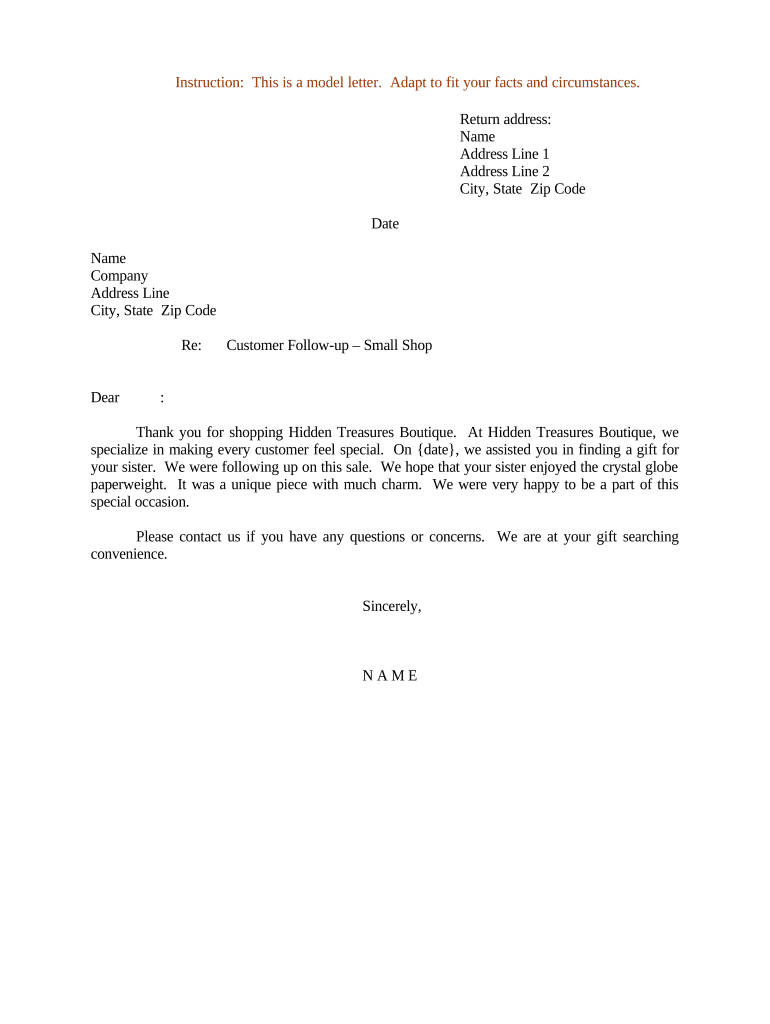
Customer Follow-up Letter

This template is fully customizable. Edit the text, fill out the fields, and send it for signature. Give it a try!
Customer Follow-up Letter

What a Customer Follow-up Letter Is and When It’s Used

A Customer Follow-up Letter is a written communication sent after an initial contact, transaction, or service interaction to confirm details, request additional information, remind the recipient of an outstanding action, or document next steps. Common uses include payment reminders, order confirmations, warranty follow-ups, service callbacks, and requests for missing documentation. The letter typically summarizes prior communications, states a clear requested action and deadline, and provides contact information for questions. A concise, professional follow-up letter helps create a record of outreach and supports internal tracking and escalation when needed.

Purpose, Key Benefits, and Legal Validity

A Customer Follow-up Letter clarifies expectations, reduces miscommunication, and creates an auditable record that can support collections, dispute resolution, or regulatory compliance. Where signed acknowledgements are required, electronic signatures meet U.S. legal standards under the ESIGN Act (15 U.S.C. ch. 96) and UETA (Uniform Electronic Transactions Act) when intent, consent, attribution, and retention are demonstrable.

Purpose, Key Benefits, and Legal Validity

Who Typically Prepares and Receives These Letters

Organizations across customer-facing teams prepare follow-up letters to close tasks, confirm arrangements, and preserve a communication record.

  • Customer service teams handling unpaid invoices or service callbacks.
  • Sales or account managers confirming next steps after proposals.
  • Operations or fulfillment teams verifying missing order information.

Step-by-Step: Preparing and Sending a Follow-up Letter

Follow a consistent sequence to create a clear, auditable follow-up that supports customer service and compliance processes.

  • 01
    Draft the Message: Summarize prior contact, state the purpose, and list the requested action clearly.
  • 02
    Verify Recipient Data: Confirm name, account number, and preferred contact channel before sending.
  • 03
    Set Action Deadline: Choose a reasonable deadline and format it MM/DD/YYYY for clarity.
  • 04
    Record Delivery: Log how and when the letter was sent and any signed acknowledgements received.

Where to File, Send, and Track Follow-up Letters

Decide a primary delivery channel and a single internal storage location so documents and responses are easy to find during audits or disputes.

  • Send Method: Email, certified mail, or secure eDelivery depending on formality and legal risk.
  • Recipient Channels: Use the recipient’s preferred channel recorded in CRM to improve response rates.
  • Internal Filing: Attach signed copies to the customer’s account or case file in document management.
  • Tracking: Record timestamps, delivery receipts, and any signer authentication logs.

Distribution and Technical Requirements for Electronic Delivery

Maintain copies in an access-controlled repository, and keep an audit trail showing who signed, when, and by what method.

  • File Formats: PDF or DOCX recommended for consistent rendering.
  • Authentication: Email link or SMS code for low-risk; stronger KBA for high-risk.
  • Integrations: CRM and cloud storage connections to preserve context.

How to Configure an Online Follow-up Letter Workflow

Set up a repeatable template and routing rules so follow-ups are consistent and auditable.

Field Configuration
Template Pre-fill header, standard text, and signature block
Recipient Role Primary recipient and CC/notification recipients
Authentication Select email, SMS, or knowledge-based options
Reminders & Escalation Automatic reminders and escalation after missed deadlines

Essential Elements of a Professional Follow-up Letter

Include standard sections so each letter is clear, actionable, and suitable for recordkeeping or escalation.

Header

Company name, sender contact, date, and customer account or order number so recipients and internal teams can immediately identify the context.
Opening Line

Reference prior communication or transaction in one sentence to remind the recipient why you are writing and provide continuity.

Issue Summary

Describe the outstanding item concisely — unpaid invoice, missing document, or required confirmation — avoiding ambiguous or technical terms.

Requested Action

State exactly what the recipient must do, include any supporting instruction, and provide a clear deadline using MM/DD/YYYY format.

Consequences

Explain reasonable next steps or consequences of inaction, such as late fees, service interruption, or escalation to collections.

Contact Details

Provide a named contact, phone, email, and hours of availability to reduce friction and speed resolution.

Required Data Elements and Storage Notes

Customer Name: Full legal name
Account Number: Unique identifier
Action Deadline: MM/DD/YYYY
Contact Info: Address, email, phone
Record ID: Internal tracking code
Signature Audit: Timestamp and method

Common Mistakes to Avoid When Preparing Follow-up Letters

  • Using vague deadlines or relative dates (e.g., 'within two weeks') instead of MM/DD/YYYY causes confusion and slows resolution.
  • Failing to verify recipient contact details before sending leads to misdirected notices and breaks audit trails for collections.
  • Omitting a clear requested action or missing reference numbers forces additional back-and-forth and prolongs dispute resolution.
  • Not recording delivery method and timestamp removes evidence needed for regulatory, billing, or legal disputes.

Risks and Consequences of Errors in Follow-up Letters

Contract Risk: Missed deadlines can affect contractual rights.
Tax Exposure: Incorrect tax contact info may trigger backup withholding
Customer Attrition: Poor clarity increases churn risk
Regulatory Noncompliance: Improper handling of protected data
Legal Evidence Gap: No delivery record weakens dispute position
Data Breach: Inadequate storage increases exposure

Timelines, Deadlines, and Processing Expectations

Establish clear internal SLAs for drafting, sending, and escalating follow-ups to ensure consistent response handling and regulatory readiness.

Initial Follow-up:

Send within 48–72 hours after unresolved contact or missed payment.

Second Notice:

Issue a second formal reminder 7 business days after the initial follow-up.

Final Notice:

Provide a final notice with a clear deadline 14 calendar days after initial notice.

Internal SLA:

Log response or escalation within 1 business day of reply receipt.

Recordkeeping:

Retain sent letter and delivery proof per retention policy and applicable regulations.

Key Milestones from Draft to Resolution

Track each milestone to measure completion and to produce an audit trail for customer service or legal inquiries.

01

Draft Completed

Finalized text, references, and internal approvals before sending.

02

Delivery Sent

Letter dispatched via chosen channel with timestamp.

03

Reminder Issued

Automated or manual reminder after missed deadline.

04

Resolution Logged

Record of payment, corrected information, or escalation outcome.

Comparing eSignature Option Costs and Compliance Features

Basic price and compliance features for representative eSignature vendors. Place signNow first for direct comparison across common feature criteria.

signNow DocuSign Adobe Sign PandaDoc HelloSign
Starting Price $8/user/mo $15/user/mo $14/user/mo $19/user/mo $15/user/mo
Free Trial 7-day trial, no credit card Trial availability varies Trial availability varies Trial available Trial available
Bulk Send Yes Yes Yes Yes No
Audit Trail Yes Yes Yes Yes Yes
HIPAA Compliant Yes Yes Yes No No

Examples: How Organizations Use Customer Follow-up Letters

Real-world examples show how follow-ups speed resolution and preserve records across industries.

Martin Properties — Rental Follow-up

A property manager confirms a missing signed lease after an in-person viewing, references the application ID

  • Used automated delivery to request signature
  • The signed response was attached to the tenant file and reduced move-in delay, improving occupancy and recordkeeping.

Fertility Centers of Illinois — Patient Forms

A clinic requests an updated consent form before treatment, noting required fields and a deadline

  • Sent via secure eDelivery with audit trail
  • The clinic retained the signed record per HIPAA retention requirements and avoided scheduling delays.

Tips for Accurate, Efficient Follow-up Letters

Apply consistent formatting and internal controls to reduce errors and speed recipient response.

Use a Template
Standardize language, fields, and deadlines so each letter is clear and internally consistent; reduce reviewer time and legal risk by centralizing approved wording.
Confirm Recipient Data
Validate name, account number, and contact channel before sending; automated CRM checks can prevent misdelivery and protect PII.
Include Clear Next Steps
State the action, required format, and exact due date in MM/DD/YYYY format to reduce back-and-forth and enable automated escalation.
Preserve an Audit Trail
Capture delivery receipts, signer attribution, and timestamps for every sent letter to support dispute resolution and regulatory audits.

FAQs and Troubleshooting for Customer Follow-up Letters

Answers to frequent questions about delivery, signatures, retention, and legal validity when using follow-up letters in customer workflows.


Need help? Contact support

be ready to get more
Join over 28 million airSlate SignNow users