Establishing secure connection…Loading editor…Preparing document…

Demand Notice

This template is fully customizable. Edit the text, fill out the fields, and send it for signature. Give it a try!
Demand Notice

What a Demand Notice Is and when it’s used

A Demand Notice is a formal written notice requesting payment, performance, or corrective action from a party that has defaulted on an obligation. It typically identifies the creditor and debtor, states the amount or action demanded, cites the contractual or statutory basis, and sets a deadline to cure. Demand Notices are used across collections, lease defaults, construction claims, and commercial disputes to document notice, create a record for later enforcement, and often satisfy pre-suit requirements before filing a lawsuit or initiating foreclosure or lien remedies.

Why a clear Demand Notice matters

A professionally drafted Demand Notice preserves legal rights, documents the creditor’s position, and creates a measurable cure period that courts and regulators will review. Clear notice reduces disputes over timing and content, supports evidentiary needs in litigation, and can prompt voluntary cure without further legal action.

Why a clear Demand Notice matters

Who prepares and receives Demand Notices

Demand Notices are created by creditors, landlords, contractors, and in-house counsel to notify a counterparty of default and request remedy within a set period.

  • Commercial creditors and accounts receivable teams: Issue notices to recover unpaid invoices or enforce contract remedies; coordinate collections and legal escalation.
  • Landlords and property managers: Serve notices for unpaid rent, lease violations, or possession demands prior to eviction filings under state landlord-tenant law.
  • Contractors and suppliers: Send payment or performance demands ahead of mechanic’s lien filings or dispute resolution procedures.

Core elements to include in a professional Demand Notice

A Demand Notice should be concise, unambiguous, and legally sufficient to show the recipient what is required and by when. Include contact and remittance details, supporting totals, and the consequences of noncompliance.

Header

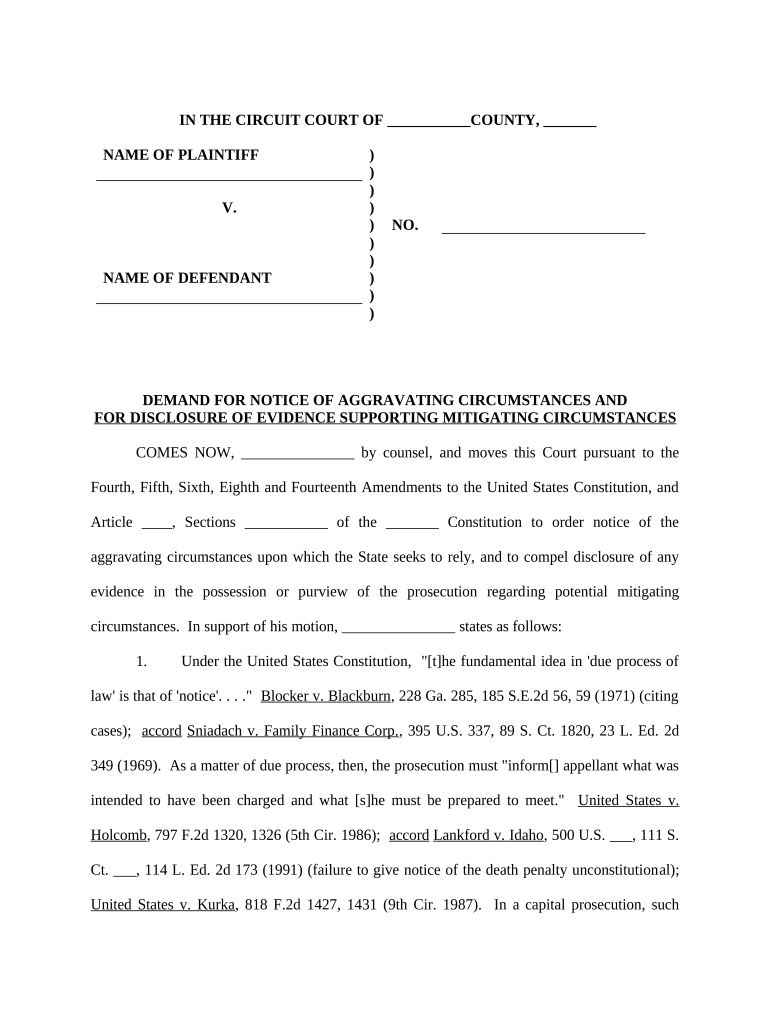
Identify the document as a Demand Notice, include sender name, company, address, and date so the purpose and authorship are clear.
Recipient

Name the individual or legal entity precisely and list service address or registered agent to ensure valid delivery and potential service compliance.

Statement of Breach

Describe the default or failure with specific contract references, invoice numbers, dates, and the factual basis for the claim.

Demand

State the exact remedy sought (dollar amount, performance, cessation), including calculations for principal, fees, interest, and costs.

Cure Deadline

Provide an explicit deadline (MM/DD/YYYY) for cure or payment and state the consequences of failure, such as late fees or legal action.

Delivery Record

Note the method of delivery and retain proof (certified mail receipt, courier tracking, or signed e-delivery certificate) for enforcement.

Essential data fields required on the Demand Notice

Document Date: Date of notice issuance
Creditor Identity: Name and address
Debtor Identity: Full legal name
Amount Due: Principal plus fees
Reference Details: Invoice/contract numbers
Cure Deadline: MM/DD/YYYY

Step-by-step: preparing and sending a Demand Notice

Follow a precise sequence to reduce enforceability risk: verify facts, choose the correct recipient, prepare the demand text, choose a delivery method with proof, and retain records of service.

  • 01
    Verify account: Confirm ledger balances and contract references before issuing
  • 02
    Draft notice: Use clear language, itemize totals, and cite contract clauses
  • 03
    Select delivery: Choose certified mail, courier, or documented e-delivery with audit trail
  • 04
    Retain proof: Save tracking receipts, email certificates, and signed acknowledgements

How to configure an online Demand Notice workflow

Set up roles, templates, and delivery rules in your e-document platform to standardize notices and capture proof of service automatically.

Field Configuration
Template Create reusable Demand Notice with locked legal text
Signer Role Assign creditor representative or attorney
Delivery Method Enable certified email and hard-copy mail options
Retention Rule Auto-archive signed notice and audit trail

Where a Demand Notice typically travels after creation

A Demand Notice moves from drafting through approval to delivery and then into the archive; each stage should generate an auditable record.

  • Drafting: Prepare notice and attach supporting invoices
  • Approval: Obtain internal sign-off or legal review
  • Delivery: Send via chosen method and capture proof
  • Archival: Store signed notice plus audit trail for retention

Digital delivery and signature requirements

Use an e-signature platform that creates an audit trail, supports multiple delivery channels, and can store signed copies securely.

  • Audit Trail: IP, timestamps, and signer actions captured
  • Authentication: Email, SMS, or stronger KBA/SSO options
  • Storage: AES-256 at rest with exportable PDF/A

Typical timelines and deadlines to include

Specify concrete dates and time zones. Timelines vary by contract and industry; common cure periods are short and intended to encourage prompt resolution.

Short cure period:

7–14 days commonly for commercial invoices

Standard cure period:

30 days frequently used for lease and contract defaults

Mechanic’s lien notice:

State statutes may require earlier notice; verify locally

Pre-suit notice:

Often 30 days before filing suit or arbitration

Bankruptcy watch:

Stay aware of automatic stays once a petition is filed

Common preparation mistakes to avoid

  • Using imprecise party names or PO boxes only, which can invalidate service or delay enforcement.
  • Failing to attach invoices or contract excerpts, leaving the recipient unable to verify the claim quickly.
  • Choosing unsecured email without delivery proof, resulting in no admissible record of service.
  • Setting ambiguous deadlines without time zone or cure mechanics, producing disputes about when a cure expired.

Risks and consequences of an incorrect Demand Notice

Service Failure: May prevent enforcement
Statute Issues: Missed statutory notice requirements
Fee Disallowance: Late fees or costs rejected
Evidence Gaps: Missing audit trail harms case
Regulatory Risk: Consumer notices may trigger CFPB scrutiny
Reputational Harm: Poorly worded demands escalate disputes

Key milestones from issue to enforcement

Track milestones rigorously: issuing, delivery confirmation, cure period, and filing. Each stage should produce documentary proof for enforcement.

01

Prepare Notice

Draft and obtain internal approval with attachments

02

Deliver Notice

Send by chosen method and capture proof of delivery

03

Cure Period

Monitor for payment or performance until the deadline

04

Enforcement Action

File suit, lien, or other remedy if uncured

eSignature vendor comparison for sending Demand Notices

Compare platform pricing, bulk send, audit trail, HIPAA support, and envelope caps when selecting an eSignature provider for legal notices. No date references are included here.

signNow DocuSign Adobe Sign PandaDoc HelloSign
Starting Price $8/user/mo $15/user/mo $14/user/mo $19/user/mo $15/user/mo
Free Trial 7-day free trial Varies by plan Varies by plan Varies by plan Varies by plan
Bulk Send Yes Yes Yes Yes No
Audit Trail Yes Yes Yes Yes Yes
HIPAA Compliant Yes Yes Yes No No
Envelope Cap No cap 100 envelopes/user/year Varies by plan Varies by plan Varies by plan

Real-world examples of Demand Notices in use

These examples show how organizations standardize notice workflows and preserve compliance when sending legal demands.

Martin Properties

A property manager standardized lease default notices to reduce vacancy-related delays.

  • The streamlined notices included rent ledgers and cure instructions.
  • I can process and execute all of these documents online with 100% compliance and built-in security. Whether on mobile or working offline, I can get forms back to their necessary parties efficiently. — Tim Martin, Founder

Optica Ventures

A small business centralized invoice demands to cut dispute resolution time.

  • Templates captured invoice and contract references automatically.
  • The interface is simple and easy-to-use for our team; more importantly, it is just as easy for our customers. — Brian Fitzgibbons, COO

Practical tips for accurate and efficient Demand Notices

Follow these practices to reduce disputes and improve enforceability when issuing a Demand Notice.

Use exact legal names
Always verify the correct legal name and service address to ensure valid service and reduce challenges to jurisdiction or authority.
Attach supporting evidence
Include invoices, contract excerpts, and payment history so the recipient can verify the claim quickly and reduce unnecessary back-and-forth.
Document delivery
Choose delivery methods that provide proof such as certified mail, courier tracking, or e-delivery with audit trail to preserve admissible proof.
Standardize templates
Use standardized, legally reviewed templates with locked critical text to lower drafting errors and speed repetitive notice issuance.

Frequently asked questions about the Demand Notice process

Answers to common questions on validity, delivery, e-signatures, and next steps when a demand goes unanswered.


Need help? Contact support

be ready to get more
Join over 28 million airSlate SignNow users