Establishing secure connection…Loading editor…Preparing document…

Demand Payment Form

This template is fully customizable. Edit the text, fill out the fields, and send it for signature. Give it a try!
Demand Payment Form

What a Demand Payment Form Is and When it’s Used

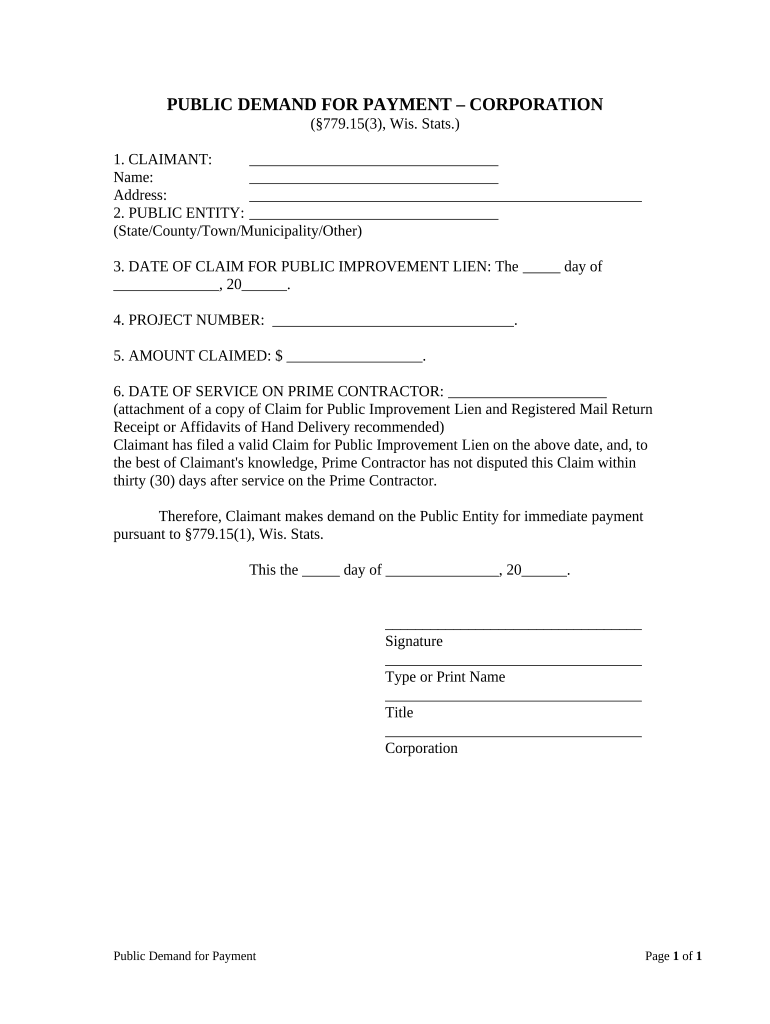
A Demand Payment Form is a written notice requesting that a debtor pay a specific outstanding amount by a stated deadline. It records the creditor, the debtor, the amount owed, the basis for the claim (invoice, contract, judgment), and a due date or cure period. The form is used by businesses, landlords, contractors, and legal representatives to document a payment request before escalation to collections or litigation. A clear, dated Demand Payment Form creates an auditable record that supports later collection steps if the debtor does not respond.

Why a Clear Demand Payment Form Matters

A properly prepared Demand Payment Form clarifies the amount due, the legal basis for collection, and the timeframe for payment or dispute; it reduces misunderstandings, supports legal enforcement, and preserves evidence of notice. In consumer or healthcare contexts, delivering the notice in a compliant manner helps avoid regulatory pitfalls under federal and state law.

Why a Clear Demand Payment Form Matters

Who Typically Prepares and Receives This Form

Organizations and individuals with receivables use demand payment forms to document requests for overdue amounts and to create a formal record prior to escalation.

  • Accounts receivable teams in businesses that invoice clients for goods or services.
  • Landlords and property managers seeking unpaid rent or damages.
  • Contractors and subcontractors requesting final payment or resolving change-order disputes.

The form is also used by law firms and collection agents when preparing evidence for demand letters, settlement offers, or litigation planning.

Key Signers and Decision-Makers

Accounts Receivable Manager

Responsible for preparing and approving the demand, verifying invoice history, and authorizing escalation. They must ensure amounts, dates, and supporting invoices are accurate before sending to the debtor or counsel.

Authorized Signatory

A company officer or designated representative with authority to bind the creditor. Their signature certifies the debt amount and authorizes next steps such as collections or small-claims filing if unpaid.

Essential Elements to Include in a Professional Demand Payment Form

A complete form combines identification, factual detail, calculable amounts, clear timelines, contact instructions, and signature information so the debtor understands the claim and how to resolve it without ambiguity.

Creditor Information

Full legal name, business address, phone and email for the party making the demand; include entity type if applicable and billing contact for follow-up.
Debtor Identification

Full legal name and last-known address of the debtor; include account, invoice, or contract number so the debtor can match the demand to prior communications.

Amount & Calculation

State the exact dollar amount due, list principal amounts, interest, late fees, and any adjustments so the total is reproducible from the provided math.

Basis for Demand

Reference the underlying invoice(s), contract section, or court judgment and attach copies of supporting documents to substantiate the claim.

Payment Instructions

Describe acceptable payment methods, remittance address, account details for electronic payments, and any reference codes required to apply payment correctly.

Deadline & Next Steps

Provide a specific due date or cure period, explain consequences of nonpayment (collections, interest, legal action), and include contact details for dispute submissions.

Step-by-Step: Preparing and Sending a Demand Payment Form

Follow these steps to create a complete, auditable demand before escalating to collections or legal action.

  • 01
    Assemble Documents: Gather invoices, contracts, delivery confirmations, and prior notices.
  • 02
    Calculate Total: Sum principal, agreed fees, and permitted interest using clear line items.
  • 03
    Draft Demand: Complete the form with contact and payment details and attach evidence.
  • 04
    Record Delivery: Send and retain proof of delivery (email, certified mail, or eDelivery receipt).

How to Customize the Form for Online Completion

Set up conditional fields, required attachments, and signer order to reduce incomplete submissions and speed resolution.

Field Configuration
Required Amount Fields Make amount fields mandatory and validate numeric format
Attachment Field Force upload of supporting invoice or contract PDF
Conditional Notes Show interest calculation only when late-fee checkbox is selected
Signer Authentication Enable email verification or SMS code for main signer

Where to Send or File the Completed Form

Choose the delivery method that provides a verifiable record and matches the debtor’s contract terms.

  • Email with Read Receipt: Fast, includes timestamp and delivery metadata
  • Certified Mail: Provides postal proof of receipt for legal proceedings
  • Registered Agent: Use for corporate debtors per service-of-process rules
  • Secure eDelivery: Use an eSignature service for audit trail and signed acceptance

Distribution Options and Technical Considerations

Select delivery channels that preserve evidence: timestamps, signer identity, and an auditable trail.

  • Email / PDF: Simple and widely accepted; pair with read-receipts for proof
  • Certified Mail: Common for formal legal notice; preserves chain-of-custody
  • eSignature Platforms: Provide digital certificates, audit trails, and secure storage

For high-volume or regulated contexts, integrate the form with accounting or case-management systems and preserve delivery records in accordance with retention rules.

Typical Timelines and Response Expectations

Standard timeframes create predictable next steps; include explicit deadlines in the form to avoid disputes about notice timing.

Initial Cure Period:

Commonly 15–30 days for payment or dispute

Acknowledgment Window:

Expect debtor to acknowledge within 5–10 business days

Escalation to Collections:

Often after 30–60 days of nonpayment

Interest Accrual:

Begins on the first day after the due date if contract permits

Small-Claims Filing:

Consider after 60–90 days depending on amount and cost

Key Milestones from Demand to Resolution

Track these stages to measure progress and determine when to escalate or negotiate.

01

Issue Demand

Prepare and send the demand with supporting documents and due date.

02

Record Delivery

Capture delivery confirmation, timestamp, and signer receipt if applicable.

03

Follow-Up

Send reminder after the initial cure period expires.

04

Escalate

Refer to collections or file in small claims if the debt remains unpaid.

Common Mistakes That Delay Collection

  • Incomplete supporting documentation; missing invoice copies or delivery receipts cause disputes and delays.
  • Incorrect debtor name or address; mismatched names can prevent legal service or bank acceptance.
  • Vague amounts or calculations; unclear fee or interest math invites challenge and slows resolution.
  • Poor delivery records; failure to capture proof of receipt weakens collection or litigation position.

Risks and Consequences of an Incorrect Demand

Delayed Recovery: Errors may extend collection timelines and increase costs.
Dispute Escalation: Ambiguity often prompts formal dispute or additional documentation requests.
Damaged Credibility: Repeated mistakes reduce willingness to negotiate.
Legal Exposure: Improper notice could violate contract terms or consumer-protection rules.
Increased Costs: Collections, attorney fees, and court costs may be required.
Evidence Gaps: Lack of an audit trail weakens enforcement in court.

Data and Security Considerations for Electronic Delivery

Encryption In Transit: TLS 1.2/1.3
Encryption At Rest: AES-256
Audit Trail: Timestamped signing records
Access Controls: Role-based permissions
Regulatory Compliance: ESIGN and UETA adherence
Healthcare Safeguards: HIPAA requires a BAA when PHI is included

How to Save, Export, and Store Completed Forms

Choose formats and storage that maintain evidentiary integrity and meet retention requirements for accounting and legal review.

PDF with Audit Trail

Export the signed form as a PDF that embeds or accompanies a separate audit trail showing signer identity, timestamps, and actions; this is the preferred format for legal records.

Word or DOCX Source

Keep the original editable file for internal updates; do not rely on DOCX as the final legal record once signed.

Secure Cloud Storage

Store completed forms in a controlled access repository with versioning and retention policies; ensure backups and encryption at rest.

Local Archive

Maintain an internal copy for accounting and litigation support following the retention schedule applicable to the document.

Practical Examples of Demand Payment Use

Two concise examples show how a demand form fits real-world workflows and why documentation matters.

Property Manager Example

A manager issues a rent-demand that cites lease paragraph and ledger

  • Tenant disputes late fees in writing
  • The manager attaches ledger and proof of delivery, enabling prompt resolution without court action by demonstrating the account history and notice.

Contractor Example

A contractor submits a demand after final invoice remains unpaid

  • Owner requests itemized backup
  • The contractor provides signed change orders and delivery receipts, which support a subsequent small-claims filing if payment is not received.

Tips for Accurate, Efficient Demand Preparation

Follow these practical practices to reduce disputes and shorten collection cycles.

Keep Attachments Organized
Attach numbered supporting documents and reference them in the demand so recipients can verify items quickly and avoid back-and-forth requests.
Use Clear, Calculable Amounts
Show arithmetic steps for principal, fees, and interest to prevent disputes over totals and to facilitate faster payment processing.
Record Delivery Method
Use delivery methods that provide proof (certified mail, tracked email, or eSignature platforms) and store receipts centrally for auditability.
Standardize Templates
Use consistent language and templates for routine demands to reduce drafting errors and limit attorney review to complex cases only.

eSignature Platform Comparison for Delivering Demand Payment Forms

Basic pricing and feature indicators help determine which platform aligns with volume, compliance, and integration needs; signNow appears first for reference.

signNow DocuSign Adobe Sign PandaDoc HelloSign
Starting Price $8/user/mo $15/user/mo $14/user/mo $19/user/mo $15/user/mo
Free Trial 7-day free trial Free trial varies Free trial varies Free trial varies Free trial varies
Bulk Send Yes Yes Yes Yes No
Audit Trail Yes Yes Yes Yes Yes
HIPAA Compliant Yes Yes Yes No No

Frequently Asked Questions and Troubleshooting

Answers to common questions about preparing, delivering, and enforcing Demand Payment Forms.


Need help? Contact support

be ready to get more
Join over 28 million airSlate SignNow users