Establishing secure connection…Loading editor…Preparing document…

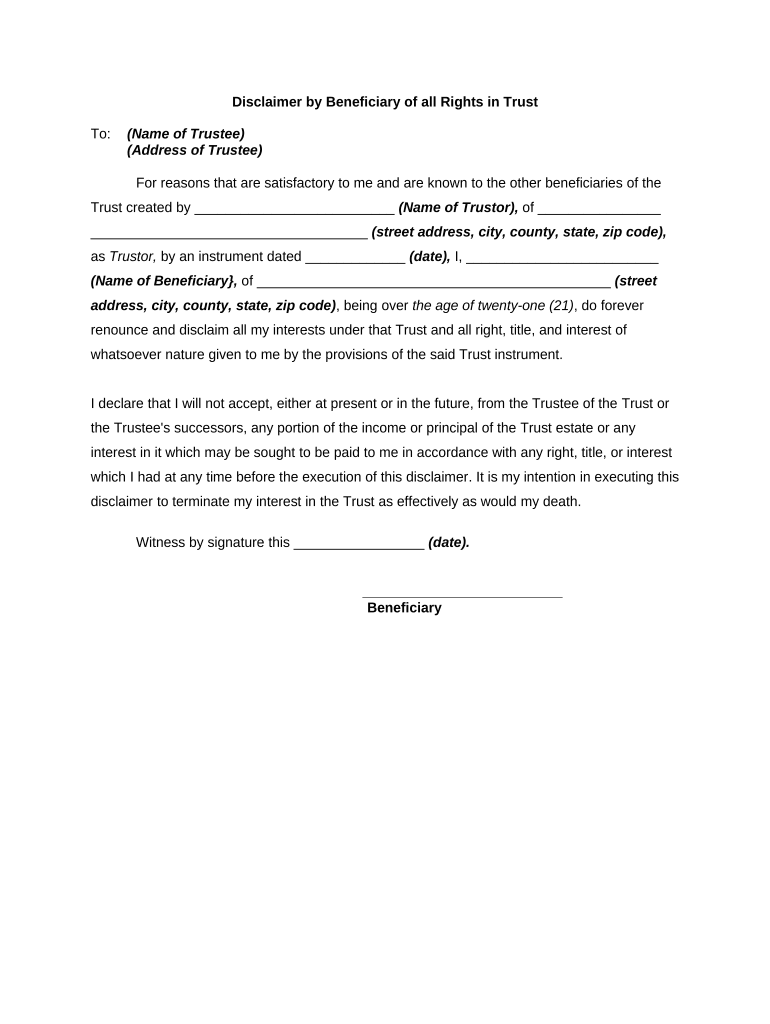
Disclaimer of Beneficiary's Interest in Trust

This template is fully customizable. Edit the text, fill out the fields, and send it for signature. Give it a try!
Disclaimer of Beneficiary's Interest in Trust

What a Disclaimer of Beneficiary's Interest in Trust Is

A Disclaimer of Beneficiary's Interest in Trust is a written instrument by which a person who would otherwise receive trust property declines or renounces their right to any present or future interest in the trust. The disclaimer must be unambiguous, made without acceptance of the interest, and typically executed within the time limits set by state law and federal tax rules to achieve intended tax or estate planning effects. It prevents possession, control, or benefits from vesting in the disclaiming party and redirects the interest according to the trust's terms or applicable succession rules.

Why a Clear Disclaimer Matters for Estate and Tax Planning

A properly drafted Disclaimer of Beneficiary's Interest in Trust preserves estate planning flexibility, can avoid gift or estate tax consequences, and clarifies succession. It protects the disclaimant by documenting the refusal of benefits and directing assets under trust or statutory default rules.

Why a Clear Disclaimer Matters for Estate and Tax Planning

Who Typically Prepares and Uses a Disclaimer

Typical users include beneficiaries, trustees, estate attorneys, and executors responsible for trust administration and estate planning decisions.

  • Individual beneficiaries declining interests to alter tax or succession outcomes.
  • Trustees executing administrative confirmations after a beneficiary files a disclaimer.
  • Estate attorneys preparing formal disclaimers to comply with state and federal requirements.

Representative Roles and Responsibilities

Beneficiary

A natural person who would receive trust property but chooses to disclaim. The disclaimer should state it is made voluntarily, without acceptance of any benefits, and identify the specific interest disclaimed; incorrect description or conditional language risks invalidation under state law.

Trustee

A fiduciary responsible for acknowledging the disclaimer, adjusting trust accounting, and redirecting the disclaimed interest according to the trust instrument or applicable intestacy rules; trustees should confirm timing and form to protect tax consequences and avoid unintended acceptance.

Essential Information to Include in the Disclaimer

Trust Name: Full legal name of the trust.
Trust Date: Date the trust was executed.
Beneficiary Name: Full legal name as on ID.
Interest Description: Specific share or property interest.
Notary/Witness: Notary acknowledgement and witness details.
Effective Date: Date disclaimer is signed and effective.

Key Risks and Potential Consequences

Tax Exposure: May trigger gift or estate tax.
Invalid Disclaimer: Ambiguous language can void effect.
Acceptance Risk: Acceptance of benefits negates disclaimer.
Timing Issues: Missed deadlines affect tax treatment.
Notarization Fail: Missing notarization may be required.
State Sanctions: State-specific penalties or estoppel.

Common Pitfalls to Avoid

  • Using conditional language or reserving rights in the disclaimer, which can be interpreted as acceptance and render the disclaimer ineffective.
  • Failing to deliver the disclaimer within statutory or trust-imposed timeframes, potentially causing the disclaimer to fail for tax or succession purposes.
  • Describing the wrong interest or trust instrument, leading to disputes over exactly what was disclaimed and who inherits the redirected interest.
  • Not coordinating with tax or estate counsel when disclaimers are used to achieve federal tax objectives, increasing audit or litigation risk.

Step-by-Step: Preparing and Executing a Disclaimer

Follow these steps to prepare, execute, and file a valid Disclaimer of Beneficiary's Interest in Trust.

  • 01
    Identify Interest: Specify trust, date, and precise interest being disclaimed.
  • 02
    Review Law: Check state statutes and federal tax timing rules before signing.
  • 03
    Draft Disclaimer: Use unambiguous language; avoid conditions or acceptance.
  • 04
    Execute & File: Sign, notarize if needed, and notify trustee or custodian.

How the Disclaimer Process Works in Practice

This process shows how a beneficiary formally renounces an interest and how the trust is adjusted administratively.

  • Prepare Form: Draft clear, unconditional disclaimer referencing trust name, date, and interest.
  • Deliver: Send to trustee and file per trust terms.
  • Acknowledge: Trustee updates records and accounting entries.
  • Redirect: Interest passes per trust or intestacy provisions.

Recommended Online Workflow Settings for Electronic Execution

Recommended online configuration when completing, signing, and delivering a Disclaimer of Beneficiary's Interest in Trust electronically to trustees and counsel.

Field Configuration
Signature Method E-signature with audit trail and timestamp.
Authentication Level Email plus SMS code recommended for identity.
Document Retention Store immutable PDF; keep audit log for 6 years.
Notification Send copies to trustee, counsel, and registries as required.

Platform Capabilities to Verify Before eSigning

When using electronic tools to complete the disclaimer, ensure platform meets legal and security requirements for trust documents.

  • Supported Formats: PDF and DOCX accepted.
  • Integrations: Works with common storage and CRM systems.
  • Audit Trail: Timestamps, IP, and signer events retained.

Timing Considerations That Affect Legal and Tax Outcomes

Key timelines affect tax consequences and legal effectiveness; follow state statute deadlines and federal tax delivery rules.

Tax Timing Considerations:

Check state statute and IRS guidance for effective disclaimers.

State Deadline Variations:

Some states limit the time to disclaim to months or years.

Trust Terms Impact:

Trust instruments may impose filing or notice requirements to trustees.

Delivery Method:

Prompt delivery to trustee and record custodians preserves tax treatment.

Tax filings:

Coordinate with tax advisor to report related transfers correctly.

eSignature Vendor Comparison for Executing Disclaimers

Comparison of common eSignature plans and capabilities relevant when executing a Disclaimer of Beneficiary's Interest in Trust.

signNow DocuSign Adobe Sign PandaDoc HelloSign
Starting Price $8/user/mo $15/user/mo $14/user/mo $19/user/mo $15/user/mo
Free Trial 7-day free trial Varies by vendor Varies by vendor Varies by vendor Varies by vendor
Bulk Send Yes Yes Yes Yes No
Audit Trail Yes Yes Yes Yes Yes
HIPAA Compliant Yes Yes Yes No No
Envelope Cap No cap 100 envelopes/user/year Varies Varies Varies

Key Milestones From Decision to Recordation

Key milestones guide the process from decision to disclaimer through trustee acknowledgment and any recording required for legal or tax effect.

01

Decision to Disclaim

Beneficiary decides to refuse interest and consult counsel.

02

Prepare Disclaimer

Draft clear, unconditional instrument naming trust and interest.

03

Execute & Notarize

Sign in presence of required witnesses or notary.

04

Trustee Acknowledgment

Deliver to trustee; trustee updates records and redirects interest.

Frequently Asked Questions About Disclaimers of Beneficiary's Interest in Trust

[INTRO] Answers to common questions about validity, timing, and electronic execution of disclaimers.


Need help? Contact support

be ready to get more
Join over 28 million airSlate SignNow users