Establishing secure connection…Loading editor…Preparing document…

Foreign Judgment Oregon

This template is fully customizable. Edit the text, fill out the fields, and send it for signature. Give it a try!
Foreign Judgment Oregon

What a Foreign Judgment in Oregon Means

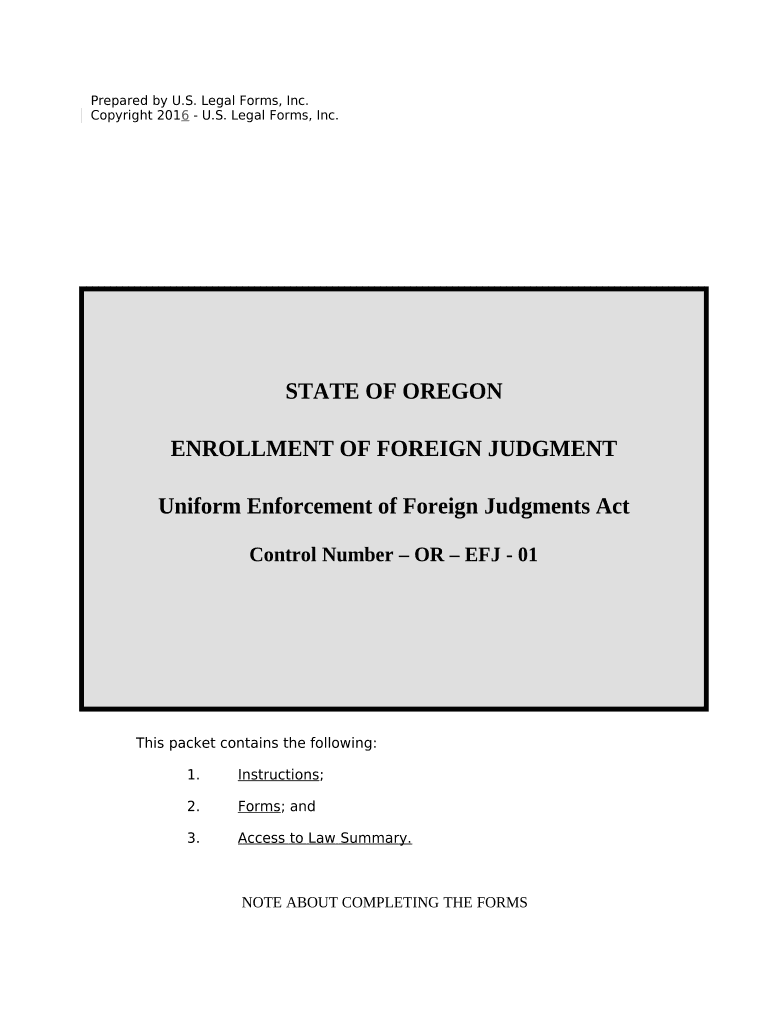
A Foreign Judgment Oregon filing is the process used to register and domesticate a money judgment entered by a court in another state or a foreign country so it can be enforced in Oregon. The procedure identifies the judgment creditor and debtor, mounts the original judgment record and any certified copies, and triggers Oregon court mechanisms for levy, garnishment, or other collection remedies. The local court clerk typically accepts the registration packet and sets deadlines for debtor notice and potential objections under state procedure.

Why Domesticate a Foreign Judgment in Oregon

Domestication creates an enforceable Oregon judgment without relitigating the merits, enabling levy, garnishment, and lien recording locally. It centralizes collection options and preserves the creditor’s remedies under Oregon enforcement rules.

Why Domesticate a Foreign Judgment in Oregon

Who Typically Handles a Foreign Judgment in Oregon

The following parties most often prepare, file, or respond to a Foreign Judgment Oregon registration.

  • Judgment Creditors — Law firms or in-house counsel seeking local enforcement and asset collection within Oregon jurisdictions.
  • Judgment Debtors — Individuals or businesses who receive notice and may file defenses or request hearings to contest enforceability.
  • Court Clerks & Process Servers — Court staff and service agents who process filings, serve notices, and return evidence of service.

Each participant has specific responsibilities: creditors prepare certified judgments, debtors review notices promptly, and clerks enforce procedural timelines.

Core Elements of a Proper Oregon Foreign Judgment Filing

A complete filing combines certified originals, an authenticated docket entry, required filing forms, clear party identification, a local filing fee, and a registry entry for enforcement purposes.

Certified Judgment

Attach a certified copy or exemplified record of the foreign judgment showing amount, date, and court of entry; this is the primary enforcement proof used by the Oregon court.
Transcripts and Orders

Include any judgments’ post-judgment orders (interest calculations, attorney fees, post-judgment relief) to establish total enforceable balance in Oregon.

Notice to Debtor

Provide a copy of the filing notice or proposed notice form so the court can direct service to the debtor and set objection deadlines.

Affidavit of Filing

Supply an affidavit certifying the original judgment’s docket and the authenticity of attachments, signed by the judgment creditor or counsel.

Filing Fee and Cover Sheet

Pay the county or circuit court filing fee and include a cover sheet identifying case caption, judgment amount, and requested relief.

Proposed Enforcement Writs

Where applicable, submit proposed writs or garnishment forms compatible with Oregon enforcement procedures to expedite collection once registered.

Step-by-Step: Registering a Foreign Judgment in Oregon

Follow these sequential actions to register and pursue enforcement efficiently in Oregon courts.

  • 01
    Assemble Records: Collect certified judgment, dockets, and post-judgment orders.
  • 02
    Prepare Filing: Complete the registration form and required affidavit.
  • 03
    File with Clerk: Submit documents and pay county filing fee.
  • 04
    Serve Debtor: Serve notice per Oregon rules and await objection period.

How the Enforcement Process Proceeds After Registration

After acceptance, the court follows a short sequence that enables collection unless the debtor timely objects and obtains relief.

  • Clerk Review: Clerk checks attachments and docket conformity before docketing the foreign judgment.
  • Notice Period: The debtor receives notice and a limited time to contest enforcement or jurisdiction.
  • Objection Resolution: Court addresses any jurisdictional or procedural defenses the debtor raises.
  • Enforcement Remedies: Assuming registration stands, creditor pursues writs, garnishments, or liens under Oregon law.

Document Workflow: What to Configure for a Smooth Filing

Set up a clear internal workflow to collect certified materials, secure signatures, and meet court deadlines.

Task Responsible party | Due date
Obtain Certification Foreign clerk or issuing court | Before filing
Draft Affidavit Creditor counsel | 3–5 business days
Pay Fees Creditor or counsel | At filing
Service Process server | Per Oregon schedule

Digital Filing and eSubmission Considerations

Many Oregon courts permit electronic submission of registration materials; verify local e-filing rules before relying on eDelivery.

  • Document Formats: PDF is universally accepted; maintain searchable text where possible
  • Authentication: Use certified copies and notarizations consistent with Oregon rule sets
  • Integrations: E-filing portals often accept uploads from cloud storage platforms

Retain originals and certified exemplars even when e-submitting, and confirm the court accepted electronic images as true copies.

Key Deadlines and Timeframes to Track

Timely action preserves enforcement rights; track filing, notice, objection, and execution deadlines carefully.

Filing Deadline:

Varies — check issuing jurisdiction and Oregon court rules

Debtor Notice Period:

Short statutory window; debtors have limited time to object to registration

Objection Filing:

Debtor must file objections promptly or risk default enforcement

Execution Requests:

Writs issued after registration is final or objections resolved

Interest Calculations:

Interest accrual dates depend on original judgment date and local statutes

Common Pitfalls to Avoid

  • Missing certified exemplars — courts often reject uncertified copies and delay registration for certification.
  • Incorrect party names — using nicknames or DBAs without legal names impedes service and asset searches.
  • Failure to follow local service rules — improper service can extend timelines and create defense opportunities.
  • Unclear relief requests — failing to specify the enforcement remedy causes unnecessary court queries and delays.

Consequences of Incomplete or Incorrect Filings

Rejection: Clerk may refuse filing until certified documents are provided.
Delay: Processing delays reduce practical enforcement window and can increase costs.
Loss of Priority: Incorrect lien recording can shift priority among creditors.
Costs: Additional fees and attorney time for corrections or re-filing.
Objection Exposure: Defendants gain grounds to stay or vacate enforcement.
Enforcement Barriers: Improperly prepared filings may prevent garnishment or levy.

eSignature Provider Comparison for Filing and Managing Documents

Comparing basic vendor pricing and features useful when preparing a Foreign Judgment Oregon registration and related enforcement packets.

signNow DocuSign Adobe Sign PandaDoc HelloSign
Starting Price $8/user/mo $15/user/mo $14/user/mo $19/user/mo $15/user/mo
Free Trial 7-day free trial Varies Varies Varies Varies
Bulk Send Yes Yes Yes Yes No
Audit Trail Yes Yes Yes Yes Yes
HIPAA Compliant Yes Yes Yes No No
Envelope Cap No cap 100 envelopes/user/year Varies Varies Varies

Real-World Examples of eSigning and Enforcement Workflows

Practical examples show how organizations prepare and enforce foreign judgments using digital workflows and certified records.

Optica Ventures LLC

Optica streamlined collection processes while preserving certified judgment records for court filing.

  • The team used standardized packets for county clerks.
  • The approach reduced clerk queries and improved clarity when enforcing out-of-state money judgments in local jurisdictions.

Martin Properties

Martin Properties digitized certified attachments and notice templates for rapid filing.

  • They kept verified certified exemplars ready.
  • This cut turnaround time for registration and allowed quicker issuance of writs once objections were resolved, supporting faster asset recovery.

Practical Tips for Accurate and Efficient Filing

Adopt consistent document preparation and review practices to reduce rejection risk and compress enforcement timelines.

Use Certified Originals
Obtain an exemplified or certified copy from the issuing court before filing in Oregon; uncertified copies are a common cause of rejection.
Standardize Party Names
Match names exactly to government or business registrations and include aliases or DBA names to support service and asset location.
Document Interest and Fees
Clearly itemize principal, pre-judgment interest, post-judgment interest, attorney fees, and costs so the court can readily compute enforceable totals.
Confirm Local Rules
Check the specific county circuit court local rules for formatting, required cover sheets, and accepted e-filing formats before submission.

Frequently Asked Questions About Foreign Judgment Oregon

Common questions about registration, objections, and enforcement in Oregon, plus practical answers to avoid delays or rejection.


Need help? Contact support

be ready to get more
Join over 28 million airSlate SignNow users