Establishing secure connection…Loading editor…Preparing document…

Homestead Exemption

This template is fully customizable. Edit the text, fill out the fields, and send it for signature. Give it a try!
Homestead Exemption

What the Homestead Exemption Covers

The Homestead Exemption is a legal provision that reduces property tax liability by excluding a portion of a homeowner's primary residence value from assessment. Eligibility, exemption amounts, and application procedures vary by state; most states provide a filing process with local county assessor or tax office. The exemption can lower annual property taxes, protect a limited amount of home equity from certain creditors, and affect estate and probate planning. Applicants usually must prove residency, ownership, and primary-use status to qualify.

Why claim the Homestead Exemption

Claiming the Homestead Exemption can reduce annual property tax bills, increase homeowner protections in bankruptcy or creditor actions in some states, and simplify future estate transfers. Benefits and eligibility differ by jurisdiction and require local filing.

Why claim the Homestead Exemption

Who typically files a Homestead Exemption

Primary-residence homeowners, surviving spouses, and legal representatives commonly apply for homestead exemptions with local tax assessors.

  • Owner-occupants: Homeowners who live in the property as their primary residence and meet state residency rules.
  • Seniors and disabled: Many states offer enhanced exemptions or additional credits for older or disabled homeowners.
  • Estate representatives: Executors or administrators claiming exemptions for decedents' primary residences during probate.

Complete and submit a Homestead Exemption: step-by-step

Follow these sequential steps to complete and submit a Homestead Exemption application to your county assessor or tax office.

  • 01
    Gather documents: Collect ID, deed, utility bills, and tax records.
  • 02
    Complete form: Enter names, address, APN, occupancy date.
  • 03
    Attach proofs: Attach copies of supporting documents as required.
  • 04
    Submit: File with county assessor before local deadline; retain copies.

Where to file and what to expect after submission

After submission the assessor verifies eligibility, calculates exemption value, and applies reductions to property assessment for the appropriate tax year.

  • Local filing: Submit to county assessor or tax collector office.
  • Verification: Assessor reviews documents and residency criteria.
  • Assessment adjustment: Assessor updates tax rolls and recalculates taxes.
  • Notification: You receive approval or denial in writing.

Essential data elements the assessor will require

Owner Name: Full legal name
Property Address: Street, city, state, ZIP
Parcel ID: Assessor parcel number
Occupancy Date: MM/DD/YYYY
Contact Info: Phone and email
Proof Type: Driver's license, utility bill

Penalties and risks of incorrect or late filings

Denial: Exemption application rejected
Back Taxes: Owed taxes plus interest
Penalties: Late-filing monetary penalties
Loss of Protection: Creditor protections reduced
Tax Adjustments: Assessment corrections applied
Legal Exposure: Potential audit or appeal

Common mistakes to avoid

  • Submitting incomplete proof of residency, such as an out-of-date utility bill or mismatched name, commonly leads to denials or requests for additional documentation.
  • Using an incorrect Parcel ID or property address that does not match county records delays processing while the assessor reconciles records.
  • Missing filing deadlines or failing to refile when required by state law can forfeit exemption eligibility for the tax year.
  • Assuming electronic submission is accepted statewide; some counties still require original signatures or notarized documents for initial claims.

Core components of a complete Homestead Exemption packet

A professional application groups all required pieces so the assessor can verify ownership and occupancy quickly; include clear labels and a checklist to reduce follow-up requests.

Cover Letter

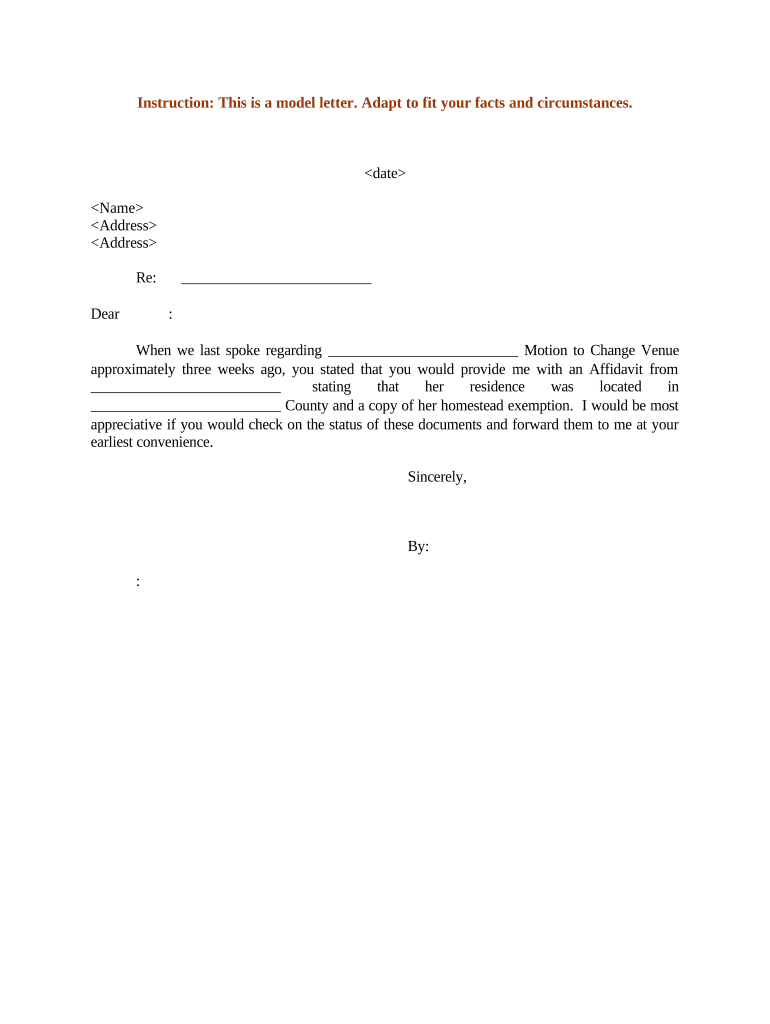
Provide a brief cover letter addressed to the county assessor summarizing the claim, listing attached documents, and citing the legal basis or local ordinance supporting eligibility.
Completed Form

Attach the official, fully completed homestead exemption form with signatures and dates; avoid blanks and ensure consistent name formatting across documents.

Proof of Ownership

Include recorded deed, title report excerpt, or mortgage statement demonstrating ownership; if names differ, attach certified name-change documents to reconcile records.

Proof of Residency

Supply at least two dated documents showing primary residence, such as driver's license, voter registration, or recent utility bills, as required by the assessor.

Parcel Identification

State the assessor parcel number or tax account number exactly as shown on the property tax bill to ensure the application applies to the correct record.

Notarization & Signatures

When required, include notarized signature pages or witness affidavits; confirm county rules for RON acceptance and preserve originals if the assessor requests them.

Practical tips for accurate and efficient filing

Follow these best practices to reduce processing delays, ensure compliance with local requirements, and maximize the likelihood of approval.

Prepare documentation
Organize supporting documents in the order requested by the assessor, make legible copies, and include a summary checklist. A clear packet shortens review time and reduces follow-up requests.
Confirm deadlines
Check county assessor deadlines and whether retroactive claims are accepted. Missing a local filing window can forfeit tax relief for the current year and require an appeal.
Use consistent names
Ensure the name on the application matches the deed and identification. Discrepancies often trigger identity verification and slow approval; include certified name-change documents when applicable.
Keep records
Retain copies of filings, stamped receipts, and assessor correspondence for at least seven years. These records support appeals, audits, and estate administration where exemption status is contested.

How organizations handle homestead-related forms

Real estate managers and small brokerages often centralize exemption filings to ensure consistency across counties and avoid missed deadlines.

Martin Properties

A regional property manager consolidated exemption packets and standardized supporting documents to reduce county follow-ups.

  • Used digital packets and e-signatures for submission.
  • Tim Martin, Founder, said: "I can process and execute all of these documents online with 100% compliance and built-in security. Whether on mobile or working offline, I can get forms back to their necessary parties efficiently."

Optica Ventures

A small real estate investor group centralized filings and retained electronic copies for audits.

  • Streamlined document collection and storage.
  • Brian Fitzgibbons, COO, said: "The interface is simple and easy-to-use for our team; more importantly, it is just as easy for our customers."

How to configure an online Homestead Exemption workflow

Configure the digital workflow to collect applicant data, attachments, and eSignatures before routing to the county assessor or legal reviewer.

Field Configuration
Form Template Upload official PDF form and map fillable fields for name, address, APN, and dates.
Signer Roles Define roles for Applicant and County Reviewer; add Notary role if required.
Required Attachments Require uploads for deed, ID, and two proofs of residency as conditional fields.
Routing Automate routing to assessor email and save signed packet to cloud storage.

Digital signing and submission requirements to confirm

Use an eSignature platform that supports ESIGN and UETA compliance, secure file attachments, and preserves audit trails accepted by local authorities.

  • File types: PDF and DOCX supported
  • Authentication: Email or SMS codes; RON if supported
  • Integrations: Cloud storage and assessor portals

Comparing eSignature pricing and capabilities for homestead filing workflows

Basic vendor pricing and capability differences that commonly affect document-heavy workflows. Confirm plan inclusions and local compliance features before selecting a provider.

signNow DocuSign Adobe Sign PandaDoc HelloSign
Starting Price $8/user/mo $15/user/mo $14/user/mo $19/user/mo $15/user/mo
Free Trial 7-day free trial No No Yes, limited Yes, limited
Bulk Send Yes Yes Yes Yes No
Audit Trail Yes Yes Yes Yes Yes
HIPAA Compliant Yes Yes Yes No No
Envelope Cap No envelope cap 100 envelopes/user/year Varies by plan Varies by plan Varies by plan

Homestead Exemption — frequently asked questions

Answers to common questions about eligibility, filing, notarization, and timelines for Homestead Exemption claims in the United States.


Need help? Contact support

be ready to get more
Join over 28 million airSlate SignNow users