Establishing secure connection…Loading editor…Preparing document…

Idaho Release

This template is fully customizable. Edit the text, fill out the fields, and send it for signature. Give it a try!
Idaho Release

What an Idaho Release Is and when it’s used

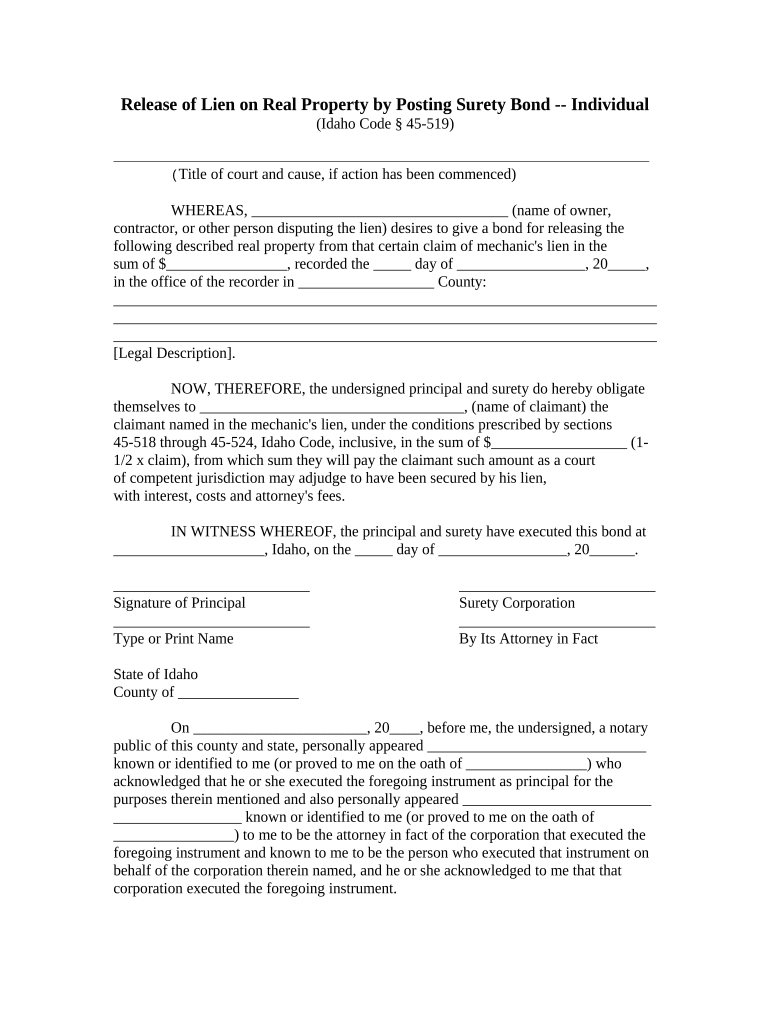
An Idaho Release is a written agreement in which one party (the releasor) gives up specified claims or liabilities against another party (the releasee). Typical uses include liability waivers for recreational activities, settlement releases after disputes, and authorization to disclose records. A properly completed release defines the scope of claims released, identifies parties, describes consideration, and includes signature and authentication steps to support enforceability under U.S. electronic signature laws.

Why a clear, well-drafted release matters

A precise Idaho Release reduces ambiguity about who gives up which rights, lowers litigation risk, and creates an auditable record of consent. It also sets expectations about the release scope, payment or consideration, and conditions under which the release becomes effective.

Why a clear, well-drafted release matters

Who typically completes an Idaho Release

Common users include individuals, businesses, and professionals who need a documented waiver or settlement agreement.

  • Individuals and participants in activities such as events or recreational programs needing liability waivers.
  • Businesses and event organizers using standardized releases to manage exposure and vendor relationships.
  • Attorneys, insurers, and settlement administrators preparing releases as part of dispute resolution or claim settlements.

Core parts of a professional Idaho Release

A robust release follows a consistent structure so parties and courts can identify intent, scope, and consideration quickly.

Parties

Clear identification of releasor(s) and releasee(s) by legal name, capacity, and contact information to avoid ambiguity about who is bound.
Recitals

Short factual background explaining why the release is being executed and any relevant transaction dates or contract references for context.

Release Clause

Precise language describing the claims waived, including temporal scope, causes of action, and any carved-out exceptions for specific claims.

Consideration

Description of payment, goods, or other consideration supporting the release; must be specific to show bargained-for exchange.

Representations

Statements by parties about authority, understanding of rights waived, and acknowledgement of voluntary execution to support enforceability.

Execution Block

Signature lines with printed names, dates, capacity (individual or corporate officer), and notarization or witness fields if required.

Step-by-step: completing and executing the Idaho Release

Follow these sequential steps to prepare, sign, and store the release correctly.

  • 01
    Prepare draft: Assemble parties, facts, and consideration to draft a precise release clause.
  • 02
    Verify authority: Confirm each signer has legal authority to execute on behalf of the named party.
  • 03
    Authenticate signer: Use valid ID, witness, or notary as required before signing.
  • 04
    Distribute and retain: Provide executed copies to all parties and archive per retention rules.

Where to send and store the completed release

After execution, route copies to all stakeholders and place the signed record in a secure filing system for future reference.

  • Other Party: Send a fully executed copy to the releasee or their counsel for their records.
  • Insurer / Claim File: Provide a copy to applicable insurers or claims administrators to document resolution.
  • Internal Records: Store in the contracting party’s secure document management system with access controls.
  • Attorney / Advisor: Provide counsel a copy for retention and future reference in dispute scenarios.

Digital signing and file format considerations

Use e-signature platforms that produce tamper-evident PDFs and a detailed audit trail when you execute releases electronically.

  • File Formats: PDF, DOCX supported
  • Authentication: Email, SMS, or stronger
  • Audit Trail: Timestamps and logs

How to configure an online release workflow

Set up the signing flow to capture identity, intent, and an auditable record of the executed release.

Field Configuration
Signer Authentication Choose email link or SMS code for basic verification
Required Fields Make names, dates, and signature fields mandatory
Conditional Fields Show notary block only when toggled on
Completion Options Enable automated distribution and audit log generation

Key legal risks of an incorrect or incomplete release

Unenforceable Release: Poorly defined scope may render the release unenforceable.
Tax Consequences: Settlement consideration might trigger reporting or withholding obligations.
Identity Disputes: Mismatch between signer name and ID can void acceptance.
Revocation Risk: Improper execution may allow later revocation challenges.
Evidence Gaps: Missing audit trail or notarization weakens proof of consent.
Regulatory Exposure: Industry rules (e.g., HIPAA) may impose additional requirements.

Common mistakes to avoid when preparing an Idaho Release

  • Using vague release language that fails to identify the precise claims or timeframe leads to disputes and potential litigation.
  • Allowing signers to use inconsistent names or nicknames causes identity challenges and may invalidate the release.
  • Skipping witness or notary steps when state or industry rules require them can undermine enforceability in later proceedings.
  • Failing to document consideration or using boilerplate phrases such as 'for good and valuable consideration' without specifics weakens evidentiary value.

Practical scenarios showing how an Idaho Release is used

These examples illustrate typical applications and the practical outcomes a clear release supports.

Event Liability Release

A community festival uses a one-page Idaho Release to document participant assumption of risk and limited claims coverage.

  • The release clarifies covered activities and effective dates.
  • With consistent execution and retained copies, organizers reduce ambiguity and improve claim handling efficiency while documenting participant consent.

Property Hold Harmless

A property owner uses a release when allowing contractors temporary access for repairs.

  • It specifies indemnified claims related to that work.
  • Properly signed and retained, the release helps prevent later disputes and supports insurer and contract records if a claim arises.

Who can sign and what authority looks like

Individual Releasor

A private person signing for personal claims must be of legal age and sign in their own name; guardians or conservators sign where legal incapacity exists and should include capacity statements.

Authorized Signer

Company or entity releases require an officer or agent with documented authority; include printed title and authority statement to evidence capacity to bind the organization.

Essential fields and data elements to capture

Legal names: Full legal names
Addresses: Street, city, state, ZIP
Dates: Execution and effective dates
Consideration: Exact amount or description
Scope: Specific claims/timeframe
Authentication: Notary, witness, or eID info

Practical tips for accurate and efficient completion

Adopt consistent drafting, signing, and filing routines to reduce errors and improve defensibility of releases.

Clear, narrow scope
Draft release language that precisely identifies the claims and timeframe being waived; specificity reduces interpretive disputes and supports enforcement in court or arbitration.
Match signer identity
Require signers to use the same full legal name as on identification and, where possible, record ID details during execution to prevent later identity-based challenges.
Initial each page
Have all parties initial each page of the release and sign the final execution block to show review of the entire document and reduce claims of omitted pages.
Preserve audit trails
When using electronic signing, retain the platform’s completion certificate, IP/timestamp data, and any authentication logs to document intent and attribution.

Typical timing considerations and processing expectations

Be mindful of effective dates, notice periods, and any insurer or statutory deadlines that may interact with a release.

Effective Date:

Specify MM/DD/YYYY when the release takes effect

Delivery Date:

Provide executed copies within a stated number of days

Insurer Notice:

Notify insurers promptly when releases resolve covered claims

Statute Interaction:

Consider how the release affects filing deadlines and limitation periods

Record Availability:

Allow time for notarization, if required, before filing with third parties

Comparing e-signature options for executing the Idaho Release

Choose an e-signature solution that supports required authentication, audit trails, file formats, and any industry-specific compliance obligations without assuming feature parity across vendors.

signNow DocuSign Adobe Sign PandaDoc HelloSign
Starting Price $8/user/mo $15/user/mo $14/user/mo $19/user/mo $15/user/mo
Free Trial 7-day free trial Varies by plan Varies by plan Varies by plan Varies by plan
Bulk Send Yes Yes Yes Yes No
Audit Trail Yes Yes Yes Yes Yes
HIPAA Compliant Yes Yes Yes No No

Frequently asked questions about Idaho Releases

Answers to common questions about enforceability, notarization, electronic signatures, and recordkeeping for releases in Idaho.


Need help? Contact support

be ready to get more
Join over 28 million airSlate SignNow users