Establishing secure connection…Loading editor…Preparing document…

Investment Agreement

This template is fully customizable. Edit the text, fill out the fields, and send it for signature. Give it a try!
Investment Agreement

What an Investment Agreement Is and When It’s Used

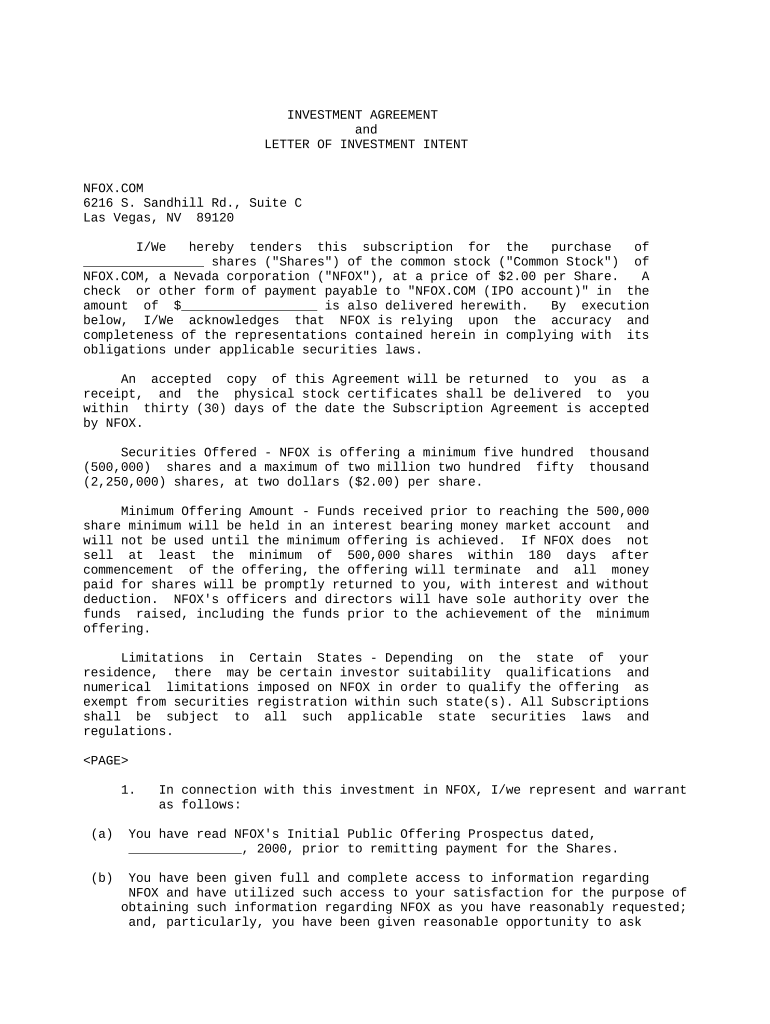
An Investment Agreement is a legally binding contract that sets the terms under which one party provides capital to another in exchange for equity, convertible instruments, or other financial consideration. It records the amount invested, type of security, ownership percentage, representations and warranties, closing conditions, and post-closing rights such as board seats or information rights. Investment Agreements govern investor protections, transfer restrictions, vesting schedules, and dispute resolution. Parties use these agreements to document expectations, allocate risk, and provide a written basis for enforcement if a dispute or regulatory review arises.

Why a Clear Investment Agreement Matters

A clear Investment Agreement reduces ambiguity about economic terms, governance, and exit mechanics, lowers dispute risk, and creates a record for tax and regulatory reporting. Well-drafted terms protect both investors and issuers and provide a template for future financings and corporate governance decisions.

Why a Clear Investment Agreement Matters

Who Typically Prepares and Signs an Investment Agreement

Investment Agreements are used by a range of parties — founders, investors, corporate counsels, and transaction managers — each with different responsibilities when preparing and signing.

  • Founders and company executives preparing terms and providing corporate authorizations for equity or convertible instruments.
  • Angel investors, venture funds, and private equity sponsors negotiating economics, protections, and closing conditions.
  • Corporate counsels and transaction teams drafting representations, compliance language, and signatory authority verification.

Identify roles early: who negotiates price, who approves changes, and who is authorized to sign so execution and recordkeeping proceed without delay.

Core Sections to Include in a Professional Investment Agreement

A complete Investment Agreement organizes essential terms so each party’s rights and obligations are explicit. Below are the core sections to include and why they matter.

Parties

Identify full legal names and entity types for investor(s) and issuer, including state of incorporation and any affiliates bound by the agreement.
Investment Terms

Specify amount invested, form of consideration (cash, promissory note, convertible instrument), price per share and post-money capitalization mechanics.

Representations & Warranties

Include issuer and investor statements about authority, accuracy of financials, capitalization, and any material liabilities or legal proceedings.

Conditions to Closing

List deliverables required before funding — board approvals, legal opinions, officer certificates, consents, and cleared due diligence items.

Governance Rights

Describe board seats, observer rights, voting thresholds, protective provisions, and information rights granted to investors.

Transfer and Exit

State lockups, right of first refusal, drag-along/tag-along, registration obligations, and procedures on sale, IPO, or dissolution.

Essential Data Elements to Capture in the Agreement

Party Names: Full legal entity names
Addresses: Registered office and mailing address
Investment Amount: Numeric value and currency
Security Type: Shares, options, convertible note
Effective Date: Date agreement becomes operative
Governing Law: State law selected for disputes

Step-by-Step: How to Complete and Execute an Investment Agreement

Follow these sequential steps to prepare, review, and finalize the Investment Agreement so closing proceeds smoothly and records remain audit-ready.

  • 01
    Draft Terms: Document economics, governance, and closing conditions.
  • 02
    Legal Review: Have counsel review representations and compliance language.
  • 03
    Finalize Exhibits: Attach schedules, capitalization table, and legal opinions.
  • 04
    Execute & Record: Sign, notarize if required, deliver copies to all parties.

How to Customize an Online Signing Workflow for This Agreement

Configure fields, signer order, and authentication so parties sign in the correct sequence and the system records each action.

Field Configuration
Signature Block Require name, title, and date for each signatory
Signing Order Set investor then issuer or vice versa as required
Authentication Use email link, SMS code, or advanced signer ID
Audit Trail Enable IP, timestamp, and certificate capture

Where to Send the Signed Agreement and How to File It

After execution, distribute copies and record any public filings required by the security type or jurisdiction.

  • Investor Copy: Deliver fully executed PDF to each investor
  • Company Records: File original in corporate minute book or digital repository
  • UCC Filing: File UCC-1 financing statement if collateralized
  • Registrar/Transfer Agent: Record share issuance with transfer agent if applicable

Digital Signing and Integration Considerations

Choose an eSignature provider that supports secure signatures, audit trails, and integration with your corporate systems.

  • Integrations: Salesforce, NetSuite, Google Workspace, Microsoft 365, Box, and other systems for automated document storage.
  • Formats: Support for PDF, DOCX, and export of completed documents with certificate of completion.
  • Authentication: Options for email, SMS, KBA, and advanced signer verification.

Ensure the chosen platform meets your compliance needs (for example HIPAA or 21 CFR Part 11) and provides retrievable audit trails for disputes or audits.

Key Dates to Track in an Investment Agreement

Track dates precisely; several deadlines affect funding, tax reporting, and record retention. Missing a date can create tax or compliance obligations.

Effective Date:

Date when agreement’s provisions take effect

Signing Deadline:

Date by which parties must execute to satisfy conditions

Closing Date:

When funds are transferred and securities issued

Payment Milestones:

Installment dates or escrow release conditions

Tax Reporting:

Related 1099/1099-NEC deadlines (see IRC §6721 for penalties)

Typical Milestones from Term Sheet to Close

A sequential milestone view helps teams coordinate approvals, funding, and post-closing tasks to meet contractual and regulatory obligations.

01

Term Sheet Agreed

Negotiate and sign non-binding economics and major terms

02

Due Diligence

Complete legal, financial, and compliance reviews

03

Definitive Drafting

Finalize the Investment Agreement and exhibits

04

Closing

Execute, fund, and deliver closing deliverables

Common Preparation Mistakes to Avoid

  • Using informal or ambiguous consideration language that leaves interpretation to later disputes.
  • Failing to verify signatory authority, resulting in voidable signatures or delayed closings.
  • Omitting closing conditions or deadlines, which can create unmet expectations and litigation risk.
  • Neglecting to attach capitalization tables or schedules that materially affect ownership calculations.

Consequences of Inaccurate or Incomplete Agreements

Contract Damages: Monetary compensation for breach
Rescission Risk: Agreement voided due to misrepresentation
Regulatory Scrutiny: Securities or tax audits may follow
Tax Withholding: Backup withholding obligations may apply
Reporting Penalties: IRC §6721 penalties for incorrect returns
Reputational Harm: Investor relations and market trust affected

How an Investment Agreement Differs from Similar Documents

Compare common instruments to choose the correct document type for the transaction and to clarify party expectations.

Document Purpose
Investment Agreement equity investment
Stock Purchase Agreement share transfer
Convertible Note debt converting
Subscription Agreement investor subscription

eSignature Vendor Comparison for Executing Investment Agreements

Compare basic pricing and capability indicators for typical eSignature vendors. signNow appears first by design to simplify comparison.

signNow DocuSign Adobe Sign PandaDoc HelloSign
Starting Price $8/user/mo $15/user/mo $14/user/mo $19/user/mo $15/user/mo
Free Trial 7-day trial Varies by plan Varies by plan Varies by plan Varies by plan
Bulk Send Yes (Premium) Yes Yes Yes No
Audit Trail Yes Yes Yes Yes Yes
HIPAA Compliant Yes Yes Yes No No
Envelope Cap No cap 100 envelopes/user/year Varies by plan Varies by plan Varies by plan

How to Save and Export the Signed Agreement

Preserve signed copies in durable, retrievable formats and ensure certificates of completion and metadata are stored with the document.

PDF/A Export

Save the fully executed document as PDF/A to preserve signature appearance and metadata for long-term storage

Original DOCX

Keep an editable DOCX version in secure archives for amendment or redlining history

Certificate of Completion

Store the signing certificate that captures IP, timestamp, and audit events with the document

Cloud Backup

Retain copies in encrypted cloud storage with role-based access controls

Frequently Asked Questions About Executing Investment Agreements

Answers to common practical and legal questions encountered when preparing, signing, and storing Investment Agreements.


Need help? Contact support

be ready to get more
Join over 28 million airSlate SignNow users