Header
Host name and contact information at the top, including legal entity where applicable, to establish who is issuing the invitation and how the recipient may respond or verify details.
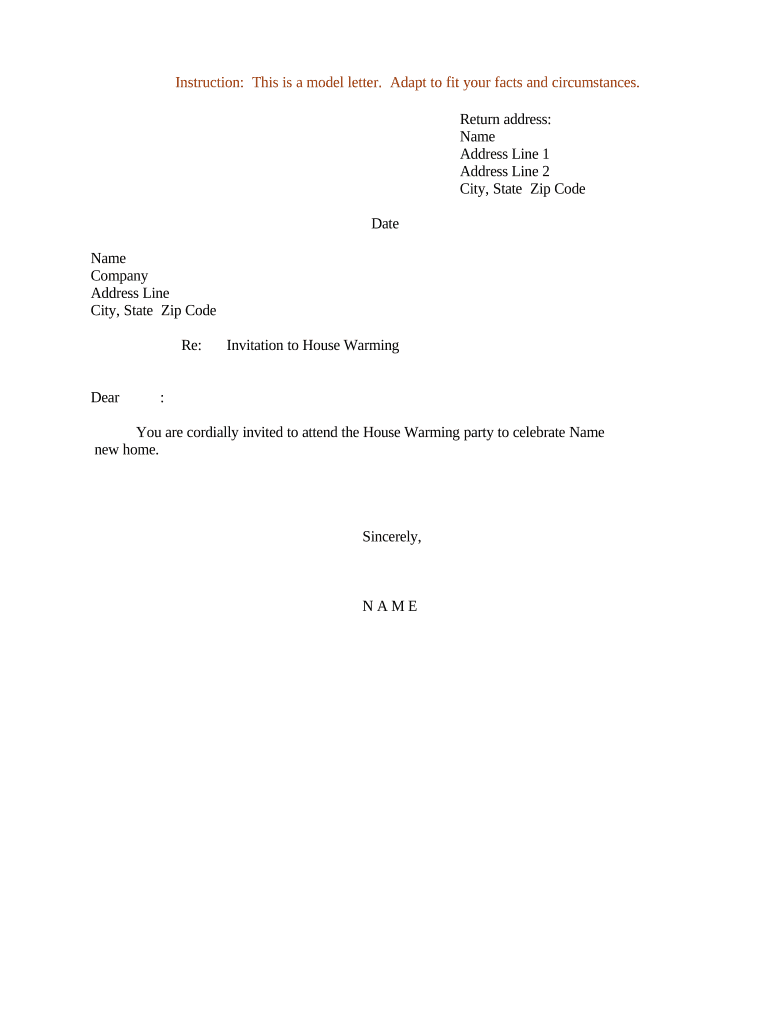
A well‑structured invitation reduces misunderstandings, supports visa or administrative requests, and documents purpose and intent. Using a standard sample helps ensure required data is present and supports legal validity when combined with proper signer attribution and retention under ESIGN and UETA.

Choose the sample that matches your purpose (event, business, visitor/visa) and adapt only the fields required by the receiving authority or organization.
Host name and contact information at the top, including legal entity where applicable, to establish who is issuing the invitation and how the recipient may respond or verify details.
Full legal name, passport or ID number if required, and mailing address to ensure the letter ties exactly to the intended individual and avoids identity mismatch issues.
Clear statement of date, start and end times, address or venue, and agenda summary so the purpose and timing of the invitation are unambiguous for administrative or visa review.
Concise explanation of why the person is invited, expected activities, and whether financial support, accommodation, or sponsorship is being provided by the host.
Any declarations, assurances, or conditional clauses (liability, costs, or obligations) stated plainly so third parties can evaluate responsibilities and risks tied to the invitation.
Host signature, printed name, title, date, and contact details; include notarization or witness lines only when required by the receiving authority or local law.
A U.S. company invites a foreign consultant for contract negotiations and site visits.
A university invites a visiting scholar to present at a conference and attend seminars.
| Field | Configuration |
|---|---|
| Authentication | Email link or SMS code for signer confirmation |
| Signature Type | Electronic signature with audit trail |
| Notarization | Enable RON or attach in‑person notarization step |
| Retention | Store signed PDF with tamper‑evident audit file |
Ensure the chosen platform records an auditable trail and stores copies in a secure repository that meets applicable compliance needs.
Prepare letters at least 4–8 weeks before travel or the event when possible.
Set an RSVP date that allows time for visa or travel administration.
Allow extra days for in‑person notarization or scheduling a RON session.
Consular offices may require additional documentation; timelines vary by country.
Retain executed letters for the period required by your retention policy.
Create the invitation and verify recipient identity and purpose.
Obtain approvals from organizational signatories or legal reviewers.
Collect electronic or in‑person signatures and notarize if needed.
Send the final copy to recipient, consular office, or other stakeholders.
| signNow | DocuSign | Adobe Sign | PandaDoc | HelloSign | |
|---|---|---|---|---|---|
| Starting Price | $8/user/mo | $15/user/mo | $14/user/mo | $19/user/mo | $15/user/mo |
| Free Trial | 7‑day free trial, no credit card required | Varies by vendor | Varies by vendor | Varies by vendor | Varies by vendor |
| Bulk Send | Yes | Yes | Yes | Yes | No |
| Audit Trail | Yes | Yes | Yes | Yes | Yes |
| HIPAA Compliant | Yes | Yes | Yes | No | No |
| Envelope Cap | No envelope cap | 100 envelopes/user/year | Varies by plan | Varies by plan | Varies by plan |