Establishing secure connection…Loading editor…Preparing document…

Joinder Form

This template is fully customizable. Edit the text, fill out the fields, and send it for signature. Give it a try!
Joinder Form

What a Joinder Form Is and when it’s used

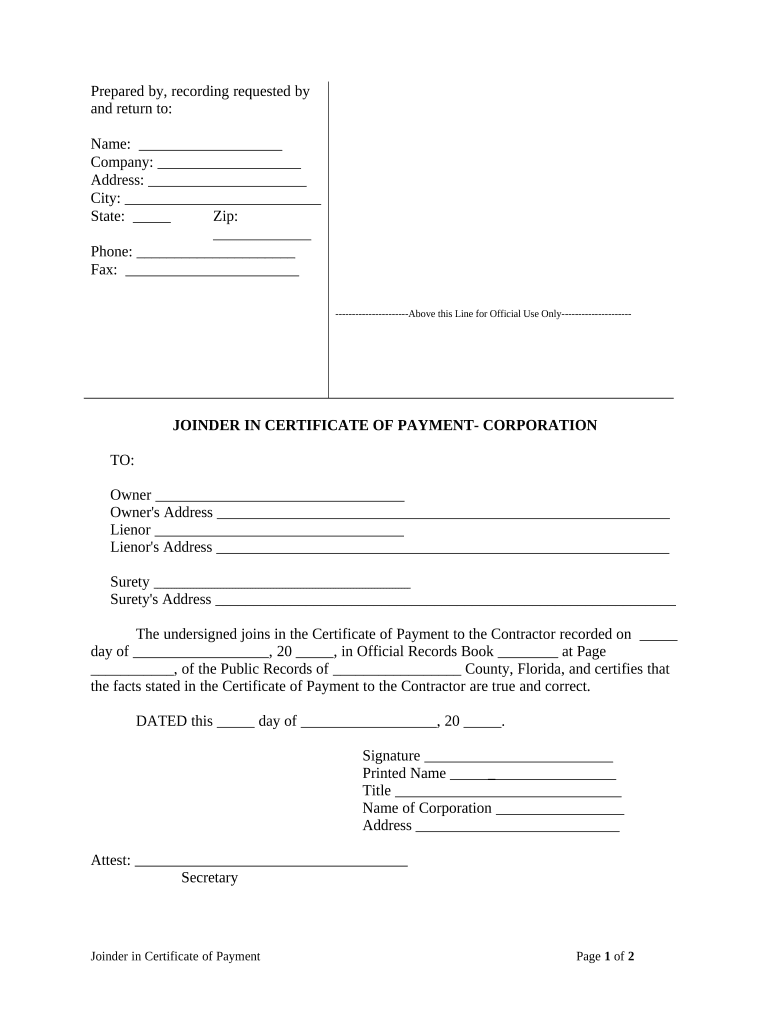
A Joinder Form is a legal instrument used to add an additional party to an existing agreement, trust, partnership, LLC operating agreement, or other multi-party contract without reissuing the entire document. It records the incoming party’s acceptance of the original agreement’s terms and any specified amendments, confirms effective dates, and establishes the signatory’s obligations. Joinders are commonly employed in mergers, membership transfers, investor capital additions, and collective contract enrollments where continuity of the original document is required rather than creating a new principal contract.

Why a properly prepared Joinder Form matters

A clear, complete Joinder Form preserves the continuity of rights and obligations among existing parties, reduces ambiguity about consent or effective date, and minimizes dispute risk. Proper execution ensures enforceability and a straightforward administrative record for corporate, real estate, or investment transactions.

Why a properly prepared Joinder Form matters

Typical users and signing parties

Organizations and individuals use Joinder Forms when a new party must be bound to an existing agreement without rewriting the base contract.

  • Corporate legal teams and in-house counsel who manage membership or shareholder changes.
  • Buyers, sellers, or transferees joining an LLC, partnership, or investor consortium.
  • Title companies and real estate closing agents adding parties to property-related agreements.

Use depends on the transaction type: corporate governance matters often require officer signatures and witness/notary steps, while commercial contract joinders may only need authorized representative execution.

Core sections to include in a professional Joinder Form

A robust Joinder Form is concise but comprehensive: it identifies the base agreement, states the new party’s identity, confirms acceptance of specified terms, sets an effective date, allocates notices and signatures, and records any limited carve-outs.

Base Agreement

Identify the original contract by title, date, and parties so the joinder clearly references the agreement being joined and avoids ambiguity about which document applies.
Joining Party

Full legal name, entity type, jurisdiction of formation, and a registration or tax ID where applicable to ensure the new party is unambiguously identified.

Acceptance Clause

A statement where the new party expressly adopts and agrees to be bound by the base agreement subject to any stated exceptions or effective limitations.

Effective Date

A clear effective date clause specifying when the new party’s rights and obligations begin, used for operational, reporting, and statute-of-limits calculations.

Notices and Contacts

Designate notice addresses and authorized representatives for communications; this ensures formal notices are properly routed under the base agreement terms.

Signatures and Authentication

Signature blocks for authorized signers, any required witness or notarization fields, and a statement of authority confirming the signer can bind the joining party.

Step-by-step: completing the Joinder Form

Follow this sequence to prepare, verify, and execute a Joinder Form so it integrates cleanly with the original agreement.

  • 01
    Review Base Agreement: Confirm consent or joinder permission in the original contract.
  • 02
    Draft Joinder: Reference contract, add joining party details and any exceptions.
  • 03
    Verify Authority: Confirm signer can bind the joining party.
  • 04
    Execute and Record: Sign, notarize if required, and distribute copies to all parties.

How to set up an online joinder workflow

Configure an e-sign and routing workflow to collect signatures, authenticate signers, and archive the executed joinder alongside the base agreement.

Field Configuration
Signature Field Place signature and date fields for each signer.
Authentication Use email + SMS code or stronger methods for high-risk transactions.
Routing Order Set role-based signing sequence to match required approvals.
Retention Policy Attach executed joinder to the original agreement for centralized storage.

Digital signing considerations and platform needs

Choose a platform that supports secure signature capture, audit trails, and the authentication level required by the transaction.

  • File formats: PDF, DOCX supported
  • Integrations: CRM and cloud storage
  • Authentication: Email, SMS, KBA options

Ensure the chosen system offers tamper-evident output, searchable storage, and audit records that meet the legal four-part e-sign validity test.

Typical electronic execution flow for a Joinder

The electronic joinder process follows a predictable flow: upload, tag fields, authenticate signers, collect signatures, and store the executed record with metadata.

  • Upload Document: Add the joinder and optionally attach the base agreement.
  • Place Fields: Assign signature, date, and text fields by role.
  • Authenticate: Send signer link and verify identity.
  • Complete: Collect signatures and generate audit trail.

Timing and effective-date considerations

Key dates affect when the joining party becomes bound, any notice periods triggered by the original contract, and filing or recording rights in specific jurisdictions.

Effective Date Selection:

Choose MM/DD/YYYY and note whether retroactive effectiveness is permitted.

Notice Periods:

Check original contract for notice or waiting periods before transfer effects apply.

Filing Deadlines:

If joinder requires public filing (e.g., with real estate office), follow local recording deadlines.

Tax Reporting:

File tax or ownership updates promptly when joinder affects ownership or taxable events.

Regulatory Triggers:

Confirm any regulatory notices triggered by adding a new party.

Key milestones from draft to archived joinder

Track milestone stages so stakeholders understand where the joinder is in the lifecycle and what each step requires for completion.

01

Draft Prepared

Legal drafts and internal review complete.

02

Authority Confirmed

Signatory authority verified for the joining party.

03

Execution

Signatures collected and notarization done if required.

04

Archival

Executed joinder stored with agreement and notice logs.

Common mistakes to avoid when preparing a Joinder

  • Failing to identify the precise base agreement by date and title, causing uncertainty about which contract governs.
  • Using abbreviated or inconsistent party names that do not match formation or tax records, leading to enforceability challenges.
  • Skipping confirmation of signatory authority, which can render the joinder voidable if the signer lacked power.
  • Neglecting notarization or witness steps where state law or the base agreement expressly requires them, exposing the transaction to challenge.

Consequences of incorrect or incomplete joinders

Contractual Voidability: Joinder may be unenforceable if signer lacked authority.
Title or Ownership Risk: Property or ownership records can be disputed.
Tax Reporting Issues: Incorrect filings can trigger penalties.
Regulatory Noncompliance: Industry rules may impose sanctions.
Delay Costs: Transactions can incur monetary and operational delays.
Evidence Gaps: Missing audit trail weakens enforcement in disputes.

Real-world examples of Joinder Form use

Two representative customer scenarios illustrate typical joinder workflows and outcomes.

Martin Properties — Closing Efficiency

Martin Properties needed to add an investor to an existing lease agreement quickly

  • team used an online joinder to collect signatures the same day
  • the executed joinder preserved the original lease terms and avoided re-drafting while providing a clear audit trail for closing records.

Fertility Centers of Illinois — Compliance

Medical practice added a corporate partner that required HIPAA precautions

  • joinder included a BAA attachment and consent language
  • this approach documented acceptance of obligations and ensured patient data handling stayed consistent with existing policies.

Who may legally sign a Joinder Form

Authorized Officer

An officer or director listed in corporate records may sign for a corporation provided internal governance permits it; confirm board approvals where required and document the basis for authority.

Member or Partner

For LLCs or partnerships, a member or managing partner signs if authorized by the operating agreement or partnership agreement; attach resolutions if the agreement requires them.

How to download and store the executed Joinder Form

After execution, save the joinder in durable, searchable formats and retain it with the base contract so the record is complete and retrievable.

Portable PDF

Export as a PDF/A for long-term storage; include the audit trail and embedded metadata showing signer identity, timestamps, and authentication method.

DOCX Archive

Keep an editable DOCX copy for internal versioning, but archive signed PDFs as the authoritative record to avoid accidental edits.

Cloud Storage

Store with your document management system and tag the joinder to the base agreement record for unified search and access control.

Local Backup

Maintain encrypted offline backups per corporate retention policy and export logs showing file integrity checks.

Select eSignature vendor comparison for Joinder Form workflows

Entry-level pricing and common feature availability across vendors to consider when collecting joinder signatures; signNow is listed first for direct comparison.

signNow DocuSign Adobe Sign PandaDoc HelloSign
Starting Price $8/user/mo $15/user/mo $14/user/mo $19/user/mo $15/user/mo
Free Trial 7-day trial Yes Yes Yes Yes
Bulk Send Yes Yes Yes Yes No
Audit Trail Yes Yes Yes Yes Yes
HIPAA Compliant Yes Yes Yes No No
Envelope Cap No cap 100 envelopes/user/year Varies by plan Varies by plan Varies by plan

Frequently asked questions about Joinder Forms

Answers to common execution, validity, and recordkeeping questions when preparing or accepting a joinder.


Need help? Contact support

be ready to get more
Join over 28 million airSlate SignNow users