Establishing secure connection…Loading editor…Preparing document…

Letter Regarding Resident Safety Month

This template is fully customizable. Edit the text, fill out the fields, and send it for signature. Give it a try!
Letter Regarding Resident Safety Month

What a Letter Regarding Resident Safety Month Is and When to Use It

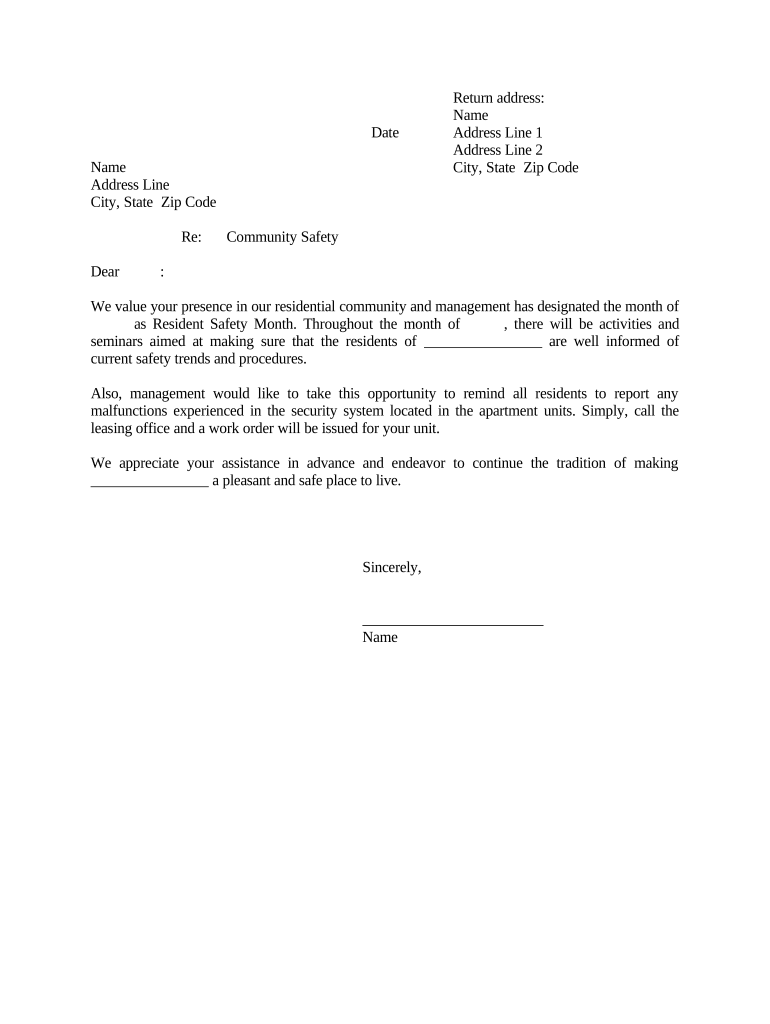
A Letter Regarding Resident Safety Month is a formal written notice from property management, a homeowners association, or a building owner to residents outlining planned safety activities, inspections, and recommended precautions during a designated safety month. It typically summarizes scheduled events (fire drills, smoke detector checks, common-area inspections), outlines temporary access or parking changes, and explains resident responsibilities such as securing personal property or responding to maintenance requests. The letter serves both informational and recordkeeping purposes: it documents communication efforts, supports liability mitigation, and provides a clear, dated account of what residents were told and when.

Why This Letter Matters for Resident Safety and Risk Management

Using a clear, dated letter improves resident awareness of safety initiatives, creates a documented communication trail for compliance or insurance purposes, and reduces confusion about access, inspection schedules, and temporary restrictions.

Why This Letter Matters for Resident Safety and Risk Management

Who Typically Prepares and Receives This Letter

Keep distribution lists current and retain copies for at least the recommended retention period to support liability protection and future reference.

  • Residents and tenants who occupy units and need to know about scheduled safety activities and temporary operational changes.
  • On-site staff and contractors who require coordinated access for inspections, maintenance, or drills.
  • Board members or corporate compliance teams that require documented resident notice for insurance or regulatory review.

Essential Elements to Include in a Professional Safety Month Letter

A complete letter balances concise instructions with necessary logistics. Include dates, scope, expected resident actions, contact points, and legal or privacy notes where appropriate to ensure clarity and compliance.

Header

Date, sender name and title, property name and address so the notice is clearly attributable.
Scope

Which units, common areas, and buildings are affected and the reason for the activities.

Schedule

Specific dates and times for inspections, drills, and temporary service changes; include start and end times.

Resident Actions

Steps residents should take (secure belongings, grant access, attend drill) and how to report issues.

Privacy/Legal

Any required disclosures about entry rights, data handling for CCTV or recordings, and citation of relevant lease clauses.

Contacts

Primary and backup contact names, phone numbers, email addresses, and expected response windows.

Required Information Fields for the Letter

Date: MM/DD/YYYY
Sender: Name and title
Property: Full property address
Scope: Units/areas listed
Contact: Phone and email
Signature: Printed name and role

Step-by-Step: Creating and Sending the Letter

Follow a standard sequence to prepare, approve, and distribute the letter while preserving records for compliance and follow-up.

  • 01
    Draft: Compile scope, schedule, and resident instructions in plain language.
  • 02
    Review: Have legal or compliance review any notice that affects entry rights or collects personal data.
  • 03
    Approve: Obtain sign-off from property owner or authorized manager.
  • 04
    Distribute: Send via chosen channels and record distribution method and recipients.

Setting Up an Online Workflow to Customize and Send the Letter

Use a repeatable workflow to populate names, dates, and unit ranges, and to capture distribution metadata for recordkeeping.

Template Field Merge resident name and unit automatically
Approval Step Assign manager reviewer
Notification Auto-email or SMS to recipients
Audit Capture Log timestamp, method, and acting user
Retention Tag Apply document category for retention policy

Where to Send or File the Completed Letter

Choose distribution and filing paths that match resident communication preferences and legal recordkeeping obligations.

  • Resident Delivery: Email, posted door notice, or mailed hard copy depending on lease language
  • On-Site File: Maintain a dated copy in property management records
  • Central Archive: Store signed copy in a secure document repository for retention
  • Compliance Folder: Attach to incident or inspection reports as needed

Technical Options for Distribution and eSubmission

Retain distribution logs and signed records in a secure repository to document that notice was provided and when.

  • Email: Simple delivery; include read receipt and attach signed PDF
  • Door Posting: Physical notice where lease allows; photograph for proof
  • eSignature Platform: Capture signed acknowledgment and audit trail

Timelines and Typical Deadlines to Communicate

Be explicit about advance notice and response windows; timeline clarity reduces disputes and supports operational planning.

Advance Notice:

Provide at least 7–14 days when inspection requires unit access

Drill Start:

State exact drill date and start time

Follow-Up Window:

Allow 72 hours for residents to report issues found

Access Scheduling:

Offer appointment slots when access is needed inside units

Record Retention:

Save the dated letter in records immediately after distribution

Key Milestones in the Safety Month Process

A simple milestone sequence helps coordinate teams and provides residents with predictable touchpoints.

01

Plan Announcement

Issue initial letter and schedule to residents.

02

Pre-Inspection Prep

Notify residents of preparatory steps and deadlines.

03

Execution Day

Conduct inspections, drills, or maintenance activities.

04

Post-Event Report

Share summary of findings and follow-up actions.

Common Mistakes to Avoid When Preparing the Letter

  • Vague schedules that omit specific dates and times, causing resident confusion.
  • Failing to document distribution method and recipients for future proof.
  • Using legal jargon without plain-language instructions that residents can follow.
  • Neglecting to obtain required internal approvals or check lease provisions before sending.

Risks and Potential Consequences of an Inadequate Notice

Tenant Disputes: Claims for improper entry or insufficient notice
Insurance Exposure: Reduced coverage or claims denials without documented notice
Regulatory Risk: Violations where local law prescribes notice periods
Operational Delays: Missed inspections when residents are uninformed
Reputational: Loss of resident trust from poor communication
Legal Costs: Attorney fees to resolve preventable disputes

Practical Examples of Resident Safety Month Letters

Two concise examples show how organizations structure notices to balance clarity, legal considerations, and operational needs.

Municipal Housing Notice

A city housing authority announces scheduled hallway fire-alarm testing

  • requires residents to avoid placing items in hallways during specified dates
  • the letter includes a phone contact, a description of safety benefits, and instructions for reporting alarm issues and requesting reasonable accommodation.

Private Property Manager Notice

A private manager notifies tenants of smoke-detector battery checks and a fire drill

  • asks tenants to ensure clear access and to secure valuables
  • includes a signed manager name, scheduled times per building, and details on how residents can reschedule in-case-of-conflict.

Who Can Authorize and Sign the Letter

Property Manager

The on-site property manager or regional facilities director typically has authority to prepare and sign operational notices. Their signature indicates the communication is official and tied to management responsibilities; maintain a record of who signed and their role for accountability.

Board or Owner

For HOA-wide or policy-level notices, an HOA board president or property owner may need to approve and sign. Their involvement is appropriate when notices affect lease terms, access rights, or community rules.

Comparing eSignature Options for Sending and Archiving Letters

Platform choice affects audit trails, HIPAA support, bulk sending, and per-user costs; signNow appears first in this comparison for clarity.

signNow DocuSign Adobe Sign PandaDoc HelloSign
Starting Price $8/user/mo $15/user/mo $14/user/mo $19/user/mo $15/user/mo
Free Trial 7-day free trial Varies by vendor Varies by vendor Varies by vendor Varies by vendor
Bulk Send Yes Yes Yes Yes Yes
Audit Trail Yes Yes Yes Yes Yes
HIPAA Compliant Yes Yes Yes No No
Envelope Cap No envelope cap 100 envelopes/user/year Varies by plan Varies by plan Varies by plan

Practical Tips for Accurate, Efficient Letter Preparation

Apply consistent templates, plain language, and distribution logging to reduce errors and support later verification.

Use a Template
Standardize wording and required fields to ensure consistent notices and reduce review time.
Plain Language
Write clear, actionable instructions so residents know exactly what to do and when.
Record Distribution
Log delivery method, recipients, and timestamps for proof of notice.
Legal Review
Have counsel review notices that alter resident obligations or involve entry rights.

FAQs and Troubleshooting for the Resident Safety Month Letter

Answers to common questions about content, distribution, signatures, and recordkeeping for resident safety notices.


Need help? Contact support

be ready to get more
Join over 28 million airSlate SignNow users