Establishing secure connection…Loading editor…Preparing document…

Letter of Rejected Bid

This template is fully customizable. Edit the text, fill out the fields, and send it for signature. Give it a try!
Letter of Rejected Bid

What a Letter of Rejected Bid Is and When it’s Used

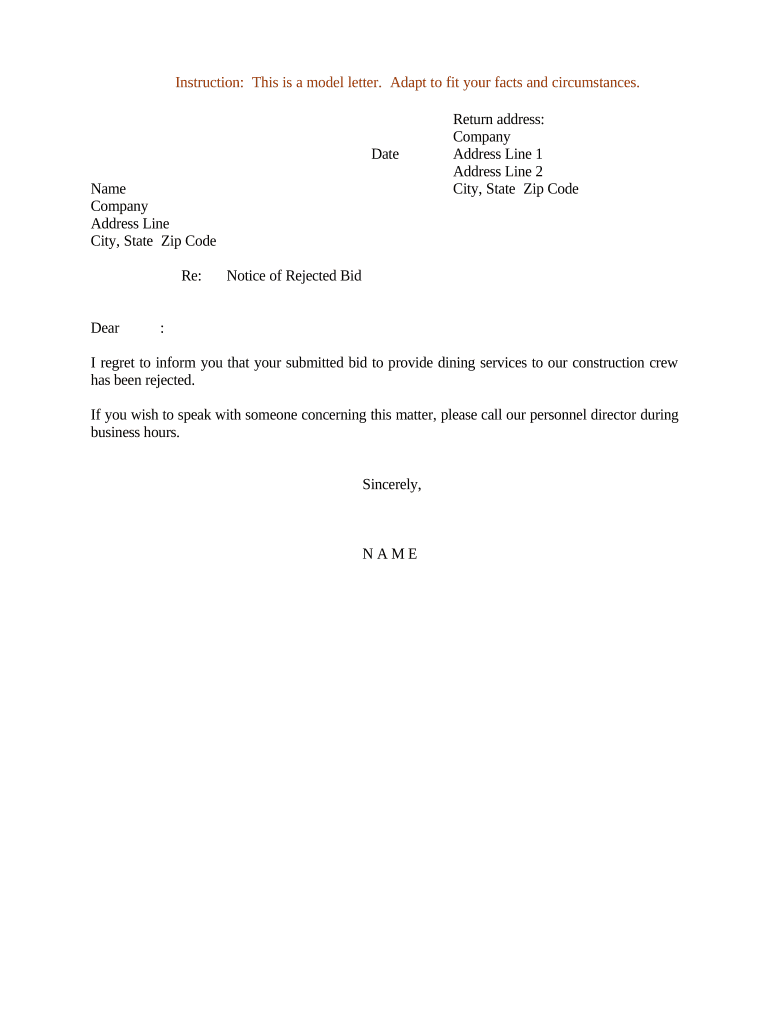
A Letter of Rejected Bid is a formal written notice issued by a contracting authority to inform a bidder that its proposal or bid was not selected. It records the bid reference, the contracting entity, and the official decision, and it often explains the primary reasons for rejection or directs the bidder to a debriefing or protest process. The letter creates an administrative record that can be used to respond to bidder questions, support procurement transparency, and satisfy audit or regulatory requirements in public and private procurement processes.

Why a Clear Rejection Letter Matters to Your Procurement Process

A well‑crafted Letter of Rejected Bid preserves transparency, reduces follow‑up disputes, and supports defensible decision making. It protects the procuring entity by documenting evaluation outcomes, provides vendors with actionable feedback or next steps, and creates a consistent record for audit or appeal proceedings.

Why a Clear Rejection Letter Matters to Your Procurement Process

Who Issues and Receives Rejection Letters

Clear routing and accountable signatories ensure the letter serves administrative recordkeeping and any subsequent legal or protest procedures.

  • Procurement officers and contract administrators who manage solicitations and award decisions.
  • Bidding vendors and subcontractors seeking explanation, debriefing, or protest rights.
  • Legal counsel and compliance teams documenting decisions for audit and dispute defense.

Essential Elements to Include in Every Letter of Rejected Bid

Include consistent, verifiable details to make the notice clear, defensible, and useful to recipients and internal records. Use plain language, reference the solicitation and bid identifiers, and state contact options for debriefing or protest.

Identification

Solitation number, bid reference, and project title so the notice ties precisely to the submitted proposal and procurement record.
Decision Date

Exact MM/DD/YYYY decision date that starts any post‑award timelines such as debrief or protest periods.

Reason Summary

Concise explanation of the primary basis for rejection (e.g., non‑responsive, price over budget, missing documents) without revealing proprietary evaluation details.

Rights & Next Steps

Instructions for requesting a debrief, filing a protest, or seeking further clarification, including deadlines and contact person.

Contact Information

Name, title, email, phone and mailing address for the contracting officer or designated procurement contact.

Signature Block

Authorized signer name, title, and signature date to confirm the administrative decision and accountability.

Required Data Fields to Capture in the Letter

Bidder Name: Full legal name
Bid Number: Solicitation reference
Project: Project or contract title
Rejection Reason: Primary cause
Decision Date: MM/DD/YYYY
Contract Contact: Name and contact

Step‑by‑Step: Prepare and Send a Rejection Letter

Follow a short, repeatable sequence to finalize the notice, preserve records, and deliver the decision to bidders in a compliant manner.

  • 01
    Draft Notice: Populate all required fields and review for factual accuracy.
  • 02
    Internal Approval: Obtain signature from authorized procurement official.
  • 03
    Send to Bidder: Deliver using the method required by the solicitation (email, certified mail, or portal).
  • 04
    Archive Record: Store the signed letter and delivery proof in the procurement file.

Where and How to Submit the Rejection Notice

Choose the delivery and filing route required by the contract or solicitation documents, and retain proof of transmission for audit and dispute defense.

  • Email Delivery: Send to the bidder's authorized contact and save delivery receipt or read confirmation.
  • Certified Mail: Use USPS Certified Mail for dated proof of delivery where required.
  • Procurement Portal: Upload signed notice to the solicitation portal and capture system timestamp.
  • Physical Delivery: Hand‑deliver with signed acknowledgement where solicitation allows.

Digital Signing and eSubmission Considerations

Platforms that integrate with document storage and procurement systems reduce manual steps and preserve a defensible record of issuance and receipt.

  • Audit Trail: Capture IP, timestamp, and signer actions
  • Authentication: Email code, SMS, or advanced methods
  • Integrations: CRM and storage connectors

How to Customize and Complete the Letter Online

Configure a reusable template with required fields, conditional text, and signer roles so letters are consistent across solicitations.

Field Configuration
Template Name Solicitation_Rejection_Template
Required Fields Bidder Name | Bid Number | Decision Date
Conditional Text Include debrief language if public procurement
Signer Role Procurement Officer | Authorized Signer

How to Download, Save, and Share Finalized Letters

Export signed letters in common formats and attach verification artifacts so the record is portable, auditable, and preservable according to retention rules.

PDF

Export a signed PDF with embedded audit trail and timestamp for long‑term retention and easy sharing.

DOCX

Save an editable DOCX copy for internal file updates; do not use as the primary signed record.

Email Archive

Store delivery receipts and message headers alongside the signed record for proof of notice.

Cloud Storage

Archive in approved document repositories with access controls and versioning.

Frequent Preparation Pitfalls to Avoid

  • Omitting the bid reference or solicitation number, which severs the link between the notice and procurement record and causes confusion.
  • Using vague or subjective language about evaluation results, which can invite disputes or reveal proprietary information inadvertently.
  • Failing to record proof of delivery, removing your primary evidence of date of notice and receipt by the bidder.
  • Not confirming the signer’s authority; unsigned or unauthorized letters may be invalid for protest or appeal timelines.

Risks and Consequences of a Deficient Rejection Letter

Bid Protest: Possible formal challenge
Contract Delay: Award timelines may be paused
Reputational Risk: Vendor relations may suffer
Audit Findings: Procurement audit exceptions
Legal Costs: Defense and counsel fees
Remedies: Possible reprocurement or damages

eSignature Pricing and Feature Snapshot for Rejection Letter Workflows

Choose an eSignature provider that supports audit trails, authentication options, and integrations with your document repository; pricing models differ by plan and usage.

signNow DocuSign Adobe Sign PandaDoc HelloSign
Starting Price $8/user/mo $15/user/mo $14/user/mo $19/user/mo $15/user/mo
Free Trial 7-day trial Varies by plan Varies by plan Varies by plan Varies by plan
Bulk Send Yes Yes Yes Yes No
Audit Trail Yes Yes Yes Yes Yes
HIPAA Compliant Yes Yes Yes No No

Frequently Asked Questions About Letters of Rejected Bid

Answers to common practical and compliance questions for procurement teams and bidders about preparing, sending, and preserving rejection notices.


Need help? Contact support

be ready to get more
Join over 28 million airSlate SignNow users