Establishing secure connection…Loading editor…Preparing document…

Letter Asking Alumni for Donations

This template is fully customizable. Edit the text, fill out the fields, and send it for signature. Give it a try!
Letter Asking Alumni for Donations

What a Letter Asking Alumni for Donations Is and When It’s Used

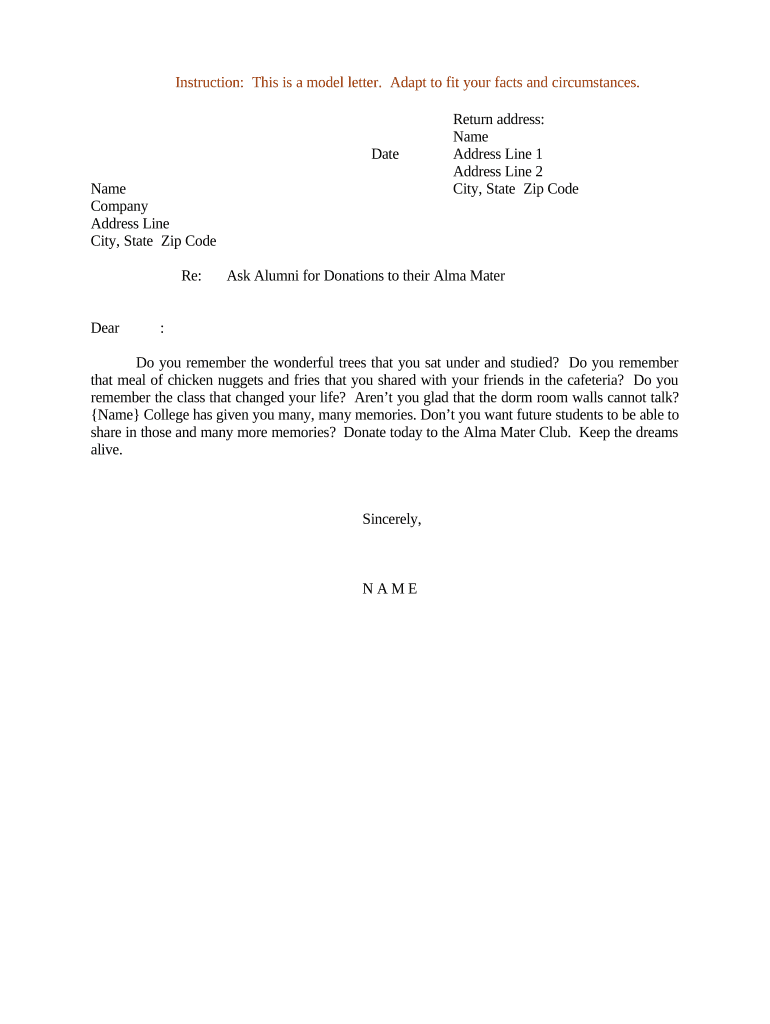
A Letter Asking Alumni for Donations is a formal written request from an educational institution, alumni association, or fundraising committee that explains a giving need, outlines how donations will be used, and provides clear instructions for making a gift. These letters are used for annual funds, capital campaigns, scholarship endowments, class gifts, reunion appeals, and emergency relief. They typically balance storytelling, a specific ask amount or suggested giving levels, giving instructions (online, check, or wire), and tax receipt language so donors can claim deductions where eligible.

Why a Well-Crafted Alumni Donation Letter Matters

A concise, compliant letter increases donor trust, clarifies tax and gift instructions, and improves response rates while reducing follow-up work. It supports institutional fundraising goals and preserves a clear record of the solicitation for legal and accounting purposes under ESIGN and UETA frameworks.

Why a Well-Crafted Alumni Donation Letter Matters

Who Typically Prepares and Sends These Letters

Coordination with finance, legal, and records teams ensures accurate donor receipts, compliance with charitable solicitation laws, and consistent messaging across channels.

  • University advancement offices coordinating institutional campaigns and stewardship
  • Development directors or fundraising managers overseeing solicitation strategy
  • Volunteer alumni leaders or class agents executing peer-to-peer asks

Typical Signers and Their Roles

Director of Alumni Relations

The Director of Alumni Relations oversees messaging, audience segmentation, and partnership with university leadership. They approve content, ensure alignment with privacy policies, and coordinate stewardship activities to acknowledge gifts appropriately.

Development Officer

A Development Officer manages donor relationships, tailors asks by affinity or giving history, and tracks pledge commitments. They often sign or co-sign letters and confirm processing steps with finance for tax receipts.

Key Data and Compliance Elements to Include

Encryption: TLS 1.2/1.3 in transit; AES-256 at rest
Audit Trail: Complete signing history with timestamps
Access Controls: Role-based permissions for records access
HIPAA/BAA: BAA available where health data applies
ESIGN / UETA: E-signatures legally enforceable in U.S. contexts
Data Residency: Configurable controls per institutional policy

Essential Elements to Put in Every Alumni Donation Letter

A professional letter balances personalization with legal clarity. Include a compelling lead, explanation of need, specific giving options, payment instructions, tax receipt language, and contact or opt-out details. Each element supports donor confidence and institutional recordkeeping.

Personalized Opening

Address the alumnus by name and reference shared history or program affiliation for relevancy and connection.
Purpose Statement

Clearly state the funding need, intended use of proceeds, and expected impact on students or programs.

Suggested Gift Levels

Provide tiered amounts and examples of what each level funds to guide donors and increase average gift size.

How to Give

List online form, mailing address for checks, wire or stock transfer instructions, and any QR codes or links.

Tax Receipt Language

Include charitable status, EIN, and statements about deductible amounts per IRS rules to support donor tax reporting.

Signature and Contact

Provide signatory name, title, phone/email for questions, and opt-out instructions for communications.

Step-by-Step: Preparing and Sending an Alumni Donation Letter

Follow these steps to draft, approve, and distribute a compliant, trackable fundraising letter to alumni segments.

  • 01
    Draft Message: Compose personalized copy and define the ask
  • 02
    Legal Review: Confirm tax language and solicitation compliance
  • 03
    Approval: Obtain signatory and finance approvals
  • 04
    Send & Track: Distribute and record responses for stewardship

How Digital Distribution and eSubmission Typically Flow

Digital routes reduce postage costs and enable tracking. This sequence is common for online or hybrid campaigns using secure platforms.

  • Upload Letter: Add template to your e-sign or email platform
  • Add Fields: Insert name, gift amount, and signature fields
  • Select Audience: Choose alumni segment and merge personalization
  • Send & Monitor: Dispatch emails and monitor opens, clicks, and gifts

Online Customization: Template Field Configuration

Map form fields and automation settings before launch to ensure data integrity and reduce manual follow-up.

Field Configuration
Donor Name Auto-merge from CRM using exact match key
Gift Amount Dropdown with presets and custom entry allowed
Acknowledgement Email Trigger immediate tax-receipt email on gift
Signer Authentication Email link or SMS code per privacy policy

Distribution Methods and Platform Considerations

Integrate with CRM systems and secure storage to preserve donation records and automate acknowledgements across channels.

  • Email Campaigns: High reach; include secure donation links
  • Printed Mail: Good for older alumni; requires postage tracking
  • eSignature Platforms: Support audit trails, integrations, and automated receipts

How to Download and Save Final Letters and Donation Records

Saving copies in consistent formats supports accounting, audits, and donor stewardship. Retain signed records and export transactional data for reconciliation.

Signed Letter PDF/A

Export an ISO-compliant PDF/A with embedded audit trail for immutable archival.

Donor List CSV

Export recipient and giving data in CSV for import into finance or CRM systems.

Archive Originals

Store signed records in a secure, access-controlled repository with versioning.

Printable Copies

Keep printed receipts for local file retention and board reviews where required.

Timelines, Deadlines, and Processing Expectations

Plan the schedule so legal, finance, and communications reviews complete before distribution; allow time for donor response and acknowledgement.

Campaign Drafting:

Allow 1–2 weeks for copywriting and approvals

Legal Review:

Allow 3–5 business days for compliance checks

Mailing Preparation:

Allow 3–7 days for print and mail batching

Acknowledgements:

Send receipts within 48–72 hours of gift

Follow-up Appeals:

Send reminders 2–4 weeks after initial ask

Key Milestones in a Typical Solicitation Timeline

A sequential timeline clarifies responsibilities and expected delivery dates from draft to donor acknowledgment.

01

Draft and Personalization

Create base letter and merge donor-specific data

02

Internal Approvals

Obtain signatory and finance sign-off before scheduling

03

Distribution

Execute email or mail run to selected alumni list

04

Acknowledgement & Recording

Issue receipts and record gifts in the accounting system

Common Mistakes to Avoid When Preparing Donation Letters

  • Using vague purpose language that confuses donors
  • Omitting EIN or tax receipt details required by IRS
  • Failing to segment donors leading to irrelevant asks
  • Neglecting opt-out language for email solicitations

Potential Risks and Consequences of Incorrect Solicitation

Registration Failure: State fines or stop-work orders
Incorrect Tax Language: Donor deductibility disputes
Data Breach: Liability and remediation costs
Misstated Use: Reputational harm and donor refund requests
Untracked Gifts: Audit adjustments and accounting issues
Privacy Violations: Compliance action under state laws

Sample eSignature Provider Comparison for Sending Donation Letters

Basic pricing and feature availability across common eSignature vendors. Place the provider selection in the context of security, compliance, and integration needs.

signNow DocuSign Adobe Sign PandaDoc HelloSign
Starting Price $8/user/mo $15/user/mo $14/user/mo $19/user/mo $15/user/mo
Free Trial 7-day free trial Varies Varies Varies Varies
Bulk Send Yes Yes Yes Yes Yes
Audit Trail Yes Yes Yes Yes Yes
HIPAA Compliant Yes Yes Yes No No
Envelope Cap No cap 100 envelopes/user/year Varies by plan Varies by plan Varies by plan

Real-World Examples of Alumni Solicitation Letters

Two concise examples illustrate different approaches: a targeted reunion ask and a broad annual fund appeal.

Reunion Class Appeal

A targeted reunion letter highlights shared milestones and proposes a class gift to fund a named scholarship.

  • The ask suggests tiered gifts tied to reunion activities.
  • The campaign included online giving links and a post-reunion stewardship email summarizing impact and donor recognition.

Annual Fund Request

A general annual fund letter emphasizes current needs and student stories to inspire support.

  • The ask offers specific amounts and recurring-gift options.
  • The institution automated acknowledgements and recorded gifts in the CRM for personalized follow-up and tax receipts.

Practical Tips for Accurate and Efficient Completion

Apply quality controls and automation to reduce errors and speed processing while maintaining compliance.

Use Templates
Standardize letter templates with merge fields to maintain consistency and reduce manual mistakes.
Segment Audience
Tailor asks by giving history and affinity to improve relevance and response rates.
Confirm Tax Language
Verify EIN and deductible language with finance before sending to avoid donor confusion.
Automate Receipts
Trigger acknowledgement emails on gift receipt to meet IRS and donor expectations.

Frequently Asked Questions About Letters Asking Alumni for Donations

Answers to common questions about drafting, legal compliance, digital signing, and recordkeeping for alumni donation letters.


Need help? Contact support

be ready to get more
Join over 28 million airSlate SignNow users