Establishing secure connection…Loading editor…Preparing document…

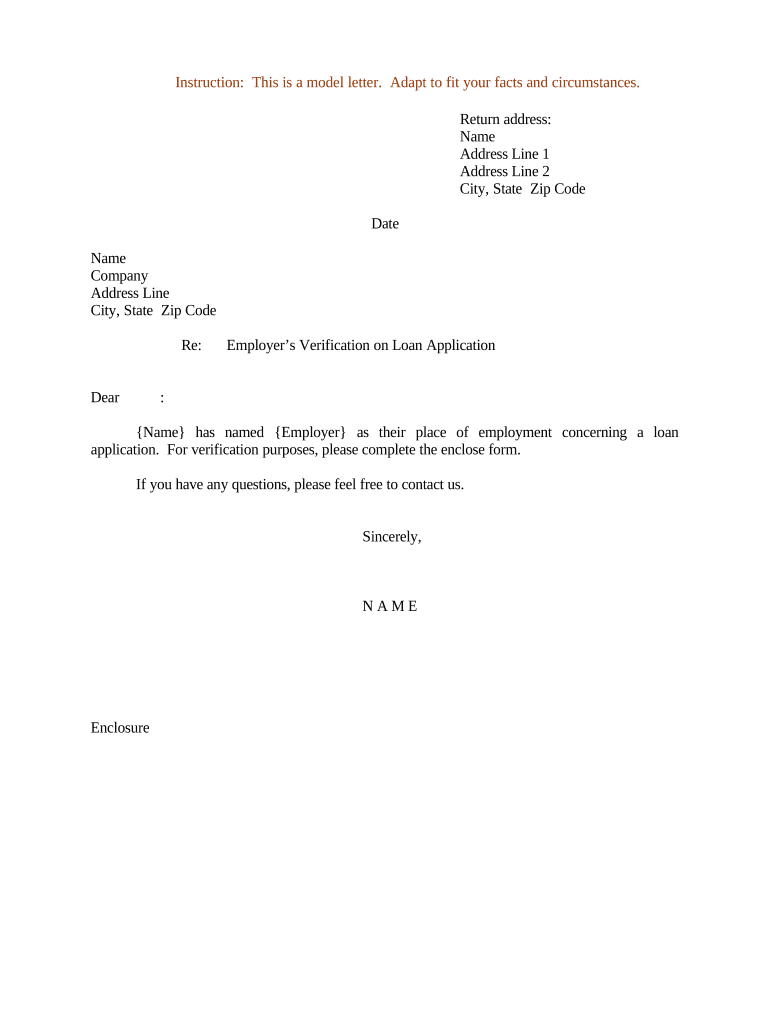
Letter for Employer’s Verification on Loan Application

This template is fully customizable. Edit the text, fill out the fields, and send it for signature. Give it a try!
Letter for Employer’s Verification on Loan Application

What a Letter for Employer’s Verification on Loan Application Is

A Letter for Employer’s Verification on Loan Application is a formal document from an employer that confirms an applicant’s employment status, job title, dates of employment, and income for a lender’s underwriting process. Lenders typically request it to corroborate pay, verify position stability, and confirm start or termination dates. Employers or HR departments prepare the letter on company letterhead, and it may be delivered as a signed paper copy, scanned PDF, or electronically via an ESIGN/UETA-compliant platform such as signNow to preserve chain-of-custody and the audit trail.

Why this Letter Matters for Loan Decisions

A clear employer verification letter reduces underwriting delays by providing lenders verified income and employment facts, helping borrowers qualify faster and minimizing manual follow-up between lender and employer.

Why this Letter Matters for Loan Decisions

Who Prepares and Relies on Employer Verification Letters

Typical parties involved include HR or payroll staff who prepare the letter and lenders or loan processors who rely on the information.

  • Human resources staff who confirm employment facts and issue the letter to external parties.
  • Mortgage and consumer loan underwriters who use verified income and job stability to assess creditworthiness.
  • Borrowers who request the letter and must authorize release of employment data.

Clear roles and an authorization from the employee streamline delivery and protect privacy while meeting lender requirements.

Essential Elements to Include in a Professional Verification Letter

A professional letter should be concise, on letterhead, and include identity, employment facts, and an authorized signature so lenders can trust the source.

Employer Identity

Company name, physical address, HR contact name and phone or email so the lender can confirm authenticity and follow up if needed.
Employee Identity

Full legal name, job title, employee ID or last four of SSN if requested, and hire date to tie the record to the correct individual.

Employment Dates

Start date and, if applicable, current termination date or expected end date. Lenders assess tenure stability from these dates.

Compensation Details

Base salary, pay frequency, bonuses or commissions (typical recent annualized amount), and whether income is guaranteed or variable.

Employment Status

Current status (active, on leave, furloughed, terminated) and any planned changes that could affect income or continued employment.

Authorized Signature

HR or authorized representative signature, printed name, title, date, and a direct contact line to verify the letter with the employer.

Required Data Points to Include

Employer Name: Full legal entity
Employer Contact: Phone and email
Employee Name: Exact legal name
Employment Dates: Hire and end dates
Compensation: Annual or hourly rate
Signer Authorization: Signature and title

Step-by-step: Preparing and Sending the Verification Letter

Follow a short, verifiable process to prepare, authorize, and deliver the letter so lenders get reliable evidence without unnecessary delay.

  • 01
    Draft Letter: Compose on company letterhead with all required data points.
  • 02
    Confirm Authorization: Ensure employee consent or company policy permits release of the information.
  • 03
    Sign and Date: Have an authorized HR representative sign and include contact details.
  • 04
    Deliver Securely: Send via secure email, encrypted PDF, or ESIGN-compliant platform.

Configuring an Online Verification Workflow

When using an electronic signature platform, set up a short workflow to control who edits, signs, and receives the final letter.

Field Configuration
Signer Order HR signs first, then lender receives copy
Authentication Email link or SMS code
Audit Trail Enable IP, timestamp, and action logs
Retention Store signed PDF for required period

Where to Send or File the Completed Letter

Choose the delivery path that matches lender instructions and preserves proof of delivery and signer authentication.

  • Direct to Lender: Send the signed letter to the lender’s secure upload portal or designated email.
  • To Borrower: Provide borrower with a sealed, signed copy for submission if lender accepts borrower-supplied documents.
  • Third-Party Verifier: Transmit to background-check or verification vendor if the lender uses a third party.
  • Company Records: Retain a signed copy in HR records for audit and compliance.

Digital Signing and eSubmission Practical Considerations

Use an ESIGN- and UETA-compliant signing approach and preserve an audit trail to ensure the letter is admissible and verifiable.

  • File Formats: PDF or PDF/A preferred for long-term integrity
  • Authentication: Email/SMS or stronger methods for high-value loans
  • Integrations: Connectors: HRIS, payroll, and lender portals

Platforms should support secure storage, hashed audit trails, and easy export so employers and lenders can verify signature attribution if required.

Timelines and Typical Processing Expectations

Expect practical deadlines from lenders and plan internal response times to prevent underwriting delays.

Employer Response Window:

Provide verification within 3–7 business days to avoid loan processing slowdowns.

Lender Deadline:

Lenders often require documentation within 10–14 days of application completion.

Notary/Verification Time:

Allow extra time if notarization or third-party verification is requested.

Internal Retention Start:

Record retention begins on the signed date of the letter.

Follow-up Escalation:

If no response within 7 days, lender may call employer directly for verbal confirmation.

Common Mistakes to Avoid When Preparing the Letter

  • Using informal stationery or unsigned scans that lack an authorized signature and contact details, which lenders may reject.
  • Providing inconsistent names or dates that do not match payroll records, creating matching errors for automated verifications.
  • Failing to obtain employee consent where company policy or privacy rules require it, exposing the employer to HR or legal complaints.
  • Sending unencrypted emails or unsecured attachments that risk interception of personal data and may violate privacy policies.

Risks and Potential Consequences of Incorrect or Fraudulent Letters

Loan Denial: Inaccurate verification can cause underwriting rejection.
Delays: Incomplete responses create processing delays for applicants.
Fraud Liability: Knowingly false statements can expose employer and employee to legal risk.
Privacy Breach: Improper disclosure may violate company policy or state privacy laws.
Reputational Harm: Repeated errors harm lender relationships.
Tax Reporting: Misstated compensation can create payroll or tax reporting complications.

Practical Examples and Real-World Outcomes

Sample scenarios show how employer verification letters speed approvals and reduce manual follow-up.

Optica Ventures (COO)

Optica needed rapid verifications for multiple closings

  • HR used a standardized template and direct delivery to lenders
  • The process reduced calls and consolidated verifications into a single authenticated document for each borrower.

Fertility Centers of Illinois (Founder)

A healthcare provider required secure transmissions for sensitive staff data

  • They used an audited electronic delivery path to preserve privacy and proof of signature
  • This approach limited exposure of employee data while meeting lender verification needs.

eSignature Pricing and Feature Comparison for Employer Verification Letters

Compare core pricing and features relevant to sending verified employer letters. signNow is listed first; use vendor plans to match your volume and compliance needs.

signNow DocuSign Adobe Sign PandaDoc HelloSign
Starting Price $8/user/mo $15/user/mo $14/user/mo $19/user/mo $15/user/mo
Free Trial 7-day free trial, no credit card required Varies by vendor Varies by vendor Varies by vendor Varies by vendor
Bulk Send Yes (Business Premium) Yes Yes Yes No
Audit Trail Yes Yes Yes Yes Yes
HIPAA Compliant Yes Yes Yes No No
Envelope Cap No envelope cap 100 envelopes/user/year Varies Varies Varies

Frequently Asked Questions about Employer Verification Letters

Answers to common questions about authorization, e-signatures, notarization, turnaround times, and signer authority for employer verifications.


Need help? Contact support

be ready to get more
Join over 28 million airSlate SignNow users