Establishing secure connection…Loading editor…Preparing document…

Letter to Reschedule an Event

This template is fully customizable. Edit the text, fill out the fields, and send it for signature. Give it a try!
Letter to Reschedule an Event

What a Letter to Reschedule an Event Is and When to Use It

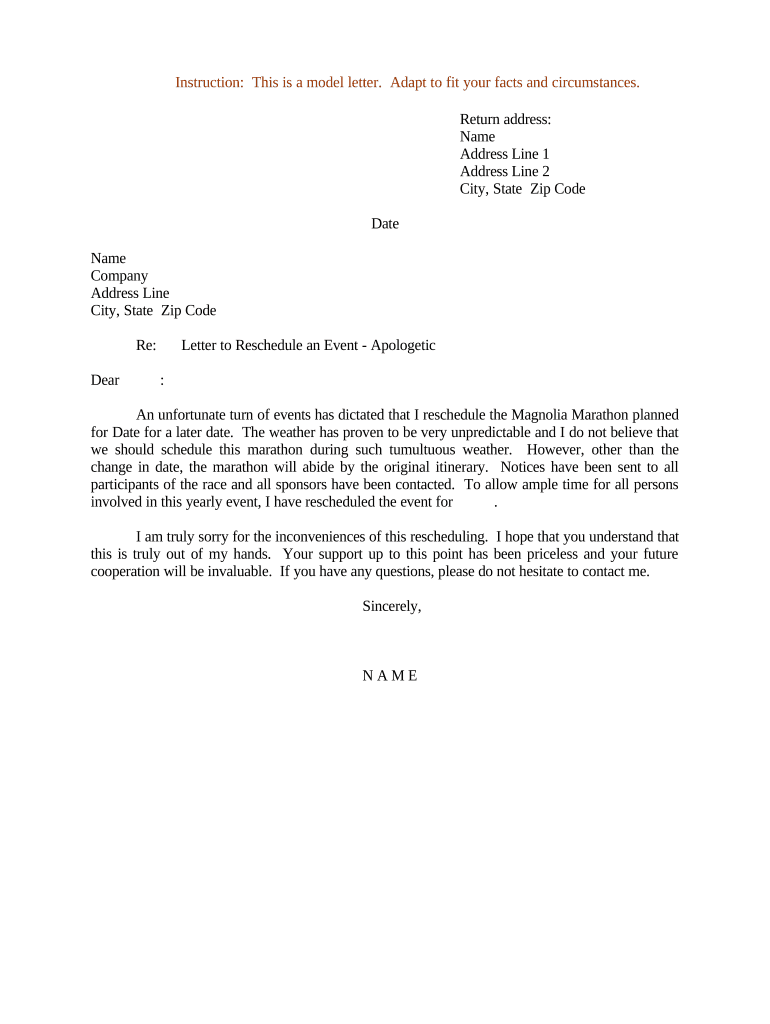
A Letter to Reschedule an Event is a written notice that formally changes the date, time, location, or format of a planned meeting, appointment, or public gathering. It documents the parties involved, the original event details, the new proposed schedule, and any revised logistics such as venue, access instructions, or refund and ticket policies. The letter clarifies responsibilities, prevents misunderstandings, and creates a record for legal, administrative, and insurance purposes. Typical scenarios include venue closures, speaker cancellations, weather-related changes, public health guidance, or conflicting schedules.

Why Sending a Formal Rescheduling Letter Matters

A formal letter creates a clear, auditable record of the change and the new terms agreed by the parties. It reduces attendee confusion, preserves contractual rights, and documents notice for venues, vendors, and insurers.

Why Sending a Formal Rescheduling Letter Matters

Who Typically Prepares and Receives These Letters

Organizers, event managers, business administrators, HR teams, and legal departments commonly prepare rescheduling letters to inform stakeholders and preserve contractual notice.

  • Event organizers and promoters who need to notify ticket holders, vendors, and venues about revised schedules and refund or exchange policies.
  • Corporate administrators and HR teams notifying employees or external partners about changed meeting or training dates and associated logistics.
  • Legal or contract managers who must document a change in performance dates to protect contractual or insurance rights.

Essential Elements to Include in a Professional Rescheduling Letter

A complete letter balances concise notice with the detail recipients need to act. Include original and new event details, reasons for the change, contact and refund options, and any action required by recipients.

Header

Sender name, organization, mailing address, contact phone and email; date of issuance; recipient name and contact information for clear routing.
Original Event

Original event name, date, time, and location stated precisely so recipients can confirm which booking is affected and reconcile calendars or travel plans.

New Schedule

Proposed new date, start and end times, and physical or virtual location details including links, access codes, or gate instructions.

Reason

Concise explanation for the reschedule (logistical, health, force majeure) while avoiding unnecessary detail that could create liability.

Attendee Options

Clear choices for attendees (attend new date, request refund, transfer ticket, or opt for credit) plus any deadlines for responses.

Signatures

Authorized signature block with printed name and title; include date signed and note if electronic signing is accepted under ESIGN/UETA.

Required Data Fields at a Glance

Event Name: Exact title
Original Date: MM/DD/YYYY
New Date: MM/DD/YYYY
Venue: Address or link
Contact: Phone and email
Signature: Name and title

Step-by-Step: Drafting and Sending the Reschedule Letter

Follow these sequential steps to create a clear, enforceable notice and ensure recipients receive and acknowledge the change.

  • 01
    Draft details: Record original and new event specifics clearly.
  • 02
    Explain reason: Provide a brief, neutral explanation for the change.
  • 03
    State options: List attendee choices and response deadlines.
  • 04
    Deliver notice: Send by chosen distribution method and retain proof.

Customizing an Online Workflow for Rescheduling Notices

Configure digital templates and routing to automate notice generation, distribution, and tracking for high-volume or repeated events.

Field Configuration
Event fields Auto-fill original/new dates and venue from calendar
Recipient list Upload CSV with emails and ticket IDs
Response capture Enable form options for refund or transfer
Audit trail Enable timestamp, IP, and signed receipt

Where to Send the Letter and How Routing Works

Select delivery channels that provide receipt evidence and match the contractual notice requirements for venues, vendors, and attendees.

  • Attendees: Send to ticket-holder email addresses with copy to account contacts
  • Venue: Deliver to venue operations and event manager contacts
  • Vendors: Notify catering, AV, security, and transportation providers
  • Regulators: Where required, notify licensing or permitting authorities

Choosing Distribution Methods and Technical Requirements

Decide on delivery methods based on recipient access, contract terms, and the need for proof of delivery and acceptance.

  • Email: Fast delivery; use read receipts and retain sent copies
  • Certified mail: Provides postal proof of delivery where required
  • eSignature: Captures consent, timestamp, and audit trail

Timing Guidance: Recommended Notice Windows

There is no universal statutory notice period for rescheduling most events, but the timing you choose affects obligations, refunds, and logistics.

Immediate Notification:

Notify attendees as soon as the change is confirmed

Short Notice Events:

For events under two weeks, notify at least 48–72 hours in advance

Large or Travel Events:

Provide at least 14–30 days when travel or visas are involved

Contractual Deadlines:

Follow any notice periods specified in vendor or venue contracts

Refund Response:

Set clear deadlines for refund or transfer requests

Common Preparation Mistakes to Avoid

  • Vague scheduling: Omitting time zone or precise start/end times leads to attendee confusion and missed participation.
  • Incomplete logistics: Failing to include new access links, parking, or entry instructions creates operational delays and extra support burdens.
  • Unclear options: Not specifying refund or transfer procedures increases ticket-holder disputes and customer service volume.
  • No proof of notice: Sending only informal messages without retainable proof risks contract and insurance disputes.

Risks and Possible Consequences of Poorly Executed Notices

Breach Claims: Contract remedies possible
Refund Liability: Increased financial exposure
Vendor Fines: Cancellation fees may apply
Attendance Drop: Reduced participation rates
Reputational Harm: Customer trust erosion
Insurance Issues: Coverage dispute risk

eSignature Platform Comparison for Rescheduling Letters

Choose an eSignature provider that meets your compliance, volume, and authentication needs. The table compares starting price, trial availability, bulk send, audit trail, HIPAA compliance, and envelope caps.

signNow DocuSign Adobe Sign PandaDoc HelloSign
Starting Price $8/user/mo $15/user/mo $14/user/mo $19/user/mo $15/user/mo
Free Trial 7-day free trial Varies Varies Varies Varies
Bulk Send Yes Yes Yes Yes No
Audit Trail Yes Yes Yes Yes Yes
HIPAA Compliant Yes Yes Yes No No

FAQs: Common Questions About Rescheduling Letters and Electronic Delivery

Answers address legality, delivery proof, signatures, and recordkeeping when you reschedule events and notify participants.


Need help? Contact support

be ready to get more
Join over 28 million airSlate SignNow users