Establishing secure connection…Loading editor…Preparing document…

Letter Follow-Up on Release of Pending Order

This template is fully customizable. Edit the text, fill out the fields, and send it for signature. Give it a try!
Letter Follow-Up on Release of Pending Order

What the Letter Follow-Up on Release of Pending Order Is

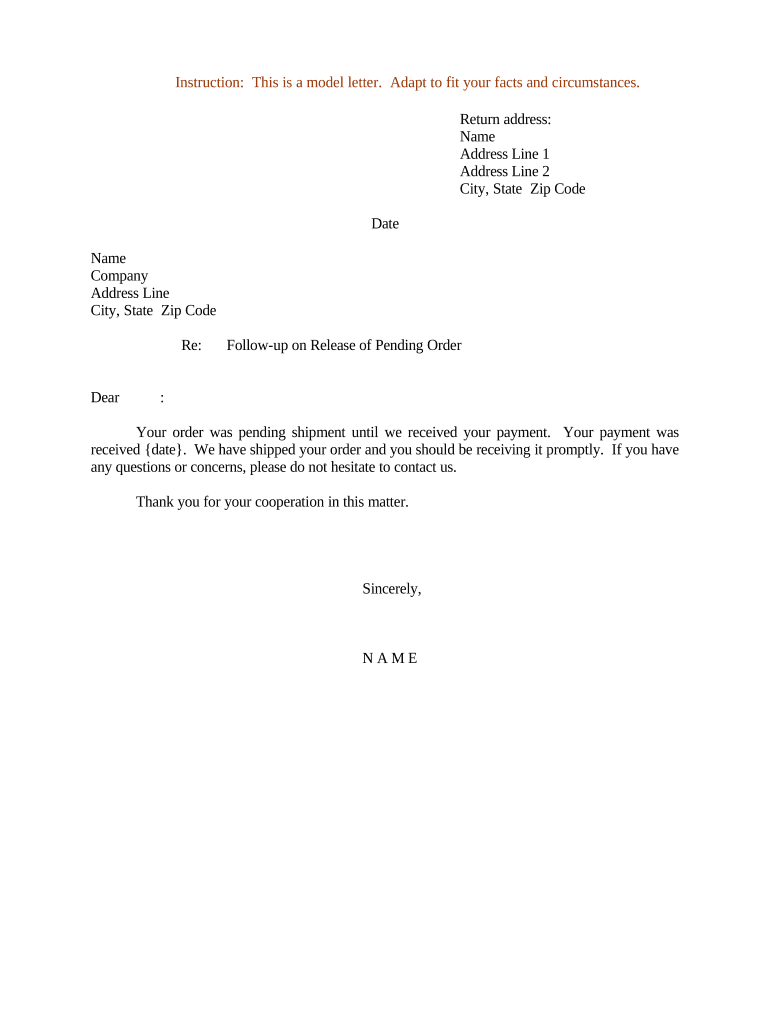
A Letter Follow-Up on Release of Pending Order is a formal written notice sent by a buyer, procurement team, or account manager after a previously pending order has been released for fulfillment. It confirms release details, requests shipment or delivery confirmation, reconciles payment or hold reasons, and documents any remaining conditions. This letter serves as an auditable business record for internal tracking, dispute resolution, and supply-chain coordination when an order transitions from pending to active status.

Why a Clear Follow-Up Letter Matters

A concise follow-up letter reduces delivery confusion, preserves evidence of release communications, speeds reconciliation, and creates a single reference for carrier, supplier, and internal teams while protecting contractual rights.

Why a Clear Follow-Up Letter Matters

Who Typically Sends and Receives This Letter

Procurement, accounts payable, warehouse teams, and sales operations commonly prepare and send this follow-up after release of a pending order.

Who Signs and Approves These Letters

Purchasing Manager

As the document owner, the purchasing manager confirms release terms, authorizes payment or release holds removal, and provides contact points for escalation; signature authority is typically outlined in internal purchasing policy.

Accounts Payable

AP staff may sign or countersign to acknowledge invoice reconciliation, confirm payment holds are cleared, and document financial acceptance for the released order in the accounting system.

Essential Information to Include

Order Number: Exact PO or order ID
Release Date: MM/DD/YYYY format
Item Details: SKU, quantity, description
Supplier Contact: Name, phone, email
Payment Status: Paid, pending, or hold
Requested Action: Confirm ship | invoice | hold removal

Risks if the Letter Is Incorrect

Delayed Delivery: Further shipment delays
Billing Errors: Invoice disputes arise
Lost Evidence: No clear audit trail
Contract Breach: Potential vendor disputes
Compliance Risk: HIPAA/FERPA exposure if PHI included
Financial Penalty: Late-payment or service fees

Common Preparation Errors to Avoid

  • Sending incomplete order identifiers, causing suppliers to misapply the release or delay fulfillment.
  • Failing to document the effective release date and time, which complicates liability and delivery-window disputes.
  • Using ambiguous language about actions requested, such as 'process as normal' without specifying shipment or invoicing steps.
  • Omitting contact details or escalation instructions, which lengthens resolution cycles when issues arise.

Step-by-Step: How to Draft the Follow-Up Letter

Use a clear, professional structure: identify the order, state the release, request confirmation, and record next steps.

  • 01
    Identify the Order: Enter PO or order ID and customer reference.
  • 02
    State Release: Specify release date and any conditions removed.
  • 03
    Request Confirmation: Ask for shipment or delivery confirmation and tracking.
  • 04
    Log Signatures: Include signer name, title, and signature date.

Where to Send or File the Letter

Route the letter to external suppliers and internal teams, and store a copy in procurement and finance systems for auditability.

  • Supplier Email: Send to supplier orders or logistics mailbox.
  • Accounts Payable: Attach to invoice reconciliation records.
  • ERP or PO System: Upload as order attachment for audit trail.
  • Document Repository: Store final signed copy in records retention system.

Key Sections to Include in a Professional Follow-Up Letter

A standard follow-up letter is concise and structured so recipients can act quickly; include identifiers, release context, requested actions, and signature verification.

Header

Company name, address, date, and recipient details so the letter is professionally attributable and easily routed by the supplier.
Order Reference

Full purchase order number, internal reference, and SKU list to ensure precise matching against supplier systems and avoid misapplied shipments.

Release Statement

Explicit sentence confirming the pending order has been released, the effective date, and any holds that were removed or remain in place.

Requested Action

Clear instruction for the supplier such as 'confirm shipment within 48 hours' or 'provide tracking and invoice for reconciliation'.

Acknowledgment Clause

A brief acceptance line for the supplier to sign or return acknowledging receipt and intended action to create mutual record.

Signature Block

Printed name, title, department, contact phone, and signature field with date to establish authoritativeness and accountability.

How to Set Up an Online Follow-Up Workflow

Configure an e-form or template that pulls order data, routes to signers, and archives the signed letter alongside the PO for auditability.

Field Configuration
Order ID Field Auto-populate from ERP or manual entry
Release Date Field MM/DD/YYYY with date-picker
Signature Field eSignature with signer email verification
Archive Action Save signed PDF to document repository

Digital Signing and Platform Considerations

Choose a platform that supports secure eSignatures, audit trails, and integration with your ERP or document repository.

  • File Formats: Accept PDF and DOCX uploads
  • Authentication: Email, SMS, or stronger methods
  • Audit Trail: Capture IP, timestamp, and history

Typical Timelines and Processing Expectations

Set clear internal and external deadlines to avoid holdovers; communicate expected response windows and escalation points.

Confirmation Window:

Request supplier confirmation within 48–72 hours of letter receipt.

Shipment Expectation:

Standard release to ship within 7–14 business days unless expedited.

Invoice Submission:

Ask supplier to submit invoice within 5 business days after shipment.

Escalation Trigger:

Escalate to supplier account manager after 7 business days without response.

Record Retention:

Store acknowledgments and signed letters per retention policy immediately.

eSignature Pricing Landscape for Executing Follow-Up Letters

Comparison of common vendor starting prices and capabilities relevant to signing and archiving follow-up letters; signNow is listed first per platform comparison standards.

signNow DocuSign Adobe Sign PandaDoc HelloSign
Starting Price $8/user/mo $15/user/mo $14/user/mo $19/user/mo $15/user/mo
Free Trial Yes, 7-day trial Varies Varies Varies Varies
Bulk Send Yes Yes Yes Yes No
Audit Trail Yes Yes Yes Yes Yes
HIPAA Compliant Yes Yes Yes No No

Frequently Asked Questions About the Follow-Up Letter

Answers to common questions about validity, signing, storage, and practical steps when an order release requires confirmation or dispute resolution.


Need help? Contact support

be ready to get more
Join over 28 million airSlate SignNow users