Establishing secure connection…Loading editor…Preparing document…

Letter Denying Request for Additional Discount

This template is fully customizable. Edit the text, fill out the fields, and send it for signature. Give it a try!
Letter Denying Request for Additional Discount

What the Letter Denying Request for Additional Discount Is

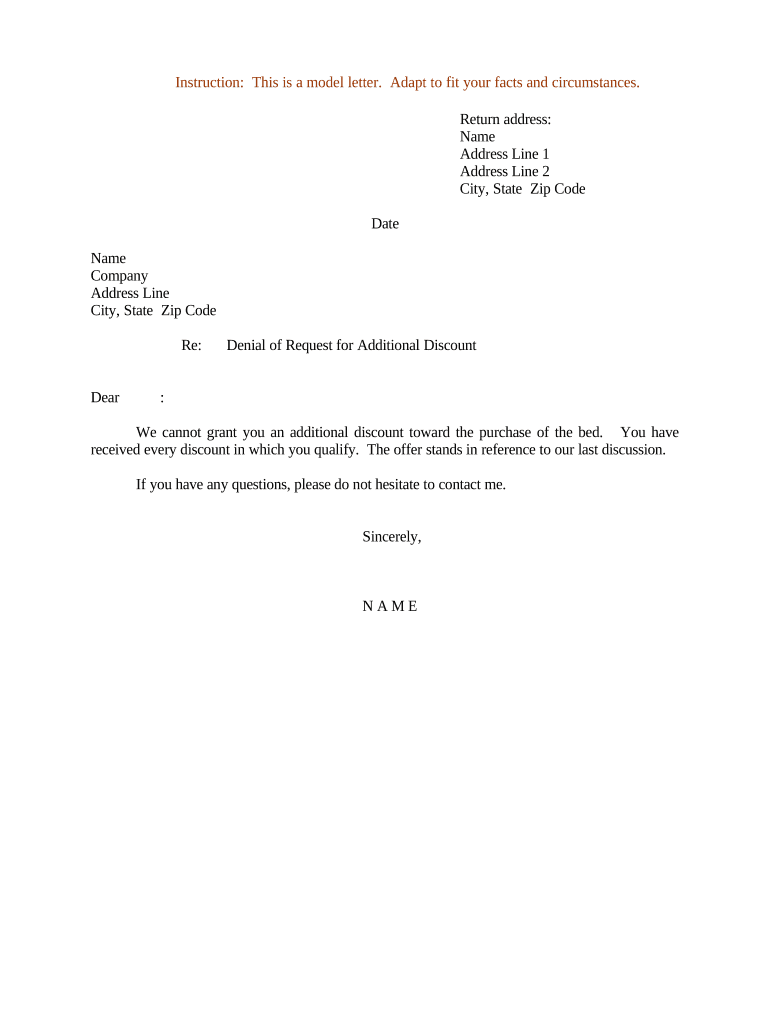
A Letter Denying Request for Additional Discount is a formal business communication used to notify a buyer or partner that a requested price reduction or extra discount is not approved. It records the decision, states the rationale, and preserves negotiation history. The letter typically references the original quote or contract, summarizes any previous concessions already granted, and confirms current pricing and terms. Organizations use this letter to manage expectations, reduce disputes, and create an auditable record for procurement, sales, or finance teams.

Why a Clear Denial Letter Matters

A concise, factual denial letter protects your pricing integrity, creates a documented decision trail, and lowers the risk of future disputes by clearly stating reasons and existing concessions.

Why a Clear Denial Letter Matters

Who Typically Prepares and Receives This Letter

Procurement, sales management, and accounts payable commonly prepare or review denials so pricing decisions align with company policy.

  • Sales managers and account executives who own customer negotiations and approve exceptions.
  • Procurement officers and buyers who requested the discount or manage supplier relationships.
  • Finance and legal teams that track concessions and ensure contractual compliance.

Authorized Signers for Denial Letters

Sales Director

A Sales Director or similar senior sales leader generally has delegated authority to approve or deny discount exceptions and signs official denial letters to ensure consistency with pricing policy and revenue targets.

Finance Officer

A Finance Officer or controller may sign when denials relate to margin, credit risk, or billing terms; their signature documents financial review and preserves internal control over pricing decisions.

Essential Data to Include in the Letter

Requestor Name: Full legal name
Customer ID: Account or invoice number
Original Quote: Quote or PO reference
Requested Discount: Percent or dollar amount
Decision Date: MM/DD/YYYY
Denial Reason: Concise policy reason

Risks from an Incorrect or Incomplete Denial

Contract Ambiguity: Creates enforceability disputes
Revenue Loss: Unapproved concessions reduce margins
Regulatory Risk: Industry rules may be violated
Reputational Harm: Customer relationship damage
Accounting Errors: Misstated discounts affect reports
Legal Exposure: Potential breach claims

Common Preparation Mistakes to Avoid

  • Failing to reference the original quote or purchase order, which leaves the recipient uncertain about the transaction being referenced and may cause disputes.
  • Using vague language like 'not possible' without a policy basis or explanation, which can escalate negotiations rather than resolve them.
  • Neglecting to copy internal stakeholders, causing downstream teams like finance or accounts receivable to process incorrect adjustments.
  • Omitting next-step guidance or alternatives, such as volume discounts or promotional timelines, which reduces the chance of maintaining the relationship constructively.

How to Complete the Letter Denying Request for Additional Discount

Follow these steps to create a clear, professional denial letter that documents the decision and preserves an audit trail.

  • 01
    Identify transaction: Reference quote, PO, or invoice number
  • 02
    State decision: Clearly say the request is denied
  • 03
    Explain reason: Cite policy or financial rationale
  • 04
    Offer alternatives: Suggest available discounts or terms

Configuring a Digital Workflow for Denial Letters

Set up a repeatable digital workflow to route, approve, sign, and archive denial letters securely.

Field Configuration
Approval routing Two-step: sales then finance
Authentication Email + optional SMS code
Template Lock core fields, allow notes
Storage Centralized document repository

Where to Send and Store the Letter

A consistent delivery and storage process helps track denials and prevents duplicate requests or conflicting concessions.

  • Deliver to requester: Send via email and record system
  • Notify stakeholders: CC finance, sales ops
  • Archive copy: Store in contract repository
  • Attach evidence: Include quote and approval log

Digital Signing and Integration Considerations

Choose a platform that captures an audit trail, supports team roles, and integrates with your CRM or ERP to synchronize account records.

  • Authentication: Email, SMS, KBA options
  • Integrations: Salesforce, NetSuite, Google Workspace
  • File formats: PDF, DOCX supported

Timelines and Typical Processing Expectations

Standard internal timelines reduce back-and-forth and set expectations for customers and teams.

Response SLA:

3–5 business days for formal reply

Approval window:

Sales/finance response within 48 hours

Record retention:

Archive immediately after sending

Customer follow-up:

Allow 7 days for reply or escalation

Dispute window:

30 days to raise formal dispute

Key Milestones from Request to Closure

Track milestones to ensure timely decisions and a clear audit trail from the initial request through final archiving.

01

Request Received

Date when buyer submits discount request

02

Internal Review

Commercial and finance evaluate margin impact

03

Decision Issued

Formal denial letter sent to requester

04

Archive and Audit

Store documents and approvals centrally

Representative Use Cases for a Discount Denial Letter

These short examples show how denial letters are used to preserve clarity and maintain the customer relationship while protecting margins.

Retail Vendor Case

A mid-size electronics reseller requested an additional 10% off an already discounted bulk order

  • The supplier cited margin thresholds and denied the extra discount
  • The seller offered extended payment terms and future promotional pricing, documenting the decision in the contract repository for audit.

Software Reseller Case

A reseller asked for a deeper perpetual-license discount outside approved tiers

  • Finance denied due to pricing policy and revenue recognition rules
  • The company proposed a temporary subscription credit instead and recorded approvals and correspondence in the CRM.

Practical Tips for Accurate and Efficient Letters

Follow consistent language and a standard template to reduce errors and speed processing for future requests.

Use a template
Standardize wording and required fields so denials are consistent, legally defensible, and easy to search across systems.
Document rationale
Record the exact policy, margin calculation, or approval limit that informed the denial to prevent re-litigation.
Keep alternatives ready
Offer defined alternatives like payment terms or future promotions to preserve the relationship and reduce escalation.
Sync systems
Mirror the letter in CRM, contract repository, and accounting systems so all teams act on the same record.

eSignature Pricing and Feature Comparison for Sending Denial Letters

Comparing basic pricing and core capabilities can help determine which platform meets your volume, security, and compliance needs without introducing a data date in this summary.

signNow DocuSign Adobe Sign PandaDoc HelloSign
Starting Price $8/user/mo $15/user/mo $14/user/mo $19/user/mo $15/user/mo
Free Trial 7-day free trial Yes Yes Yes Yes
Bulk Send Yes Yes Yes Yes No
Audit Trail Yes Yes Yes Yes Yes
HIPAA Compliant Yes Yes Yes No No

FAQs About the Letter Denying Request for Additional Discount

Answers to common questions about drafting, signing, and retaining denial letters for commercial negotiations.


Need help? Contact support

be ready to get more
Join over 28 million airSlate SignNow users