Establishing secure connection…Loading editor…Preparing document…

Letter of Intent for Asset Purchase

This template is fully customizable. Edit the text, fill out the fields, and send it for signature. Give it a try!
Letter of Intent for Asset Purchase

What a Letter of Intent for Asset Purchase Is and When it’s Used

A Letter of Intent for Asset Purchase is a preliminary written statement outlining the principal terms under which a buyer proposes to acquire specified assets from a seller. It typically identifies the parties, describes the assets, states the proposed purchase price and allocation, and lists key conditions to closing such as due diligence, third‑party consents, and regulatory approvals. An LOI speeds negotiations and focuses due diligence while reserving certain binding provisions (confidentiality, exclusivity) and leaving detailed transfer mechanics to a later definitive asset purchase agreement.

Why a Clear LOI Matters in an Asset Sale

A well‑drafted LOI sets expectations, narrows issues for the definitive agreement, protects deal momentum during diligence, and can preserve bargaining positions by documenting price and fundamental terms early.

Why a Clear LOI Matters in an Asset Sale

Who Typically Prepares and Reviews an LOI for Asset Purchase

An LOI is used by parties and their advisors to outline terms before drafting a definitive purchase agreement.

  • Buyers and corporate development teams who want to secure exclusivity and outline offer structure.
  • Sellers and their management or M&A advisors who need to present terms to stakeholders.
  • Outside counsel and tax or finance advisors who review allocation, conditions, and closing mechanics.

Legal counsel commonly prepares or reviews the final LOI language to ensure that binding and nonbinding clauses are clearly delineated.

Essential Sections to Include in a Professional LOI

Include clear, standalone sections so each party can quickly assess commercial and legal risk before committing to a definitive agreement.

Parties

Identify full legal names and entity types for buyer and seller, including jurisdiction of organization and contact details for notices.
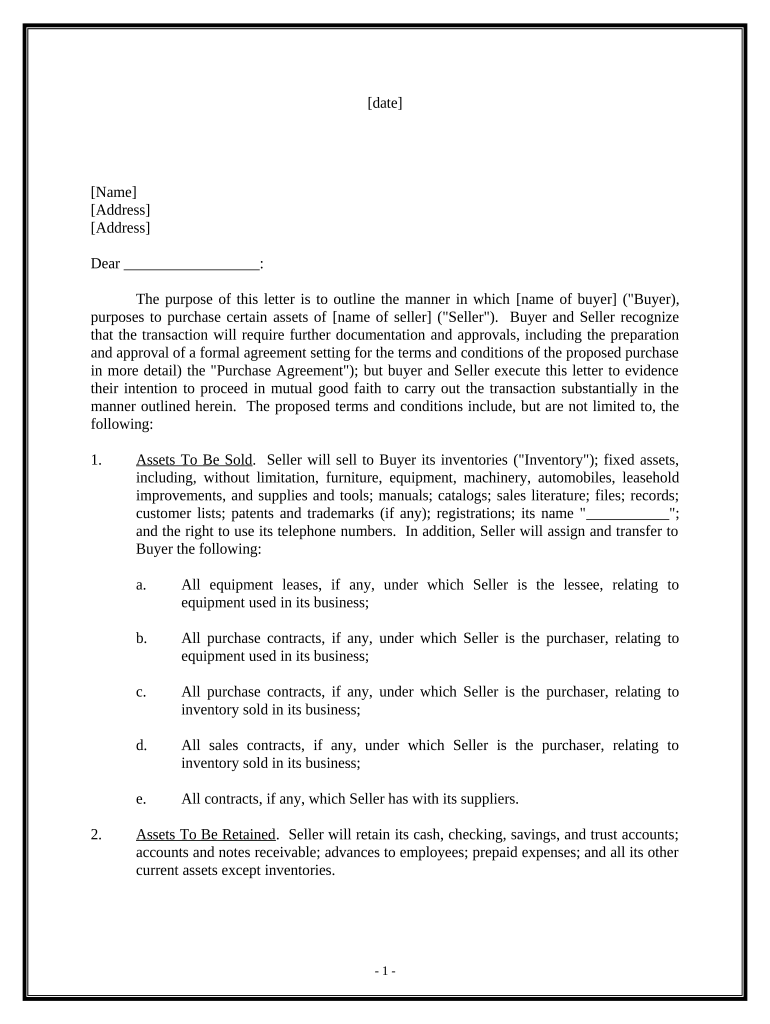
Assets Being Sold

Describe included assets with enough specificity (inventory, equipment, IP, contracts to be assigned) and list any excluded items.

Purchase Price

State total consideration, payment structure (cash, notes, holdback, escrow), and allocation among asset classes for tax reporting.

Conditions to Closing

List material conditions such as satisfactory due diligence, third‑party consents, clear title, regulatory approvals, and financing contingencies.

Exclusivity and Timeline

Set any no‑shop/exclusivity period, key milestone dates for diligence and closing, and consequences of missed deadlines.

Confidentiality and Expenses

State confidentiality obligations, which provisions are intended to be binding, and who bears transaction costs and break fees if applicable.

Key Information to Provide on the Form

Buyer Name: Full legal entity name
Seller Name: Full legal entity name
Effective Date: MM/DD/YYYY format
Asset List: Short asset identifiers
Purchase Price: Currency and allocation
Binding Provisions: Confidentiality/exclusivity

Step‑by‑Step: Completing a Letter of Intent

Follow these sequential steps to assemble an LOI that captures commercial terms and reserves legal issues for the definitive agreement.

  • 01
    Identify Parties: Enter full legal names and contact details for notice purposes.
  • 02
    Describe Assets: List assets with enough detail to avoid ambiguity.
  • 03
    Set Price and Structure: Specify total consideration, payment timing, and allocation.
  • 04
    Define Conditions: List due diligence, consents, and approvals needed to close.

Configuring an Online LOI Workflow

Set up routing, authentication, and notifications to match your review and approval workflow when completing the LOI electronically.

Field Configuration
Signing Order Sequential signing with buyer then seller
Authentication Email link or SMS code for signer verification
Audit Trail Capture timestamps, IP, and actions
File Format Use PDF/A for final executed copies

Where to Send or Submit a Completed LOI

The LOI is typically circulated to the parties, their counsel, and transaction advisors; it is not generally recorded with a government agency.

  • Seller Counsel: Primary recipient for review and negotiation
  • Buyer Counsel: Receives seller comments and coordinates redlines
  • Deal Advisors: Investment bankers or brokers receive copies
  • Escrow or Agent: Receives executed LOI if deposits are required

Digital Signing and File Requirements

Choose a secure eSignature platform that supports PDF signing, audit trails, and the authentication level your transaction requires.

  • File Types: PDF, DOCX accepted
  • Authentication: Email link, SMS code, or KBA
  • Integrations: CRM and document storage

Maintain signed copies in immutable format with accessible audit logs; preserve originals per retention policy and regulatory needs.

Typical Timelines and Deadlines to Include

Define clear milestone dates so both parties understand exclusivity, diligence windows, and expected closing timing.

Signature Deadline:

Date by which parties must sign the LOI

Exclusivity Period:

Length of any no‑shop obligation

Due Diligence Window:

Number of days for buyer review

Target Closing Date:

Anticipated date for definitive agreement closing

Termination Date:

Date when offers or exclusivity expire

Common Mistakes to Avoid When Preparing an LOI

  • Failing to distinguish binding clauses (confidentiality/exclusivity) from nonbinding commercial terms creates enforceability disputes.
  • Vague asset descriptions or undefined excluded assets lead to protracted negotiations and scope disputes during closing.
  • Not specifying purchase price allocation causes tax uncertainty and may trigger IRS scrutiny or buyer/seller disagreement.
  • Missing signatory authority or corporate approvals can render the LOI ineffective or delay closing while corporate records are obtained.

Potential Risks and Legal Consequences

Accidental Binding: Enforceable obligations
Break Fees: Contractual penalties
Tax Exposure: Allocation disputes
Regulatory Delay: Approval-related hold-ups
Confidentiality Breach: Damages and injunctions
Authority Gaps: Voidable signatures

How an LOI Differs from Other Transaction Documents

Compare common document types so you can choose the right instrument for each stage of the transaction.

Document Type | Binding? | Primary Purpose Type Binding Purpose
Letter of Intent generally no limited binding clauses outline principal commercial terms
Asset Purchase Agreement full binding obligations definitive transfer and warranties
Term Sheet negotiation roadmap summarize economics and structure
Exclusivity Agreement binding prevent seller solicitation during negotiations

eSignature Vendor Comparison for Executing an LOI

Signatures for LOIs are commonly executed with eSignature providers; below is a concise vendor comparison with signNow placed first.

signNow DocuSign Adobe Sign PandaDoc HelloSign
Starting Price $8/user/mo $15/user/mo $14/user/mo $19/user/mo $15/user/mo
Free Trial 7-day free trial Varies by vendor Varies by vendor Varies by vendor Varies by vendor
Bulk Send Yes Yes Yes Yes No
Audit Trail Yes Yes Yes Yes Yes
HIPAA Compliant Yes Yes Yes No No
Envelope Cap No cap 100 envelopes/user/year Varies Varies Varies

Practical Tips for Accurate and Efficient LOI Completion

Adopt these practices to reduce rework and legal exposure while keeping negotiations on track.

Use Clear Definitions
Define key terms (Assets, Closing, Effective Date) to avoid ambiguity and speed drafting of the definitive agreement.
Limit Binding Language
Explicitly label which clauses are binding (e.g., confidentiality, exclusivity) and state that other terms are nonbinding.
Attach Exhibits
Use schedules and exhibits for asset lists and excluded items to simplify later transfer mechanics.
Coordinate Tax Allocation
Agree on purchase price allocation early to prevent tax disputes and speed post‑closing reporting.

Real‑World LOI Scenarios

These examples illustrate how different parties use LOIs in practice and what issues commonly arise during the transition to a definitive agreement.

Optica Ventures LLC

A growth investor submitted an LOI to acquire laboratory equipment and IP

  • Negotiated a 60‑day diligence window
  • The LOI’s clear asset schedule reduced final agreement revisions and shortened closing by six weeks.

Martin Properties

A buyer used an LOI to secure exclusivity for property management contracts

  • Included binding confidentiality and a small earnest deposit
  • This prevented competing bids while buyer completed vendor consent processes.

Frequently Asked Questions About LOIs for Asset Purchase

Answers to common questions about enforceability, execution, and practical next steps for a Letter of Intent for Asset Purchase.


Need help? Contact support

be ready to get more
Join over 28 million airSlate SignNow users