Heading
A concise title identifies the notice type and links it to the lease clause or statutory authority so readers immediately understand the purpose.
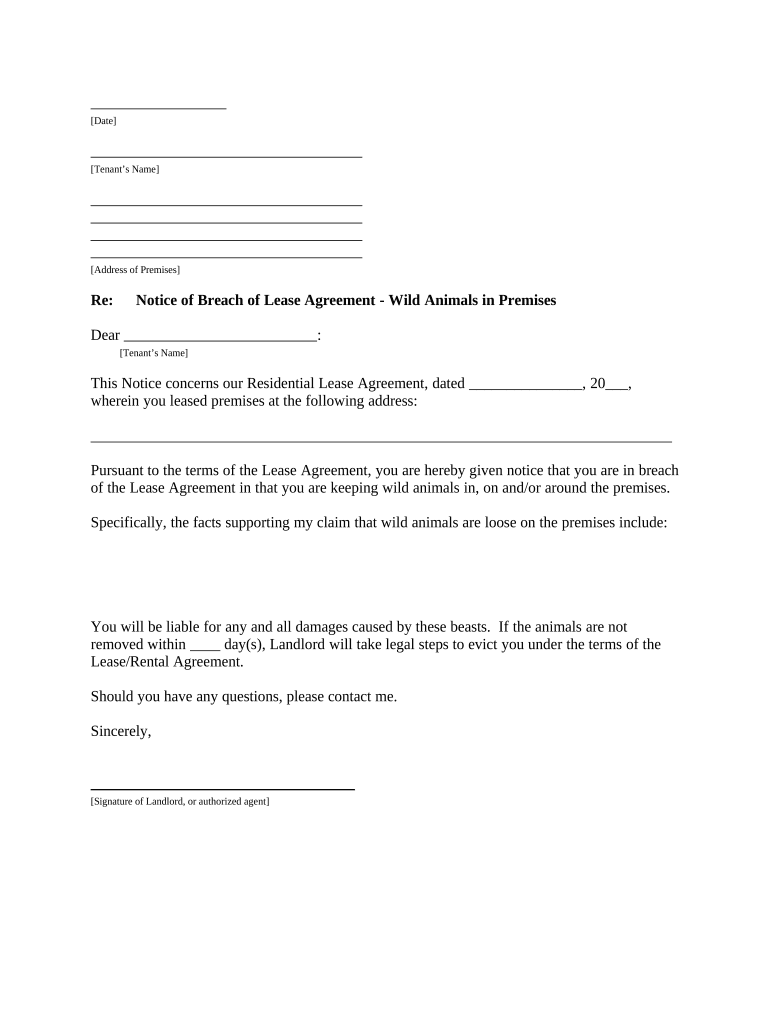
A well‑drafted Tenant Notice reduces disputes by documenting facts, deadlines, and remedies; it preserves landlord and tenant rights and creates traceable proof of service that courts and agencies can evaluate.

Landlords, property managers, tenants, and housing attorneys prepare and rely on Tenant Notices to document requests, defaults, and changes in tenancy.
The landlord or authorized agent issues the Tenant Notice, certifies facts, and provides contact information. The issuer must accurately identify the property, state the alleged default or request, and sign or authenticate the notice to show authority to act on the owner’s behalf.
The tenant is the recipient whose rights and obligations are affected; the tenant should review deadlines, possible remedies, and how to respond. If multiple tenants share liability, each named tenant should be listed to avoid ambiguity.
A concise title identifies the notice type and links it to the lease clause or statutory authority so readers immediately understand the purpose.
List full legal names and contact details for landlord, agent, and tenant so responsibility and service addresses are unambiguous.
Describe the conduct or default with dates and amounts; cite lease sections or statutes that the alleged breach violates to support enforceability.
Specify the exact action required (pay $X, complete repair) and the cure method so the tenant can comply within the stated deadline.
Provide the deadline in MM/DD/YYYY and indicate how the deadline is measured (calendar days vs business days) and acceptable delivery methods.
Record the delivery method, date, and evidence (signed receipt, certified mail record, or eSignature audit trail) to document service if enforcement is later needed.
Attach the specific lease clause referenced in the notice to show the contractual basis for the demand and reduce disputes about interpretation.
Include payment history or repair requests to document prior communications and substantiate the factual basis for the notice.
Retain certified mail receipts, courier tracking, signed acknowledgements, or the eSignature certificate of completion as supporting evidence.
Save signed notices as PDF/A and PDF for long-term retention; maintain an editable DOCX copy for future amendments if needed.
Choose a signing workflow that captures signer identity, timestamp, and an unalterable audit trail to support enforcement.
| Field | Configuration |
|---|---|
| Tenant name | Mandatory text field; auto-validate common name patterns |
| Notice type | Dropdown with predefined templates to reduce errors |
| Signature | Required signature field plus date stamp |
| Proof of service | Attach audit trail and delivery receipt automatically |
| signNow | DocuSign | Adobe Sign | PandaDoc | HelloSign | |
|---|---|---|---|---|---|
| Starting Price | $8/user/mo | $15/user/mo | $14/user/mo | $19/user/mo | $15/user/mo |
| Free Trial | 7-day free trial | No | No | No | No |
| Bulk Send | Yes | Yes | Yes | Yes | No |
| Audit Trail | Yes | Yes | Yes | Yes | Yes |
| Envelope Cap | No cap | 100 envelopes/user/year | Varies by plan | Varies by plan | Varies by plan |
Often 3 days for nonpayment (varies by state and lease)
Notice to cure often allows 7–30 days depending on severity and jurisdiction
Month-to-month tenancies commonly require 30 days’ notice
Typically 24–48 hours’ notice for non-emergency entry (state law may vary)
May proceed after failure to cure or pay within the specified deadline
A manager sends a 'Pay or Quit' after missing two rent payments
A tenant receives a notice to cure for lease violations