Establishing secure connection…Loading editor…Preparing document…

License Agreement for Software Use

This template is fully customizable. Edit the text, fill out the fields, and send it for signature. Give it a try!
License Agreement for Software Use

What the License Agreement for Software Use Covers

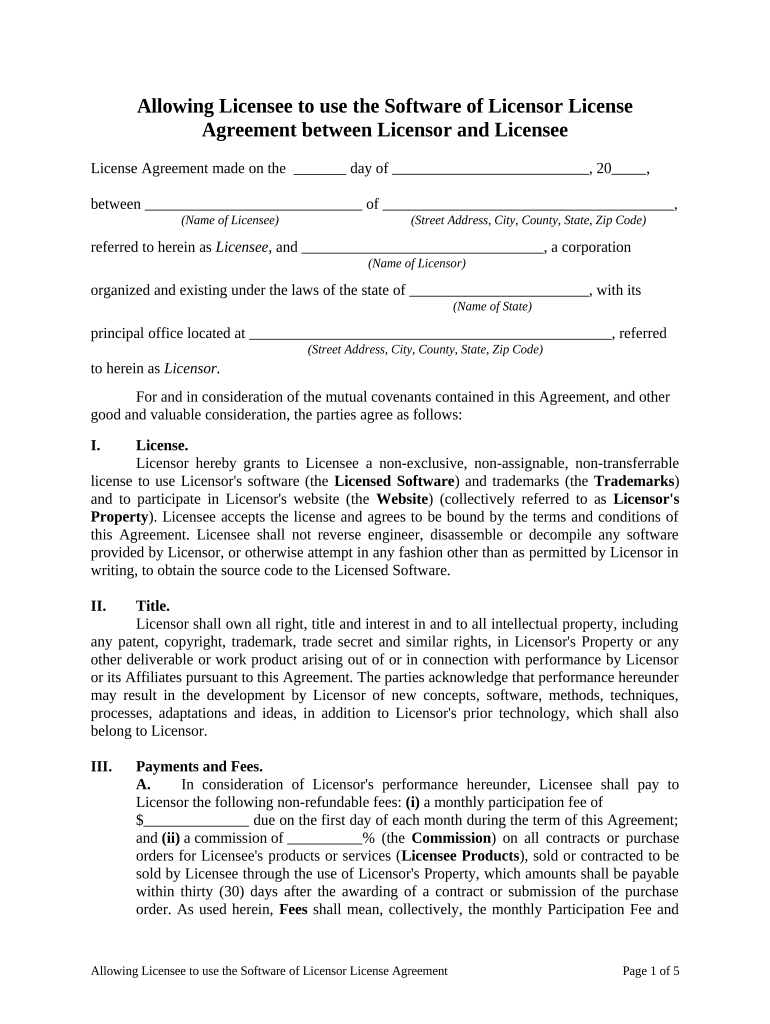
A License Agreement for Software Use is a written contract that grants permissions to use software under specified terms. It identifies the licensor and licensee, defines the license scope (user counts, environments, modules), sets the term and renewal mechanics, allocates intellectual property ownership and liability, and defines permitted and prohibited uses. These agreements may include support, maintenance, update, and audit rights. For commercial and enterprise deployments, the license frequently addresses confidentiality, data handling, warranty disclaimers, indemnities, and conditions for termination or suspension.

Why a Clear License Agreement Matters

A clear license reduces disputes by specifying rights, limits, and obligations; protects intellectual property; and clarifies pricing, support, and termination. Well-drafted terms enable predictable audits, compliance with industry rules, and enforceable remedies when breaches occur.

Why a Clear License Agreement Matters

Who Typically Prepares and Signs This Agreement

Organizations use these agreements to govern software deployments across teams and vendors; individuals sign when accessing licensed products under employer or vendor arrangements.

  • Software vendors and their legal teams managing license terms and IP protections.
  • Procurement or IT teams negotiating user counts, pricing, and support SLAs.
  • Enterprise legal counsel and corporate signatories finalizing execution and compliance requirements.

Key Signatory Roles

Licensor — Legal

The licensor or its authorized representative (often in-house counsel or contracts manager) must sign with authority to grant rights, bind the company, and accept warranty and indemnity terms.

Licensee — Officer

The licensee should be signed by an officer or authorized procurement contact who can bind the organization and confirm acceptance of usage limits, payment obligations, and compliance responsibilities.

Security and Compliance Elements to Include

Encryption: TLS 1.2/1.3 in transit; AES-256 at rest
Audit Trail: Signed document timestamp and event log
HIPAA: BAA required for PHI handling
21 CFR Part 11: Controls for FDA-regulated electronic records
Certifications: SOC 2 Type II; ISO 27001
Accessibility: WCAG 2.0 Level AA conformance

Common Risks and Legal Consequences

Contract Invalidity: Improper signature or consent may jeopardize enforceability
IP Loss: Unclear assignment provisions risk ownership disputes
Regulatory Violation: Noncompliance with HIPAA or 21 CFR Part 11 can produce fines
Operational Disruption: License breaches can result in suspension of service
Litigation Costs: Disputes may incur significant attorney and damages expenses
Data Exposure: Insufficient controls increase breach and notification obligations

Frequent Preparation Mistakes to Avoid

  • Using vague scope phrases like 'reasonable use' without numeric limits or permitted environments increases dispute risk and complicates audits.
  • Failing to name the legal entity or using a trade name instead of the corporate name can render the signature ineffective against the intended party.
  • Omitting renewal or termination mechanics leads to unintended auto-renewals or sudden service loss when parties disagree on notice periods.
  • Neglecting data-handling language and HIPAA/industry addenda can expose parties to regulatory fines and contract repudiation.

Step-by-Step: Completing a License Agreement for Software Use

Follow these sequential steps to prepare, review, and execute a clear, enforceable license agreement.

  • 01
    Identify Parties: Enter full legal names and entity types
  • 02
    Define Scope: Specify users, sites, modules, and permitted environments
  • 03
    Set Term: Record effective date, renewal method, and termination rights
  • 04
    Sign and Record: Execute with approved signer and preserve audit trail

How Electronic Execution Typically Works

Electronic completion and eSigning follow standard stages from document preparation to retention; confirm each step for legal compliance.

  • Prepare Document: Draft terms and insert signature fields
  • Choose Authentication: Select email, SMS, KBA, or stronger method
  • Send to Signers: Distribute via secure link or enveloped email
  • Capture Audit Trail: Store timestamps, IPs, and signature events

Essential Clauses to Include in a Professional License Agreement

A complete license agreement contains standard clauses that allocate rights, responsibilities, and remedies. Each clause should be precise, measurable, and tied to operational processes such as deployment, auditing, and incident response.

License Grant

Specify exact rights granted (per-user, per-device, perpetual vs. term) and any geographic or functional limits to usage.
Term & Renewal

Define effective date, fixed term or subscription cadence, renewal notice periods, and consequences of nonrenewal.

Restrictions

Prohibit reverse engineering, redistribution, sublicensing, and other unauthorized uses with clearly defined remedies.

Intellectual Property

State that licensor retains IP; include assignment language for work-for-hire or custom development deliverables if applicable.

Support & Updates

Describe service levels, patching cadence, security updates, and any separate fees for premium support.

Termination & Remedies

List breach cure periods, termination triggers, post-termination decommissioning and data return or deletion procedures.

Configuring an Online Execution Workflow

Map platform settings to the agreement’s requirements so the execution process produces an admissible, auditable record.

Field Configuration
Signer Authentication Email or SMS code; consider KBA for high risk
Signature Order Sequential or parallel signer routing
Conditional Fields Show fields only when applicable
Audit Retention Store logs and signed copies per retention rules

Technical Requirements for eSubmission and Signing

Choose a platform that supports required authentication, audit logging, and formats compatible with your recordkeeping systems.

  • Formats: PDF, DOCX, and exportable audit logs
  • Integrations: CRM and cloud storage connections
  • Authentication: Email, SMS, KBA, or SSO

Typical Timing and Deadlines to Track

Identify key dates in the agreement lifecycle—effective date, execution deadline, renewal windows, payment dates, and audit notice periods.

Effective Date:

Date when the license rights and obligations begin

Signature Deadline:

Final date to sign before offer expiration

Renewal Notice:

Time required to notify nonrenewal or pricing changes

Payment Due Date:

Invoice terms and late-payment consequences

Audit Notice Period:

Advance notice required before compliance audits

eSignature Pricing and Feature Comparison for License Execution

Compare core pricing and feature criteria commonly needed for executing license agreements; signNow is listed first for direct comparison with major vendors.

signNow DocuSign Adobe Sign PandaDoc HelloSign
Starting Price $8/user/mo $15/user/mo $14/user/mo $19/user/mo $15/user/mo
Free Trial 7-day free trial, no card Varies Varies Varies Varies
Bulk Send Yes Yes Yes Yes No
Audit Trail Yes Yes Yes Yes Yes
HIPAA Compliant Yes Yes Yes No No
Envelope Cap No envelope cap 100 envelopes/user/year Varies by plan Varies by plan Varies by plan

Frequently Asked Questions About License Agreements and eSignatures

Answers to common legal and execution questions when preparing and eSigning a License Agreement for Software Use.


Need help? Contact support

be ready to get more
Join over 28 million airSlate SignNow users