Establishing secure connection…Loading editor…Preparing document…

Mississippi Tax Sales

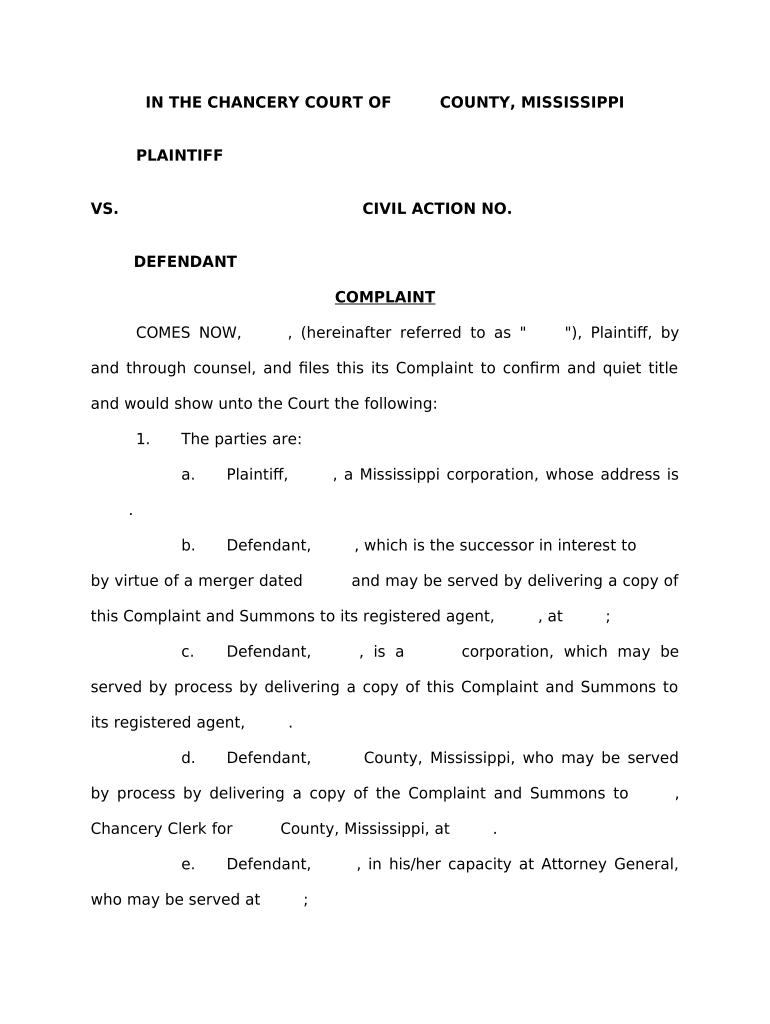
This template is fully customizable. Edit the text, fill out the fields, and send it for signature. Give it a try!
Mississippi Tax Sales

What Mississippi tax sales are and how they function

Mississippi tax sales are statutory processes where a county sells liens or property interests to recover unpaid property taxes. The sale typically follows county notice and publication requirements, a scheduled auction, and a statutory redemption period during which the owner may repay taxes plus interest and costs. Successful purchasers receive certificates or deeds subject to redemption and post-sale recording. Procedures, notice forms, and timelines are governed by Mississippi law and local county rules and affect title, redemption rights, and potential tax reporting obligations.

Why understanding Mississippi Tax Sales matters

Clear documentation protects county revenue, preserves taxpayer notice rights, and creates predictable title outcomes for purchasers. Accurate forms reduce legal challenges, speed post-sale recording, and control financial exposure for all parties involved.

Why understanding Mississippi Tax Sales matters

Typical users and stakeholders in Mississippi tax sale transactions

County officials, tax collectors, property owners, investors, and attorneys commonly work with tax sale documents and notice forms.

  • County tax offices and clerks who prepare notices, manage auctions, and record sale instruments.
  • Real estate investors and certificate holders who purchase liens or titles at auction and manage redemption risks.
  • Title companies and attorneys who perform due diligence, prepare deeds, and resolve post-sale title issues.

Each stakeholder needs different fields completed accurately to preserve legal rights, meet statutory deadlines, and enable proper recording or tax reporting.

Step-by-step workflow to prepare Mississippi tax sale documents

Follow a consistent sequence: confirm statutory requirements, prepare and publish notices, run the auction, and complete post-sale recording and reporting.

  • 01
    Verify parcel: Confirm legal description, parcel ID, and outstanding taxes with county records.
  • 02
    Prepare notice: Draft statutory notice language, set publication dates, and schedule the auction.
  • 03
    Conduct sale: Hold auction per county rules, record winning bid, and issue certificate or deed.
  • 04
    Post-sale recording: File deed or certificate with the recorder and update tax records promptly.

How to configure an online workflow for Mississippi tax sale documents

Set up a repeatable digital workflow that enforces authentication, places required fields, and captures an audit trail for each filing.

Workflow configuration field and purpose Configuration
Document type and template selection Choose tax sale notice or deed template with locked legal text.
Signer authentication and verification Require email plus SMS or knowledge-based checks for official signers.
Notifications and reminders Enable automated reminders to bidders and county staff before auction.
Recording and export options Prepare PDFs compliant with county recorder requirements and export metadata.

High-level process for eSubmission and recording

A digital workflow handles document creation, signer verification, signature capture, and prepares files for local recording or archival.

  • Create document: Populate template fields with parcel and owner data.
  • Place signer fields: Assign signature, date, and official acknowledgement fields.
  • Authenticate signers: Use email links, SMS codes, or stronger identity checks.
  • Capture audit trail: Save timestamps, IP addresses, and verification logs for recordkeeping.

Technical and integration considerations for digital tax sale workflows

Ensure the platform supports secure PDFs, audit trails, and integration with local county systems or document repositories.

  • File formats: PDF, DOCX supported
  • Integrations available: Salesforce, NetSuite, Google Workspace
  • RON and notary support: Remote notarization where permitted

Confirm county recorder acceptance of e-submitted files and align authentication and notarization methods with local statutory requirements.

Common timing elements and deadlines to watch

Timelines vary by county; verify local statutes. Below are common deadline types commonly encountered in tax sale processes.

Publication window:

Often a set number of weeks before auction; follow county schedule.

Auction date deadline:

Date publicized in notice; auction occurs on scheduled day.

Redemption period end:

Varies by jurisdiction; owner may redeem by repaying taxes plus costs.

Recording timeframe:

File deed or certificate with recorder promptly after sale.

Relevant IRS deadline:

If tax reporting applies, 1099 reporting deadlines may be Jan 31.

Key processing milestones from notice through recording

Sequence milestones help teams track progress and ensure statutory compliance from pre-sale notice to post-sale recording and reporting.

01

Pre-sale verification

Confirm owner identity, outstanding amounts, and legal descriptions before issuing notice.

02

Notice publication

Publish in required newspapers and post physical notices where required by county law.

03

Public auction

Conduct auction per county rules and record winning bidder information.

04

Post-sale recording and reporting

Record deed or certificate and complete any tax or 1099 reporting obligations.

Security and compliance posture for electronic handling

Encryption in transit: TLS 1.2/1.3
Encryption at rest: AES-256
Regulatory frameworks: ESIGN and UETA compliance
Healthcare standard: HIPAA (BAA required)
Audit standard: SOC 2 Type II
Industry certification: ISO 27001

Primary risks and legal consequences to avoid

Sale invalidation: Procedural defects can void a sale
Title defects: Inaccurate documents may create title challenges
Redemption liability: Purchasers may face redemption payments
Civil litigation: Affected parties may sue over notice errors
Tax reporting penalties: Incorrect reporting can trigger IRS fines
Recording rejections: Noncompliant forms may be refused by recorder

Vendor pricing and core capability comparison for eSignature use in tax sales

Compare common plan starting prices and core features relevant to secure signing and compliance. Confirm vendor terms and plan details before purchase.

signNow DocuSign Adobe Sign PandaDoc HelloSign
Starting Price $8/user/mo $15/user/mo $14/user/mo $19/user/mo $15/user/mo
Free Trial 7-day free trial Varies by vendor Varies by vendor Varies by vendor Varies by vendor
Bulk Send Yes Yes Yes Yes No
Audit Trail Yes Yes Yes Yes Yes
HIPAA Compliant Yes Yes Yes No No

Real-world examples of digital document use in property transactions

These brief case examples illustrate how organizations use digital signing to manage property and tax-related documents while preserving compliance and speed.

Tim Martin — Martin Properties

I can process and execute all of these documents online with 100% compliance and built-in security. Whether on mobile or working offline, I can get forms back to their necessary parties efficiently.

  • Use case: remote investor transactions and quick authorizations.
  • Outcome: Faster closings, preserved audit trails, and reduced paper handling across multiple properties and jurisdictions, simplifying post-sale title and accounting workflows.

Brian Fitzgibbons — Optica Ventures LLC

The interface is simple and easy-to-use for our team; more importantly, it is just as easy for our customers.

  • Use case: client-facing signature collection on notices and assignments.
  • Outcome: Higher completion rates, fewer follow-ups, and consistent document formats that integrate with accounting and title review processes.

Practical best practices to reduce risk and speed processing

Adopt standardized templates, strong authentication, and robust retention to minimize defects and support recording and audits.

Use county-compliant templates
Standardize notice and deed language to match county recorder and tax office requirements. Maintain version control for templates and document which statute or ordinance authorizes each clause. This reduces rejections and legal disputes arising from inconsistent wording.
Verify identity and authority
Authenticate signers with multiple factors where appropriate and confirm official capacities for county signatories. Capture printed name, title, and contact information to support chain-of-custody and later verification during recording or litigation.
Capture a complete audit trail
Record timestamps, IP addresses, consent disclosures, and signer authentication evidence. Retain the audit record together with the executed document to support enforceability and respond to any post-sale challenges.
Maintain consistent retention and backups
Store signed documents in an immutable archive, back up regularly, and retain records for the recommended federal and state periods. Ensure access controls and encryption to protect sensitive taxpayer information.

Frequently asked questions about Mississippi tax sale documents and eSigning

Answers to common document, signing, and filing questions to help you avoid procedural errors and compliance issues.


Need help? Contact support

be ready to get more
Join over 28 million airSlate SignNow users