Establishing secure connection…Loading editor…Preparing document…

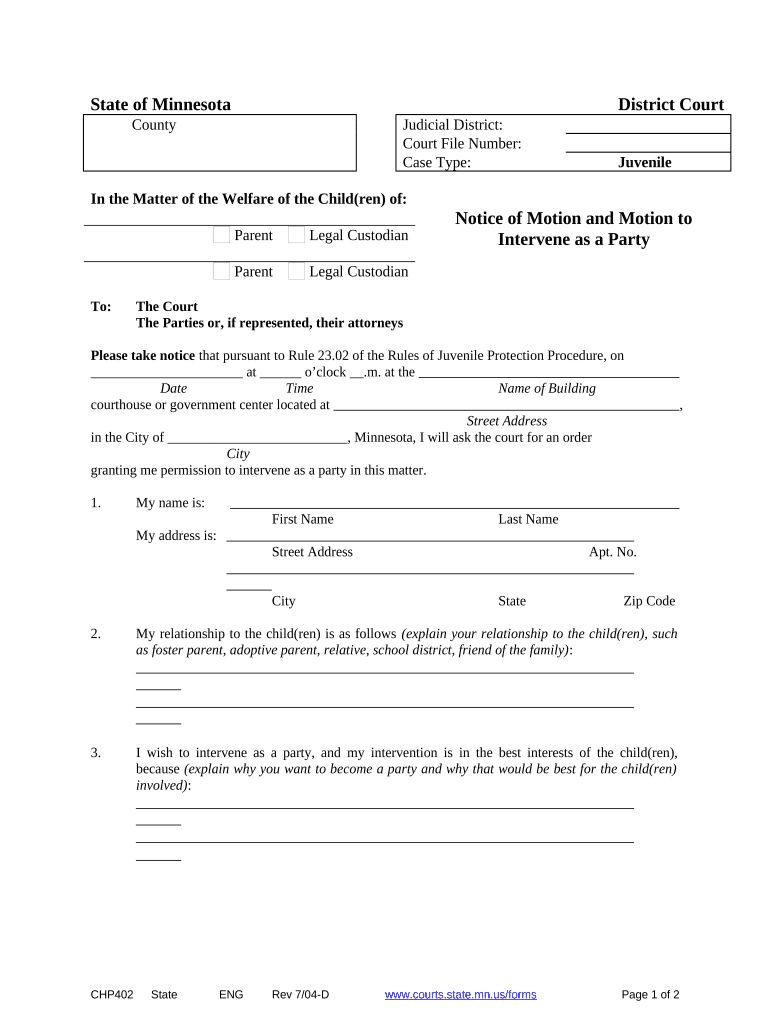
Motion to Intervene

This template is fully customizable. Edit the text, fill out the fields, and send it for signature. Give it a try!
Motion to Intervene

What a Motion to Intervene Is and when it applies

A Motion to Intervene is a court filing that asks the judge to allow a nonparty to join ongoing litigation because that nonparty has a direct, protectable interest that may be impaired by the action. Federal Rule of Civil Procedure 24 governs intervention in federal courts; many states have parallel rules. Intervenors may seek to intervene as of right or permissively; courts evaluate timeliness, the movant’s interest, and whether existing parties adequately represent that interest. Properly drafted motions identify the interest, the legal basis for intervention, and the specific relief sought.

Why filing a Motion to Intervene matters

Intervention protects rights and enables a nonparty to defend or advance an interest directly affected by litigation outcomes, preventing collateral losses and preserving appellate rights.

Why filing a Motion to Intervene matters

Who typically files or relies on a Motion to Intervene

Organizations and individuals whose legal or practical interests are directly affected by pending litigation commonly seek intervention.

  • Regulated entities with statutory interests affected by an injunction or regulatory challenge.
  • Third parties with contractual or property interests at risk from case outcomes.
  • Government agencies asserting public or sovereign interests in a dispute.

Intervention is fact-specific; consult procedural rules and counsel to confirm standing and timing before filing.

Common movant profiles and roles

Public Agency

State or federal agencies may intervene to protect regulatory schemes or public interests; intervention often requires showing a unique public interest and statutory authority to appear.

Private Entity

Corporations, trade associations, or nonprofit organizations intervene to protect contractual, property, or economic interests that existing parties do not adequately represent.

Essential details to include on the Motion

Caption: Case title and docket number
Movant Identity: Name and contact information
Interest Claimed: Legal or practical stake
Intervention Type: As of right or permissive
Relief Requested: Specific rights or orders
Signature Block: Attorney or pro se signature

Risks and consequences of a deficient motion

Dismissal Risk: Motion denied for untimeliness or lack of interest
Sanctions Risk: Court may award fees if motion is frivolous
Limited Relief: Court may grant narrow participation only
Waiver Risk: Failing to intervene timely can foreclose claims
Evidence Exclusion: Late intervention may limit evidence access
Appellate Limits: Standing to appeal may be restricted

Common preparation pitfalls to avoid

  • Waiting too long: untimely motions are routinely denied even when interests are strong.
  • Vague interest statements: courts require specific, concrete legal or practical stakes.
  • Missing supporting facts: affidavits or declarations are often needed to establish injury.
  • Ignoring local rules: format, service, and e-filing requirements vary by court and can cause rejection.

Step-by-step: preparing and filing a Motion to Intervene

Follow a clear sequence: document the interest, assemble evidence, draft legal argument, and comply with filing and service rules.

  • 01
    Identify Interest: Document how the case will affect you
  • 02
    Choose Basis: Select Rule 24(a) or 24(b) argument
  • 03
    Gather Evidence: Attach declarations and exhibits
  • 04
    File & Serve: E-file per clerk rules and serve parties

How intervention fits into the litigation flow

Intervention can occur before or during dispositive motions; timing affects available remedies and procedural rights.

  • Pretrial Stage: Intervention before hearings preserves participation rights
  • During Motions: Courts assess timeliness and prejudice to existing parties
  • After Judgment: Intervention post-judgment is rarely permitted
  • Appeals: Intervenors may obtain limited appellate review rights

Filing workflow checklist and recommended settings

Set up a repeatable workflow covering draft, evidence, signatures, e-filing, and service to avoid procedural rejections.

Step Recommended setting
Drafting Use pleading template and local rule checklist
Declarations Attach signed, dated affidavits
Signatures Attorney or pro se sign with date
E-filing Select court CM/ECF or local e-file portal

eFiling and signature platform requirements

Confirm the court’s accepted submission methods and any required authentication for e-filed pleadings.

  • Court Portals: CM/ECF or state e-file systems
  • Signer Auth: Attorney bar verification may be required
  • Document Format: PDF/A preferred by many courts

Check the clerk’s website for size limits, redaction rules, and required cover sheets before e-filing.

Timing considerations and typical deadlines

Timeliness is a key factor under Rule 24; local rules and scheduling orders set precise deadlines for filing and service.

Rule 24 Timeliness:

Court considers delay length and prejudice

Scheduling Orders:

Follow any case-specific cutoffs

Hearing Notice:

File well before the next noticed hearing

Service Deadline:

Serve all parties per local rule

Appeal Window:

Intervenor challenge windows vary by court

Key milestones from draft to court ruling

Track core events from preparation through the court’s decision to preserve rights and comply with process deadlines.

01

Prepare Motion

Draft pleading, exhibits, and proposed order

02

File & Serve

E-file motion and serve existing parties

03

Opposition Period

Allow time for responses per local rules

04

Decision

Court rules on intervention and scope

Core components of a professional Motion to Intervene

A complete motion combines procedural citations, a clear factual record, and legal argument showing why intervention is warranted under applicable rules.

Caption

Accurate court, case number, and party names to ensure the clerk files and links correctly with the underlying case docket.
Statement of Interest

A precise explanation of the movant’s legal or practical stake and how the litigation outcome would impair that interest.

Legal Basis

Citation to Rule 24(a) or 24(b) and supporting case law or statutes demonstrating entitlement to intervene as of right or permissive intervention.

Facts and Evidence

Affidavits, contracts, or exhibits showing the connection between the movant and the matters at issue in the litigation.

Relief Sought

A proposed order and a narrow statement of the participation or relief the intervenor seeks, including proposed briefing schedules if needed.

Service & Certificate

Proof of service and a certificate of compliance with local rules, including any meet-and-confer or notice requirements.

Typical eSignature vendor pricing and key features for legal filings

Compare starting prices, trial options, bulk send, audit trail, HIPAA compliance, and envelope caps when selecting an eSignature provider for court-related documents.

signNow DocuSign Adobe Sign PandaDoc HelloSign
Starting Price $8/user/mo $15/user/mo $14/user/mo $19/user/mo $15/user/mo
Free Trial 7-day free trial Varies by vendor Varies by vendor Varies by vendor Varies by vendor
Bulk Send Yes Yes Yes Yes No
Audit Trail Yes Yes Yes Yes Yes
HIPAA Compliant Yes Yes Yes No No

Frequently asked questions about Motions to Intervene

Answers to common questions on timing, required evidence, service, and electronic submission for Motions to Intervene.


Need help? Contact support

be ready to get more
Join over 28 million airSlate SignNow users