Establishing secure connection…Loading editor…Preparing document…

Non-Military Affidavit

This template is fully customizable. Edit the text, fill out the fields, and send it for signature. Give it a try!
Non-Military Affidavit

What a Non-Military Affidavit Is and when it’s used

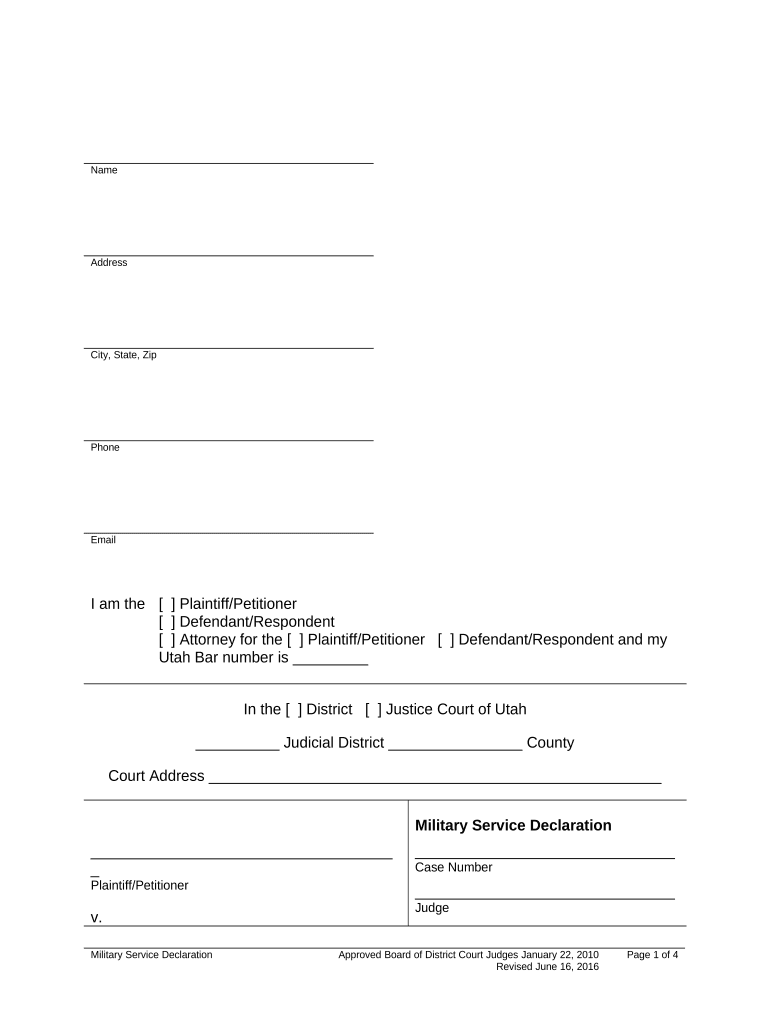
A Non-Military Affidavit is a written, sworn statement that a named person is not a member of the U.S. armed forces, or is not subject to certain military status requirements. It is typically executed under oath, signed by the declarant, and notarized or otherwise acknowledged. Common uses include probate and estate filings, property closings, benefit or claim processing, and vendor or background checks that require confirmation a party is not on active military duty. Courts and agencies rely on the affidavit as objective evidence when military status affects legal rights or procedural steps.

Why a carefully prepared Non-Military Affidavit matters

A properly executed affidavit establishes a sworn factual record, reduces processing delays, and meets legal requirements for agencies and courts that must verify military status under federal or state rules. Clear wording and correct notarization improve enforceability.

Why a carefully prepared Non-Military Affidavit matters

Who commonly completes or requests this affidavit

The Non-Military Affidavit is used by individuals, organizations, and public agencies whenever military status affects rights, benefits, or filing requirements.

  • Individuals and estate representatives seeking probate or beneficiary distributions.
  • Title companies and lenders verifying parties in real estate transactions.
  • Government agencies or courts processing claims, evictions, or administrative matters.

Parties requesting this affidavit should confirm exact wording, notarization, and any jurisdictional language required by the receiving authority.

Essential parts of a professional Non-Military Affidavit

A complete affidavit combines declarant identification, a clear sworn statement, jurisdictional language, authentication, and supporting details so receiving parties can rely on the document without further inquiry.

Declarant Details

Full legal name, date of birth, current address, and relationship to the transaction or case so the identity of the affiant is unmistakable for record checks and service.
Statement of Non-Service

A precise sworn sentence stating the declarant is not on active duty or otherwise subject to specific military protections, using plain language to avoid ambiguity.

Jurisdiction Clause

Reference the state or county where the affidavit is executed and include any clause required by the receiving agency to ensure proper legal effect.

Notarization Block

A notary acknowledgment or jurat with date, notary signature, and seal; if remote notarization is used, include session ID and recording retention details.

Signature and Date

Declarant signature and printed name with the execution date in MM/DD/YYYY format; initials alone are not sufficient unless expressly allowed.

Attachments and IDs

Attach a copy of government ID and any supporting documents referenced; the notary may be required to inspect ID for identity proofing.

Step-by-step: completing and authenticating the affidavit

Follow these core steps to prepare a valid affidavit and avoid common processing delays.

  • 01
    Prepare document: Complete all fields and attach ID scans.
  • 02
    Review wording: Confirm exact declaratory language required by recipient.
  • 03
    Notarize or witness: Sign before a notary or required witnesses.
  • 04
    Submit to recipient: Send original or certified copy as instructed.

How to set up an online affidavit workflow

Configure digital fields and signer steps so each participant completes their part in order and evidence of execution is preserved.

Field Configuration
Document upload PDF or DOCX accepted, set as read-only after upload.
Signature placement Place signature, date, and initial fields for each signer.
Signer authentication Choose email, SMS code, or advanced verification.
Notary or witness step Reserve a final step for notarization or witness confirmation.

Typical routing for electronic affidavit execution

This sequence shows a common electronic signing flow that preserves audit evidence and supports notarization where required.

  • Sender uploads: Upload affidavit and attach ID instructions.
  • Assign signers: Add declarant and notary/witness email addresses.
  • Signer authenticates: Signers verify identity using chosen method.
  • Complete and archive: Signed copy and audit trail stored securely.

Digital signing and notarization: platform considerations

Choose a platform that supports reliable audit trails, compliant notarization workflows, and secure storage.

  • Authentication: Email, SMS code, or KBA
  • Notarization support: In-person or RON capability
  • Document formats: PDF and DOCX accepted

Ensure the selected service can produce a time-stamped Audit Trail and meets any industry compliance needs such as HIPAA or 21 CFR Part 11 when relevant.

Timing, filing windows, and preservation expectations

Deadlines depend on the receiving authority; submit affidavits promptly to meet court, agency, or lender timelines.

Upon Request:

Provide affidavit immediately when a payer or agency requests it.

Notarization timing:

Sign and notarize on the same date as execution when possible.

Agency deadlines:

Follow specific filing deadlines set by the recipient.

Retention trigger:

Retention periods begin on the execution date.

RON recording:

Retain audio-video per state requirements when used.

Common mistakes that delay acceptance

  • Using an informal or ambiguous declaration that fails to state non-military status precisely.
  • Missing notarization or using the wrong type of notarization for the receiving jurisdiction.
  • Submitting a scanned unsigned document instead of an original or properly signed electronic copy.
  • Mismatched names or dates between the affidavit and supporting ID or case records.

Key legal risks from incorrect or false affidavits

Perjury exposure: Criminal penalties for false sworn statements
Document rejection: Recipient may refuse filing or processing
Civil liability: Potential damages for fraudulent declarations
Notary breaches: Notary noncompliance can void acknowledgment
Processing delays: Administrative holds or additional evidence required
Financial impact: Lost benefits or contractual delays

Real-world examples of Non-Military Affidavit use

These scenarios illustrate typical situations where the affidavit resolves a status question quickly.

Real Estate Closing

A buyer signs an affidavit confirming non-military status for title insurance eligibility

  • Affidavit executed and notarized same day
  • The clear sworn statement allowed the closing to proceed without a court order and avoided a 7–10 day title hold.

Agency Benefit Review

An individual provides a notarized affidavit to a benefits agency to confirm eligibility

  • Agency requires original notarization
  • The affidavit prevented further investigation and satisfied the agency’s statutory verification requirement.

eSignature vendor comparison for affidavit signing and notarization workflows

Price and core capabilities vary by vendor; signNow appears first to show available plans and compliance features relevant to affidavit workflows.

signNow DocuSign Adobe Sign PandaDoc HelloSign
Starting Price $8/user/mo $15/user/mo $14/user/mo $19/user/mo $15/user/mo
Free Trial 7-day free trial No No Yes, limited Yes, limited
Bulk Send Yes Yes Yes Yes No
Audit Trail Yes Yes Yes Yes Yes
Envelope Cap No cap 100 envelopes/user/year Varies by plan Varies by plan Varies by plan

Frequently asked questions and common troubleshooting points

Answers to common implementation and acceptance questions about Non-Military Affidavits and electronic execution.


Need help? Contact support

be ready to get more
Join over 28 million airSlate SignNow users