Access and Hours
Define building hours, after-hours access procedures, badge policies, visitor registration, and any restricted zones so tenants and vendors know when and how entry is allowed.
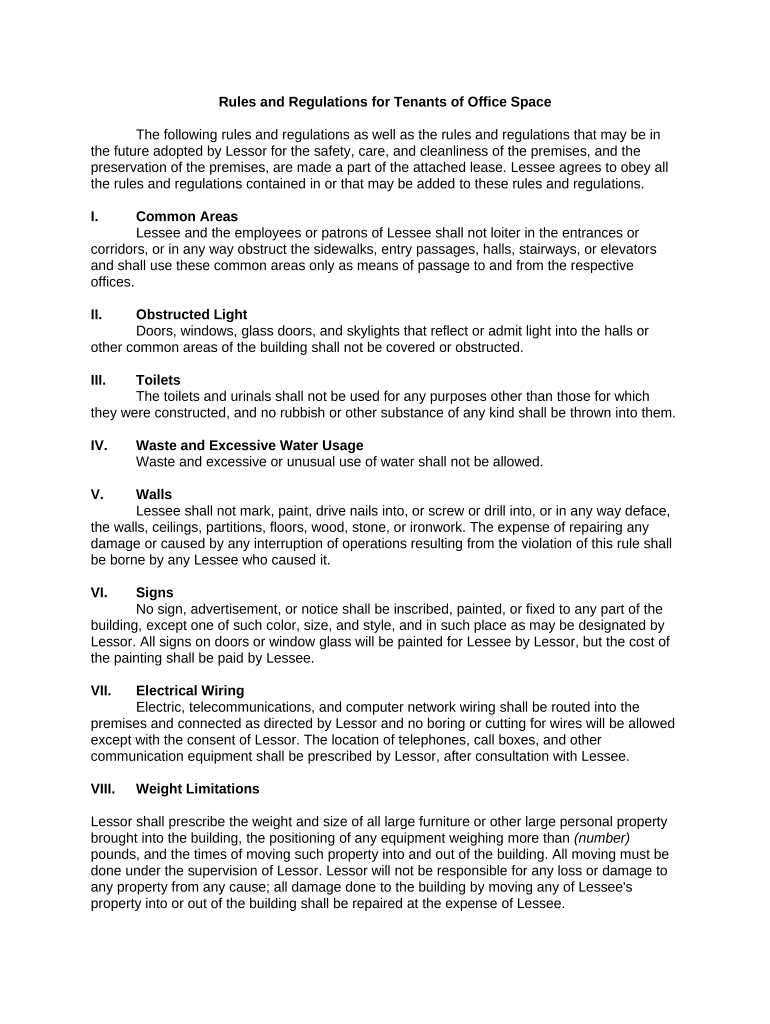
Clear rules reduce disputes, ensure consistent enforcement, and protect building safety and insurance coverage. They help managers enforce standards fairly and give tenants predictable expectations about access, maintenance, and permitted alterations.

Use it as an exhibit to leases, a tenant handbook for move-in, and a reference for operational and emergency procedures.
Senior property manager or owner signatory with authority to bind the landlord. This person confirms building-wide policies and has responsibility for enforcement and updates when regulatory or operational changes occur.
Authorized company officer or facilities manager for the tenant who accepts and acknowledges the rules, ensures internal compliance, and coordinates with property management on operational issues and permitted alterations.
Define building hours, after-hours access procedures, badge policies, visitor registration, and any restricted zones so tenants and vendors know when and how entry is allowed.
Set rules for conference rooms, lobbies, parking, signage, deliveries, and janitorial services including reservation procedures, permitted activities, and maintenance responsibilities.
Require landlord approval for tenant alterations, specify permitted cosmetic changes, and outline submission of plans, contractor insurance requirements, and restoration obligations.
Include emergency procedures, fire prevention rules, hazardous materials restrictions, and requirements to comply with OSHA, local fire code, and building safety plans.
Detail tenant responsibilities for physical security, visitor screening, secure disposal of sensitive materials, and handling of personal health information when applicable.
Explain breach reporting, notice periods, fines or remediation steps, and landlord rights to cure defaults consistent with the lease and applicable law.
Provide rules when the lease or exhibit is executed; tenants should acknowledge on move-in.
Commonly 30 days notice for operational changes; shorter for safety updates.
Typical lease cure periods range 10–30 days depending on breach severity.
Immediate effect allowed for safety or legal compliance; notice provided as soon as practicable.
Allow reasonable time, often 10–14 days, for tenant comments on proposed rule changes.
| signNow | DocuSign | Adobe Sign | PandaDoc | HelloSign | |
|---|---|---|---|---|---|
| Starting Price | $8/user/mo | $15/user/mo | $14/user/mo | $19/user/mo | $15/user/mo |
| Free Trial | 7-day free trial | Varies by vendor | Varies by vendor | Varies by vendor | Varies by vendor |
| Bulk Send | Yes | Yes | Yes | Yes | No |
| Audit Trail | Yes | Yes | Yes | Yes | Yes |
| HIPAA Compliant | Yes | Yes | Yes | No | No |
A downtown office building consolidated delivery rules to reduce lobby congestion and lost packages.
A medical tenant required secure disposal procedures and restricted access to records areas.