Establishing secure connection…Loading editor…Preparing document…

Oklahoma Response to Petition in Error

This template is fully customizable. Edit the text, fill out the fields, and send it for signature. Give it a try!
Oklahoma Response to Petition in Error

What the Oklahoma Response to Petition in Error Is

The Oklahoma Response to Petition in Error is a formal court filing used to oppose or respond to a petition that seeks review of a lower court judgment on error. It explains the respondent's position, states procedural and factual objections, and asks the appellate court to affirm, modify, or dismiss the petition. The document must follow Oklahoma appellate rules for formatting, captioning, and service, and should be supported by citations to the trial record, legal authority, and any required exhibits.

Why a Clear, Properly Prepared Response Matters

A well-organized Response to Petition in Error preserves issues for the appellate court, avoids waiver of defenses, and frames the record and legal questions tightly for decision. It reduces the risk of sanctions or procedural dismissal for technical defects.

Why a Clear, Properly Prepared Response Matters

Who typically prepares and files a Response in Oklahoma

The filing parties and professionals who commonly prepare this document include the respondent, defense counsel, and court clerks responsible for docketing appellate filings.

  • Respondent or defendant: Prepares factual record summaries and legal responses; preserves arguments for appeal.
  • Licensed attorney: Drafts legal arguments, ensures compliance with appellate rules, and certifies service to opposing parties.
  • Court clerk or paralegal: Formats the filing to local rules and files with the appropriate appellate clerk.

Who Has Authority to Sign the Response and Typical Signers

Respondent (Individual)

An unrepresented respondent may sign the document personally and must include contact information. Signing attests to the truth of factual statements and compliance with service and filing rules; inaccurate signatures risk sanctions or default.

Authorized Counsel

A licensed attorney of record signs pleadings on behalf of a party. Counsel should include bar number and service details; an attorney signature certifies that the filing is warranted by law and fact under applicable rules.

Step-by-Step: Preparing and Filing Your Response in Oklahoma

Follow these sequential steps to prepare, sign, serve, and file a timely response that complies with Oklahoma appellate procedures.

  • 01
    Assemble the record: Confirm pages and record citations to support your response.
  • 02
    Draft the response: Write issues, facts, arguments, and relief requested.
  • 03
    Sign and execute: Obtain required signatures and date the filing.
  • 04
    Serve and file: Serve opposing counsel and file with the appellate clerk.

Where to Serve and File the Response

Identify the correct appellate clerk and service procedures before filing; local appellate rules govern where and how filings are accepted.

  • Prepare filing packet: Include the response, required exhibits, and proof of service.
  • File with appellate clerk: Submit hard copy or electronic filing per the clerk's rules.
  • Serve opposing parties: Deliver a copy by mail, email, or electronic service as allowed.
  • Record proof of service: Attach or file a certificate showing how and when service occurred.

Digital Filing and Document Format Considerations

Confirm whether the appellate court accepts electronic filing or requires paper; formatting requirements (PDF/A, pagination, bookmarks) differ by jurisdiction.

  • Accepted formats: PDF is standard; some clerks accept PDF/A for archival.
  • File size limits: Large exhibits may require separate submission per clerk rules.
  • Integrations: E-filing may integrate with court portals or document systems.

Setting Up an Electronic Workflow for the Response

Configure your digital workflow to place signature fields, capture service evidence, and bundle exhibits for filing.

Field Configuration
Signature Signer's full name and date field
Certificate of Service Auto-populate recipient, method, and date
Exhibit attachments Attach PDFs and label with exhibit letters
Document ordering Ensure caption and index appear first

How This Response Differs from Other Appellate Filings

Compare common appellate documents to understand when a Response to Petition in Error is the appropriate filing.

Document Type Purpose Typical Timing
Response to Petition in Error oppose review after petition filed
Answer address allegations at trial or initial pleading
Motion to Dismiss seek dismissal on legal grounds pre-answer
Petition for Writ (e.g., cert) seek extraordinary relief varies by court

Essential Components of a Professional Oklahoma Response to Petition in Error

A complete response combines procedural compliance, a focused factual record, clear legal argument, and properly executed service and filing statements.

Case Caption

Full court caption and docket number formatted to appellate rules; ensures correct identification and docket placement.
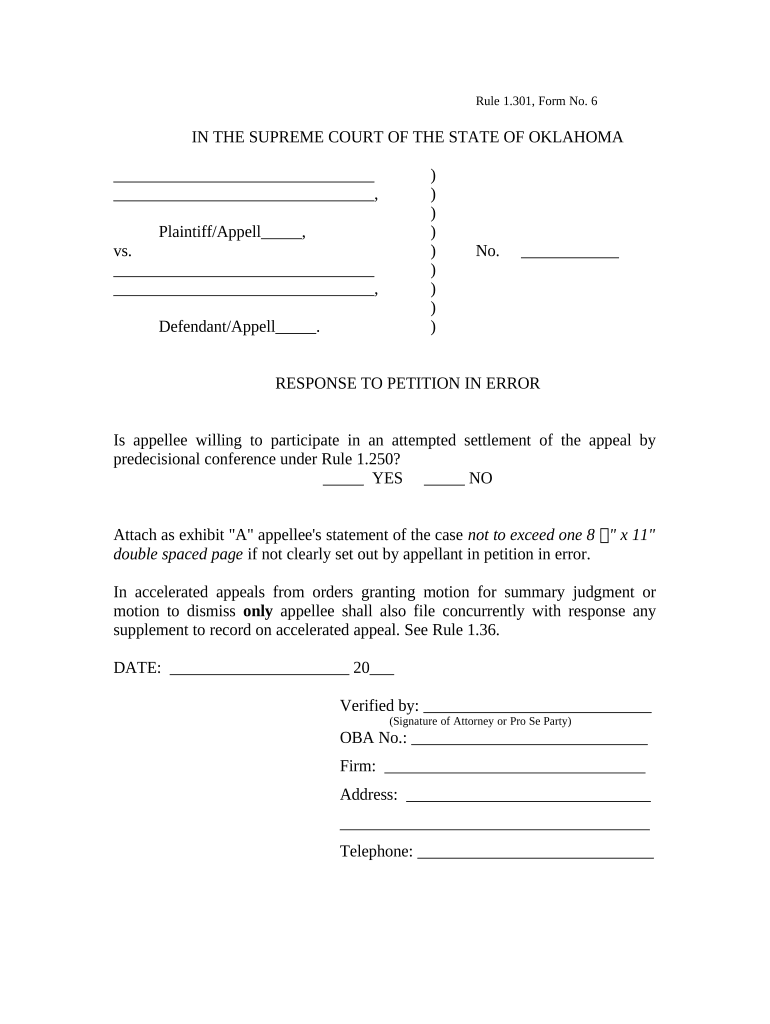
Table of Contents

Organize headings, record references, and page numbers to aid the court's review and comply with page limits.

Statement of Issues

Numbered issues framed to mirror the petition's content and clarify which errors are contested.

Argument Section

Legal analysis with statute and case citations tied to the trial record and pinpoint authorities.

Record Citations

Precise references to trial transcript or exhibits to support factual and procedural assertions.

Certificate of Service

Affirmation of how, when, and to whom the response was served, including date and method.

Supporting Documents to Include and File Formats to Use

Attach exhibits and supporting items in the sequence required by local rules and use durable electronic formats for e-filing.

Exhibit Bundle

Attach trial exhibits or relevant record excerpts as separate, bookmarked PDF files labeled Exhibit A, B, etc., in order.

Transcript Excerpts

Provide precise transcript pages cited in the argument; include page numbers and custody log references.

Certificate of Service

Include a signed or electronically executed certificate that lists recipients, delivery method, and date of service.

Proposed Order

If required, attach a proposed order or judgment formatted to the court's submission standards as a separate PDF.

Typical Timing and Deadlines to Watch

Deadlines vary by court; confirm specific timeframes in the Oklahoma Rules of Appellate Procedure and local appellate rules before filing.

Response Deadline:

Usually set by court rules or order; check local rules for exact days.

Service Timing:

Serve opposing counsel per rule-specified methods and deadlines before filing.

Filing Window:

File with the appellate clerk within any prescribed timeframe to avoid waiver.

Extension Requests:

File motions for extension early and include good cause statements when needed.

Rehearing or Appeal:

Post-decision deadlines for rehearing or further appeal are governed by appellate statutes and rules.

Key Milestones in the Response and Appeal Process

Track these sequential milestones to ensure timely response, proper record development, and preservation of appellate rights.

01

Petition Filed

Opposing party files petition seeking appellate review.

02

Response Drafted

Prepare response with record citations and legal arguments.

03

Service and Filing

Serve petitioner and file with appellate clerk while retaining proof of service.

04

Court Consideration

Court reviews filings and issues decision or order for further briefing.

Common Mistakes to Avoid When Preparing the Response

  • Missing the docket number or miscaptioning the case, causing clerks to misfile or delay the submission.
  • Failing to cite the record precisely, which undermines arguments and can cause issues to be treated as unpreserved.
  • Submitting exhibits in an incorrect order or format, leading to clerk rejection or incomplete record review.
  • Neglecting to include or properly execute the certificate of service required by appellate rules.

Penalties and Risks of an Incorrect or Late Response

Waiver of Issues: Failure to raise or preserve issues can forfeit appellate review opportunities.
Default Judgment: Untimely responses may permit adverse rulings or default in procedural contexts.
Sanctions: Frivolous filings or misrepresentations can trigger court sanctions against counsel or parties.
Rejection: Noncompliant formatting or missing certificates can cause filing rejection.
Delay: Procedural defects may prolong the appeal and increase costs.
Loss of Rights: Missing appellate deadlines can bar further review in some cases.

Comparing eSignature Pricing and Features for Filing and Signing

Basic pricing and availability of features vary; signNow appears first for reference. Verify vendor terms and plan details with each provider before purchase.

signNow DocuSign Adobe Sign PandaDoc HelloSign
Starting Price $8/user/mo $15/user/mo $14/user/mo $19/user/mo $15/user/mo
Free Trial 7-day free trial Varies Varies Varies Varies
Bulk Send Yes Yes Yes Yes Yes
Audit Trail Yes Yes Yes Yes Yes
HIPAA Compliant Yes Yes Yes No No
Envelope Cap No cap 100 envelopes/user/year Varies Varies Varies

Required Information and Key Fields in the Response

Case Caption: Full party names and court identification
Docket Number: Exact appellate case number
Statement of Facts: Concise factual summary with record citations
Issues Presented: Numbered issues opposing the petition
Relief Requested: Specific outcome the respondent seeks
Signature Block: Signer name, date, and contact details

How to Update or Amend a Filed Response

Follow these steps when the court permits amendment or when new information requires a corrected filing.

01

Review Order:

Confirm the court's permission to amend or correct.
02

Prepare Amendment:

Draft a concise amendment identifying changes and reasons.
03

Attach Exhibit:

Include any supporting documents or corrected pages.
04

Motion to Amend:

File a motion if required by local rules.
05

Serve Parties:

Serve the amendment and certificate of service.
06

File with Clerk:

Submit per clerk's procedures and obtain filing stamp.

FAQs: Filing and Common Questions About the Oklahoma Response to Petition in Error

Answers to frequent practical questions about preparation, service, filing, and electronic signatures for appellate responses.


Need help? Contact support

be ready to get more
Join over 28 million airSlate SignNow users