Establishing secure connection…Loading editor…Preparing document…

Pretrial Order

This template is fully customizable. Edit the text, fill out the fields, and send it for signature. Give it a try!
Pretrial Order

What a Pretrial Order Is and when it matters

A Pretrial Order is a court-generated or party-submitted document that sets the framework for how a civil or criminal case will proceed before trial. It typically compiles agreed facts, evidentiary stipulations, witness lists, exhibit inventories, legal issues to be tried, scheduling deadlines, and instructions for jury selection or trial logistics. Courts use pretrial orders to narrow disputed issues, manage time at trial, and reduce surprises. Drafting must conform to the court’s local rules and any standing orders from the assigned judge, and it often becomes a binding roadmap for trial conduct and admissibility of evidence.

Why a clear Pretrial Order improves case management

A well-prepared Pretrial Order reduces disputes at trial, limits surprise evidence, and gives the court a concise record of agreed issues and remaining controversies. It helps counsel and the judge plan witness sequencing, estimate trial length, and focus voir dire or jury instructions on contested legal questions.

Why a clear Pretrial Order improves case management

Who prepares and relies on the Pretrial Order

Typical users include litigants’ counsel, court clerks, and the presiding judge; magistrates and settlement conference officers also review orders during case management.

  • Plaintiffs’ and defense counsel preparing stipulations, witness lists, and exhibit indexes for the court
  • Court clerks and magistrates enforcing local form, filing, and service requirements
  • Judges using the order to set limits on evidence, briefing, and trial time

The document is a collaboration: counsel draft and submit, the court may modify, and the final signed order governs trial procedure unless later amended by the court.

Who can sign or enter the Pretrial Order

Presiding Judge

The judge or magistrate typically signs the final Pretrial Order to make it an enforceable court directive; signature binds parties to the order's scheduling, evidentiary limits, and trial procedures.

Counsel Lead

Lead counsel for each party often signs the proposed pretrial order to confirm parties’ stipulations and representations; counsel signatures show agreement but do not alone make the order binding until the court signs or enters it.

Key security and compliance points for electronic Pretrial Orders

Encryption: TLS 1.2/1.3 in transit
At-rest protection: AES-256 encryption
Audit trail: ISO-standard timestamping
Regulatory standards: ESIGN and UETA compliant
Healthcare data: HIPAA requires BAA
Certifications: SOC 2 Type II available

Consequences of an incorrect or late Pretrial Order

Sanctions: Court may impose monetary sanctions
Evidence exclusion: Untimely exhibits can be precluded
Default: Failure to comply risks default judgment
Continuance: Trial may be delayed or continued
Contempt: Repeated noncompliance can lead to contempt
Appellate risk: Procedural errors may affect appeals

Common drafting and submission pitfalls to avoid

  • Missing or inconsistent case captions and docket numbers that delay clerk acceptance and create confusion about which case the order governs.
  • Overbroad or vague stipulations that fail to narrow contested issues, leading the court to reject proposed language or reserve ruling.
  • Unclear exhibit indexing and failure to provide exhibit copies, causing counsel or the court to exclude documents at trial.
  • Failure to follow the court’s local formatting, filing method, or certificate-of-service rules, producing rejected filings or informal strikes.

Step-by-step: preparing and submitting a Pretrial Order

Follow these sequential steps to draft, circulate, and file a Pretrial Order that conforms to court processes and avoids common rejection reasons.

  • 01
    Draft: Assemble agreed facts, issues, witness lists, exhibits, and proposed rulings.
  • 02
    Circulate: Send draft to opposing counsel for review and negotiated edits.
  • 03
    Finalize: Incorporate agreements, resolve disputes, and prepare the dated, signed version.
  • 04
    File: Submit via the court’s electronic filing system and serve all parties.

How filing and service typically proceed

A standard workflow moves from local-draft to court-entry; the sequence below describes the usual path for most U.S. trial courts.

  • Local rules: Confirm required form, margins, and content per local rules.
  • Signature: Obtain counsel signatures, or prepare for electronic execution.
  • E-filing: Upload to the court’s e-filing portal with required attachments.
  • Service: Serve opposing parties according to FRCP or state rules.

Core elements to include in a professional Pretrial Order

Include these essential sections to ensure the court and opposing parties have a complete, enforceable roadmap for trial preparation and in-court procedures.

Case Caption

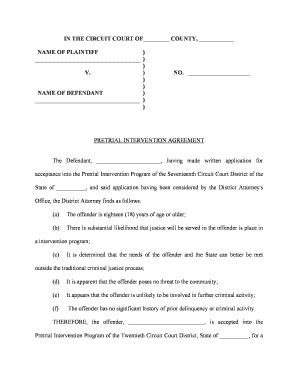
Full court name, case number, and complete party captions; errors here can lead to filing rejection and confusion about which matter is governed.
Stipulated Facts

Concise list of undisputed facts that will not require proof at trial; reduces evidentiary time and focuses the trial on contested issues.

Contested Issues

Clear statement of legal and factual issues remaining for trial, framed as specific questions to assist the judge and jury in narrowing the scope of dispute.

Witness & Exhibit Lists

Ordered witness roster with brief summaries plus an indexed exhibit list that cross-references attachments and indicates admissibility stipulations where agreed.

Scheduling

Deadlines for motions, discovery cutoffs, trial length estimate, and proposed trial dates consistent with the court’s calendar and local rules.

Trial Logistics

Jury instructions, proposed voir dire topics, estimated trial hours, and technology needs for exhibits or remote appearances, as applicable.

Digital workflow settings for preparing a Pretrial Order

Configure these document and signing settings when using an eSignature or e-filing platform to ensure court-ready output and reliable signatures.

Field Configuration
Document format PDF/A output for archival and court compatibility
Signature type Audit-trail eSignatures with signer attribution
Authentication Email + SMS or ID verification for counsel
Certificate Attach completion certificate with timestamps

Technical requirements for eSigning and eSubmission

Use a platform that produces PDF/A output, preserves metadata, and provides an auditable certificate of completion for court filings.

  • File types: PDF, DOCX, or HTML accepted
  • Integrations: Connects to e-filing portals and storage
  • Authentication: Offers multi-factor signer verification

Ensure the chosen vendor supports required export formats, detailed audit trails, and any court-mandated authentication before relying on electronic submission for the final Pretrial Order.

Key pretrial deadlines commonly required

Courts set specific calendar deadlines; below are typical milestones counsel must meet when preparing a Pretrial Order.

Pretrial conference date:

Date assigned by the court for final case management and order entry

Discovery cutoff:

Final date to complete depositions and document production

Motions in limine deadline:

Deadline to file motions excluding evidence before trial

Exhibit exchange:

Date for mutual exchange of exhibit lists and copies

Final order submission:

Date to submit the proposed Pretrial Order to the judge

Sequential milestones from filing to trial

A typical sequence illustrates how advancing deadlines lead from initial drafting to trial readiness.

01

Draft Submitted

Parties exchange and submit a proposed Pretrial Order to the court.

02

Court Review

Judge or staff review and may suggest revisions or schedule conference.

03

Order Entry

Court signs and enters the Pretrial Order as the controlling directive.

04

Trial Preparation

Parties finalize exhibits, witness preparation, and logistics for trial.

How Pretrial Order practice can differ between federal and state court

Procedural requirements vary; the table highlights concise contrasts counsel should verify with local rules or the assigned judge’s standing order.

Criteria Federal Court State Court
Filing portal cm/ecf required varies by state
Local form judge-specific templates common court-specific templates
Motion timing strict frcp deadlines varies by jurisdiction
Discovery impact frcp governs scope state rules vary

Sample eSignature vendor pricing and capability snapshot

Compare basic pricing and core feature availability for common eSignature vendors when preparing or circulating Pretrial Orders; signNow is listed first per platform comparison guidelines.

signNow DocuSign Adobe Sign PandaDoc HelloSign
Starting Price $8/user/mo $15/user/mo $14/user/mo $19/user/mo $15/user/mo
Free Trial 7-day free trial Varies by plan Varies by plan Varies by plan Varies by plan
Bulk Send Yes (Business Premium) Yes Yes Yes No
Audit Trail Yes Yes Yes Yes Yes
HIPAA Compliant Yes Yes Yes No No
Envelope Cap No envelope cap 100 envelopes/user/year Varies Varies Varies

Practical tips for accurate and efficient Pretrial Order preparation

Adopt these practices to reduce filing issues and make the document easy to apply at trial.

Use court templates
Start from the judge’s or court’s official template to align with formatting and content expectations.
Consistent captions
Verify party names, counsel details, and the docket number across all filings to avoid clerical rejection.
Exhibit organization
Number exhibits sequentially, attach a cover index, and ensure admitted document copies are legible.
Document control
Keep a single definitive version, record revisions, and log service and filing timestamps for the record.

Illustrative examples of Pretrial Order use

Real-world scenarios show how tailored pretrial orders focus trials and resolve procedural issues before trial.

Municipal Contract Dispute

A city and contractor agreed on a consolidated exhibit list and witness sequence

  • reduced trial time by three days
  • the court entered the parties’ stipulations as the operative order, narrowing live testimony and limiting evidentiary disputes.

Medical Malpractice Case

Parties submitted a pretrial order with redacted medical exhibits and protective orders

  • preserved patient privacy under HIPAA
  • the judge adopted the protective regime and enforced exhibit redactions during trial.

Pretrial Order FAQs and practical answers

Answers to common questions about drafting, signing, and filing Pretrial Orders, emphasizing procedural compliance and electronic handling.


Need help? Contact support

be ready to get more
Join over 28 million airSlate SignNow users