Establishing secure connection…Loading editor…Preparing document…

Agreement for Purchase and Sale of Restaurant

This template is fully customizable. Edit the text, fill out the fields, and send it for signature. Give it a try!
Agreement for Purchase and Sale of Restaurant

What the Agreement for Purchase and Sale of Restaurant Is

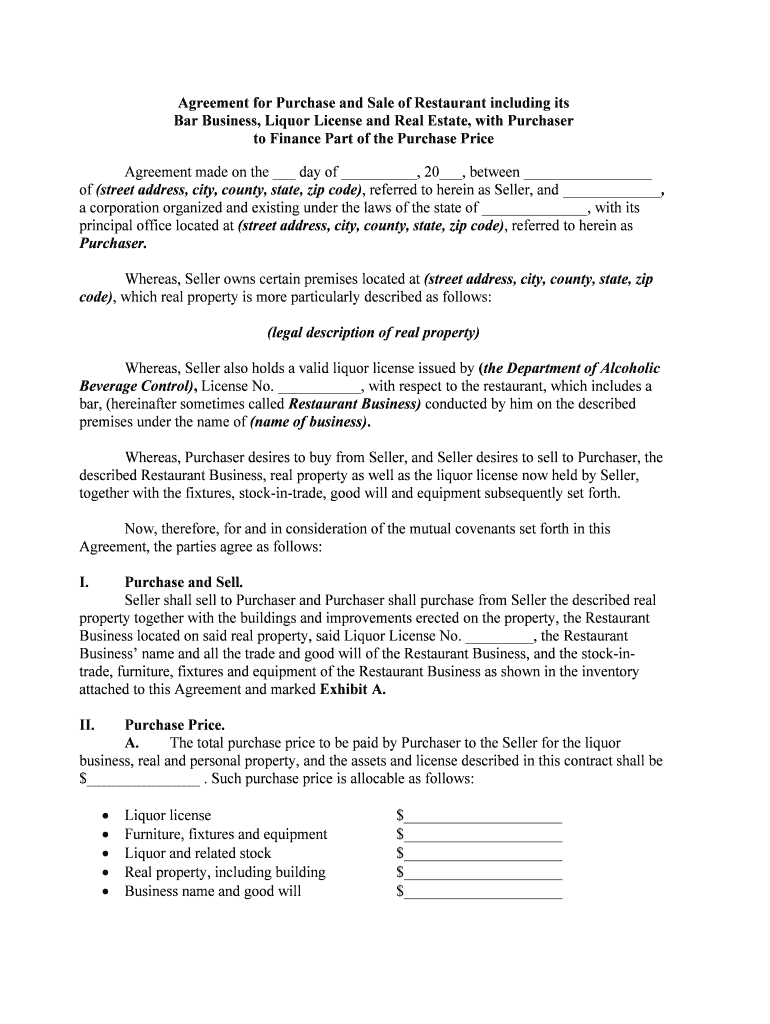
The Agreement for Purchase and Sale of Restaurant is a legally binding contract that documents the transfer of restaurant ownership, assets, and related liabilities from a seller to a buyer. It sets the purchase price, payment terms, included assets (equipment, leasehold improvements, inventory), excluded items, representations and warranties, conditions to closing, and post-closing obligations such as training or transition assistance. The agreement also allocates risk, specifies escrow or deposit terms, and identifies permits or licenses that must be transferred or obtained before closing to ensure lawful continued operation.

Why a Clear, Complete Agreement Matters

A thorough Agreement for Purchase and Sale of Restaurant protects both parties by defining what is transferred, how payment is made, and what conditions must be met before closing. It reduces post-closing disputes, clarifies tax and license responsibilities, and preserves the enforceability of buyer and seller remedies.

Why a Clear, Complete Agreement Matters

Who Typically Prepares and Signs This Agreement

Parties to the transaction and their advisors prepare and execute the agreement to document transfer terms and protections.

  • Buyers and investor groups who need to confirm included assets, working capital adjusments, and license transfer conditions.
  • Sellers and restaurant owners who must limit post-closing liabilities and secure payment through escrow or promissory terms.
  • Lenders, brokers, and landlords who require clear assignment, estoppel, or consent provisions tied to the closing.

Legal counsel, accountants, and industry specialists commonly review the agreement to address tax, employment, and regulatory consequences.

Typical Signatory Roles

Buyer — Individual or Entity

The buyer signs to accept ownership and obligations; review financing contingencies, equipment condition, and lease assignment clauses with legal and tax advisers before signing.

Seller — Restaurant Owner

The seller signs to transfer assets and warrants accuracy of disclosed information; full disclosure of debts, pending claims, and license status prevents post-closing liability.

Security and Compliance Considerations for Transaction Records

Encryption: TLS 1.2/1.3 in transit; AES-256 at rest
Audit Trail: Comprehensive timestamped signing history
Certifications: SOC 2 Type II; ISO 27001
HIPAA: Business associate agreement required
ESIGN / UETA: Meets ESIGN and UETA requirements
21 CFR Part 11: Compliance options available

Risks and Consequences of an Incomplete or Incorrect Agreement

Title Defects: Transfer delays or litigation
Licensing Gaps: Forced temporary closure risk
Tax Exposure: Unexpected liabilities to buyer or seller
Breach Claims: Damages and rescission risk
Escrow Failure: Payment and delivery disputes
Missing Vendor Consents: Contract assignment blocked

Common Mistakes When Preparing the Agreement

  • Vague asset lists that omit equipment serial numbers or inventory valuation methods, causing post-closing disputes about what transferred.
  • Failing to confirm lease assignment or landlord consent, which can prevent the buyer from legally operating at the current location.
  • Inadequate allocation of sales tax and payroll liabilities, leaving the buyer or seller unintentionally responsible for prior-period obligations.
  • Skipping a condition precedent for license transfer, which can force temporary shutdown if municipal/health permits are not in place.

Key Clauses Every Purchase and Sale Agreement Should Include

A professional agreement should cover price mechanics, included assets, liabilities assumed, representations and warranties, closing conditions, and post-closing obligations to provide clarity and reduce litigation risk.

Purchase Price

Defines total consideration, allocation between assets, and any holdback or escrow provisions to secure indemnities.
Assets Included

Itemizes equipment, FF&E, inventory, leasehold improvements, and intellectual property to avoid ambiguity at closing.

Liabilities

Specifies which debts, payroll, and vendor obligations the buyer will assume or which remain seller responsibilities.

Representations

Seller statements about financials, licenses, compliance, and absence of undisclosed liabilities to support indemnity claims.

Conditions to Close

Permits, landlord consents, financing, and satisfactory due diligence as preconditions to completing the transaction.

Post-Closing Duties

Transition assistance, training, non-compete or restricted covenants, and timing for final inventory adjustments.

Step-by-Step: Completing the Agreement

Use this sequential checklist to populate the agreement, confirm conditions, and prepare for closing in a clear, auditable order.

  • 01
    1. Identify Parties: Enter full legal names and entity types exactly as registered.
  • 02
    2. Define Assets: List equipment, inventory method, and exclusions with serial numbers when possible.
  • 03
    3. Set Price Terms: Specify purchase price, deposit, payment schedule, and escrow holder.
  • 04
    4. Add Conditions: Include license transfers, landlord consent, and financing as closing conditions.

How the Transaction Flow Usually Works

A typical transaction follows a predictable path from offer through closing and post-closing adjustments; document each milestone and responsible party.

  • Offer & Acceptance: Buyer submits offer; seller accepts or counters in writing.
  • Due Diligence: Buyer inspects books, permits, equipment, and lease terms.
  • Escrow & Closing: Funds and signed documents exchanged via escrow agent.
  • Post-Closing Adjustment: Final inventory or working capital reconciliation performed.

Configuring an Online Review and Signing Workflow

Set up a clear review-and-sign flow that assigns reviewers, sets signer order, and enforces authentication to maintain a defensible audit trail.

Field Configuration
Signer Order Specify sequential or parallel signing as transaction requires
Authentication Use email + SMS code or stronger ID verification
Conditional Fields Show fields only when specific choices apply
Notifications Automate reminders and completion receipts

Technical Requirements for Digital Execution

Choose a platform that produces an unalterable audit trail, supports required authentication, and exports standard signed PDF records.

  • File Formats: PDF, DOCX, and editable templates supported
  • Integrations: Connectors for CRM, NetSuite, and cloud storage
  • Auth Options: Email, SMS code, and advanced signer authentication

Ensure the platform supports ESIGN/UETA compliance, optional HIPAA BAA, and retains tamper-evident signed copies for the required retention period.

Common Timeline Deadlines and Expectations

Use these standard timing checkpoints to schedule diligence, deposits, and the closing date so each party’s obligations are met in sequence.

Due Diligence Period:

Typically 10–30 days to review financials, licenses, and equipment

Deposit Deadline:

Buyer provides earnest money within agreed days after contract execution

Closing Date:

Set a firm date for funds transfer and document exchange

License Transfer:

Coordinate permit transfers to avoid operational gaps at closing

Tax Reporting:

Report sale as required for income and sales tax within applicable deadlines

Key Milestones from Offer to Post-Closing

Sequence the transaction as numbered stages so responsibilities and timing remain clear to all parties and advisors.

01

Stage 1 — Offer

Buyer delivers signed offer with proposed price and basic terms.

02

Stage 2 — Due Diligence

Buyer inspects records, permits, and physical assets; raises exceptions.

03

Stage 3 — Closing

Funds, executed assignment, and licenses are exchanged through escrow.

04

Stage 4 — Transition

Seller provides training and final inventory reconciliation as contract requires.

Practical Examples of How Parties Use the Agreement

These short examples show typical ways buyers and sellers structure terms and handle closing logistics.

Case Study — Independent Buyer

Buyer performed a 21-day due diligence review and used an escrow holdback for inventory discrepancies

  • Escrow held 10% until final counts
  • The clear schedule and holdback reduced post-closing disputes and preserved working capital for the buyer.

Case Study — Seller Transition

Seller agreed to two weeks of transition training for the buyer and a limited non-compete within a three-mile radius

  • Training ensured recipes and supplier contacts transferred
  • The buyer opened without interruption and both parties avoided operational downtime.

Best Practices to Reduce Post-Closing Disputes

Follow these practical recommendations to tighten the agreement and protect both parties before and after closing.

Detailed Asset Schedules
Attach itemized equipment and inventory schedules with serial numbers and valuation method to prevent disagreements over what transferred and its condition.
Clear Condition Precedents
Make licenses, landlord consent, and satisfactory financing express conditions to closing so failures are clearly remediable before completion.
Use Escrow for Funds
Route purchase funds through an independent escrow agent with agreed release conditions to protect buyer payment and seller delivery.
Obtain Professional Reviews
Have accountants vet tax consequences and attorneys review indemnities and disclosure schedules to limit hidden liabilities.

eSignature Vendor Pricing and Feature Comparison for This Agreement

Compare starting price and core capabilities relevant to signing and storing transaction agreements. signNow is listed first per vendor ordering requirements.

signNow DocuSign Adobe Sign PandaDoc HelloSign
Starting Price $8/user/mo $15/user/mo $14/user/mo $19/user/mo $15/user/mo
Free Trial 7-day free trial Trial available Trial available Trial available Trial available
Bulk Send Yes Yes Yes Yes No
Audit Trail Yes Yes Yes Yes Yes
HIPAA Compliant Yes Yes Yes No No
Envelope Cap No cap 100 envelopes/user/year Varies by plan Varies by plan Varies by plan

Frequently Asked Questions About the Agreement

Answers to common legal, signing, and post-closing questions to reduce uncertainty during preparation and execution.


Need help? Contact support

be ready to get more
Join over 28 million airSlate SignNow users