Complaint
A concise statement of facts and legal basis requesting the court to declare title ownership and remove specified clouds or claims against the property.
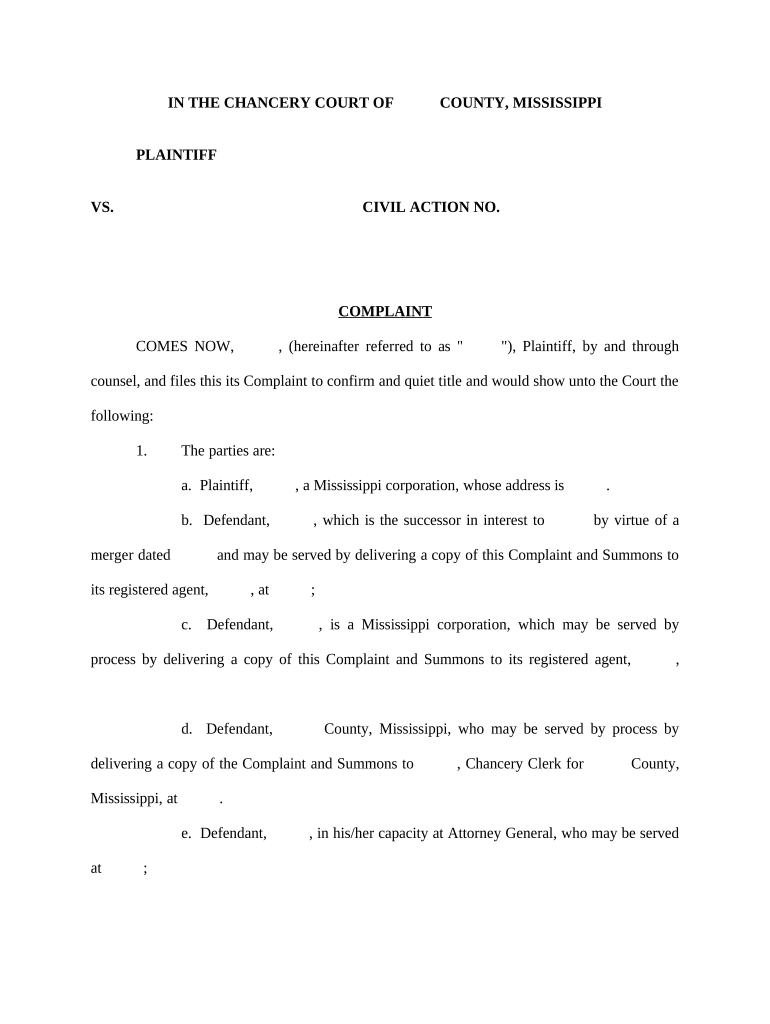
A quiet title action resolves competing claims so property can be sold, mortgaged, or developed without lingering legal risk. It creates a court record that lenders and title insurers rely on when underwriting new transactions.

In contested matters, an experienced real estate attorney usually drafts pleadings and manages service, evidence, and hearing preparation to improve the likelihood of a favorable judgment.
A concise statement of facts and legal basis requesting the court to declare title ownership and remove specified clouds or claims against the property.
Full metes-and-bounds or recorded plat description identical to the deed; inaccuracies can derail the proceeding and affect enforceability.
All record owners, lienholders, and other interested parties must be identified and served, including unknown occupants when required.
Attach deeds, mortgages, title reports, surveys, affidavits, lien releases, and documentary proof that supports the petition's factual assertions.
Proof of service by personal delivery, certified mail, or publication where permitted; state rules determine acceptable methods and timelines.
A draft order or judgment the court can enter that specifies the relief sought and the scope of title cleared.
| signNow | DocuSign | Adobe Sign | PandaDoc | HelloSign | |
|---|---|---|---|---|---|
| Starting Price | $8/user/mo | $15/user/mo | $14/user/mo | $19/user/mo | $15/user/mo |
| Free Trial | Yes, 7-day trial | Yes, trial varies | Yes, trial varies | Yes, trial varies | Yes, trial varies |
| Bulk Send | Yes | Yes | Yes | Yes | No |
| Audit Trail | Yes | Yes | Yes | Yes | Yes |
| HIPAA Compliant | Yes | Yes | Yes | No | No |
| Envelope Cap | No cap | 100 envelopes/user/year | Varies by plan | Varies by plan | Varies by plan |
No universal deadline; file when claim arises
Service deadlines follow state civil procedure rules
Defendants typically have 20–30 days to answer, per local rules
Hearing set by docket availability and court procedures
Record judgment promptly to update title records
Compile complaint, exhibits, and proposed judgment for filing.
Clerk assigns case number and accepts documents after fee payment.
Provide defendants with complaint per state rules and obtain proof of service.
Court issues judgment and clerk records the order to clear title.
Choose an eSignature provider that supports audit trails, notarization workflows (RON where accepted), and secure storage to maintain document integrity and evidentiary value.
A small residential developer prepared affidavits and releases online to accelerate closings.
A real estate investor resolved a boundary dispute by compiling title instruments and a survey via cloud workflows.