Establishing secure connection…Loading editor…Preparing document…

Release of Liability Agreement

This template is fully customizable. Edit the text, fill out the fields, and send it for signature. Give it a try!
Release of Liability Agreement

What a Release of Liability Agreement Is and when it applies

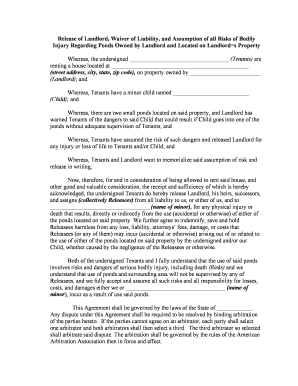
A Release of Liability Agreement is a written contract where one party (the releasor) agrees to relinquish the right to pursue claims against another party (the releasee) for specified risks or activities. Commonly used for recreational activities, equipment rentals, volunteer events, and service-oriented work, the document defines the covered risks, timeframe, and parties. Properly executed releases identify consideration, scope, and governing law, and they can be drafted for single events or ongoing relationships. Electronic execution is generally valid under U.S. law when the transaction meets e-signature requirements.

Why organizations and individuals use this agreement

A Release of Liability Agreement clarifies responsibility, limits litigation exposure, and documents informed consent to known risks. It creates a written record of parties’ expectations and can simplify insurance and risk management processes when tailored to the activity and jurisdiction.

Why organizations and individuals use this agreement

Typical parties who prepare or sign releases

Releases are used by businesses, event hosts, property owners, and service providers to document assumption of risk and limit liability.

  • Event organizers and venues who host physical activities and need participant waivers.
  • Service providers and contractors who want to limit exposure from client activities.
  • Property or equipment owners who loan items or allow on-site access.

Use depends on the activity, applicable statutes, and whether the document will be used repeatedly or for a single incident.

Who can sign and who prepares the form

Primary Signer

Individuals or authorized representatives signing the release must have legal capacity to waive rights. For minors, a parent or guardian signature is typically required and some jurisdictions restrict waiver enforceability for child injuries.

Preparing Party

Businesses, event hosts, or attorneys usually draft the release. When an organization prepares the form, include role, contact information, and a clear signature block for the authorized signer.

Core elements to include in a professional release

A well-drafted Release of Liability Agreement is concise but specific, addressing parties, scope, effective dates, risks, consideration, and signature mechanics to reduce ambiguity and improve enforceability.

Parties

Identify the releasor and releasee by full legal name and business entity type so the agreement clearly binds the intended persons or organizations.
Scope of Release

Specify exactly which claims, activities, locations, and timeframes are covered to avoid overbroad language that courts may decline to enforce.

Consideration

Describe what the releasor receives in exchange (e.g., access, rental, reduced fee). Even nominal consideration helps support contract validity.

Assumption of Risk

Include explicit statements that the releasor understands and assumes the known risks associated with the activity or item.

Governing Law

Specify the state law that will interpret the agreement and any venue provisions for dispute resolution.

Signature Details

Provide space for printed name, signature, date, and, if applicable, witness or notary blocks and authority of signatory for organizations.

Step-by-step: completing and executing the release

Follow these steps to create a clear, enforceable Release of Liability Agreement and capture valid signatures.

  • 01
    Draft terms: Define parties, scope, risks, and consideration in plain language.
  • 02
    Add signature blocks: Include printed names, titles, dates, and witness/notary sections as needed.
  • 03
    Confirm authority: Verify signers’ capacity and organizational authority before execution.
  • 04
    Execute and retain: Obtain signatures and save records in secure storage with audit details.

Typical routing and handling for a release

A standard digital workflow moves the draft from preparer to signer, then to storage with an audit trail. These stages reduce friction and document completion time.

  • Create document: Upload or create the release template.
  • Prepare fields: Place signature, date, and required input fields.
  • Send to signer: Deliver by email link or in-person signing session.
  • Archive record: Store signed copy with audit trail and attachments.

Sample online workflow settings for electronic execution

Configure signer access, authentication, and retention to match the document’s sensitivity and legal requirements.

Field Configuration
Signature field Required; signer must sign before finalizing.
Authentication Email link standard; use SMS or KBA for higher assurance.
Reminders Automatic reminders enable faster completion.
Audit trail Enable IP, timestamp, and action logging.

Digital signing considerations and platform capabilities

Choose execution and authentication methods that meet legal and operational needs.

  • Authentication: Email, SMS, or KBA options.
  • Document formats: PDF and DOCX support
  • Retention: Secure storage with export

Select settings that balance signer convenience with the evidence required to support enforceability under ESIGN and UETA.

Timing considerations and common deadlines

While releases often take effect immediately, some processes require advance delivery, insurer notification, or retention milestones that affect compliance and claims handling.

Before activity:

Provide release prior to participation or equipment use.

Insurance notice window:

Report incidents to insurer within policy timeframes.

Record retention start:

Retention begins on effective date of document.

Contract renewals:

Update release terms before renewed activities.

Statute of limitations:

Effective date may affect filing deadlines for claims.

Frequent drafting and execution mistakes to avoid

  • Using overly broad language that attempts to waive unforeseeable or statutory rights, which courts may find unenforceable.
  • Failing to identify parties precisely, for example omitting an LLC indicator or misnaming an organization.
  • Not specifying the risks or activity, leaving the scope ambiguous and increasing litigation risk.
  • Skipping signer capacity checks for minors or incapacitated persons, undermining the release’s validity.

Legal and practical risks if the release is flawed

Unenforceable waiver: Court may refuse to bar claims
Insurance denial: Carrier may deny coverage
Regulatory limits: Statutory rights may not be waived
Fraud allegations: Improper signing can trigger challenges
Witness issues: Missing witness can affect validity
Record gaps: Poor retention complicates defenses

Comparing e-sign providers for executing releases

Platform selection should weigh price, HIPAA capability, bulk send, and audit trail strength. signNow is listed first for comparison consistency.

signNow DocuSign Adobe Sign PandaDoc HelloSign
Starting Price $8/user/mo $15/user/mo $14/user/mo $19/user/mo $15/user/mo
Free Trial 7-day free trial No No Yes, limited Yes, limited
Bulk Send Yes Yes Yes Yes No
Audit Trail Yes Yes Yes Yes Yes
HIPAA Compliant Yes Yes Yes No No

Frequently asked questions and practical answers

Answers to common questions about enforceability, e-signatures, notarization, and how to handle revocation or disputes.


Need help? Contact support

be ready to get more
Join over 28 million airSlate SignNow users