Establishing secure connection…Loading editor…Preparing document…

Release Lien

This template is fully customizable. Edit the text, fill out the fields, and send it for signature. Give it a try!
Release Lien

What a Release Lien Is and when it matters

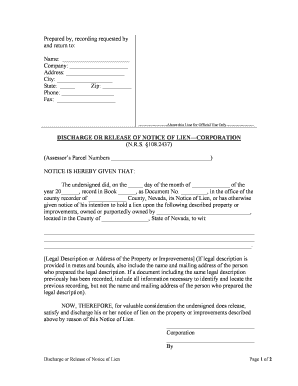
A Release Lien is a written statement by a lienholder that removes or discharges a legal claim (lien) against property after the underlying obligation is satisfied. It can cover real property, vehicle titles, mechanic’s liens, or UCC filings for business collateral. The document typically identifies the original security instrument, states the amount satisfied, and directs the recording office to cancel the lien. Proper execution, notarization where required, and timely recording with the county or state filing office complete the discharge and clear title for the owner.

Why a clear Release Lien matters

A correct Release Lien restores marketable title, prevents double-payment disputes, and avoids enforcement actions that can encumber sale or refinancing. Using a well‑formed release reduces administrative delays and legal exposure for both lienholder and owner.

Why a clear Release Lien matters

Who typically completes and receives a Release Lien

Recipients typically file the release with the county recorder, DMV, or UCC filing office and distribute copies to the owner, lender, and any affected parties.

  • Banks and secured lenders: prepare releases after loans are paid in full or collateral is reconveyed.
  • Contractors and subcontractors: issue lien waivers/releases upon final payment for construction projects.
  • Vehicle owners and dealers: request lien release to clear a title for sale or transfer.

Primary signers and their roles

Lienholder

A mortgagee, secured creditor, mechanic, or entity listed on the lien who must certify satisfaction and sign; responsible for accuracy and any required notarization or corporate attestation.

Property Owner

The individual or business whose property is encumbered; often receives the recorded release and may need to confirm that the public record reflects the discharge.

Essential parts of a professional Release Lien

A complete Release Lien includes identification, statement of satisfaction, execution details, and recording instructions so county or state offices can process the discharge without follow-up.

Document title

Clearly label as Release of Lien or Lien Release to avoid administrative delays during recording and retrieval.
Lien reference

Cite the original lien instrument number, recording date, county, and book/page or UCC file number so clerks can match records accurately.

Satisfaction statement

Explicitly state the debt, amount satisfied, or judgment discharged and whether the release is partial or full.

Signer details

Include printed name, title, company, mailing address, and contact information for the signing lienholder or authorized representative.

Notary block

Provide a notary acknowledgment when state law or local recording office requires notarization for the release to be accepted.

Recording instructions

Specify the recording office, return-to address, and whether additional copies or fees should accompany the submission.

Step-by-step: completing and executing a Release Lien

Follow this sequence to prepare a valid release, obtain necessary authentications, and record the discharge correctly.

  • 01
    Verify lien details: Confirm instrument number and filing office before drafting the release.
  • 02
    Prepare release: Draft clear satisfaction language and include recording instructions.
  • 03
    Authenticate signature: Sign before a notary or use approved eNotarization where allowed.
  • 04
    Record and distribute: Submit to the recorder or filing office and send recorded copies to parties.

Common digital workflow settings for e‑submitting a Release Lien

Configure document fields and recipient routing to match the legal execution and recording sequence for your jurisdiction.

Field Configuration
Signer order Lienholder signs first; owner receives copy afterward
Authentication Email link plus SMS code for moderate assurance
Notary handling Support for in-person or RON notarization where permitted
Return routing Auto-send recorded copy to owner and title agent

How filing and recording typically flow

A consistent sequence helps ensure the public record reflects the release and that title searches show a clear lien status.

  • Prepare: Draft release with exact lien references
  • Authenticate: Sign and notarize as required by law
  • Record: Submit to county recorder or UCC filing office
  • Confirm: Obtain recorded copy and distribute

Technical considerations for eSigning and eRecording

Verify the recorder or DMV accepts electronic or remotely notarized documents before relying on eSubmission to clear title.

  • File formats: PDF or PDF/A preferred
  • Integrations: Works with title, storage, and ERP integrations
  • Authentication: Support for email, SMS, and advanced ID checks

Security and compliance standards relevant to Release Lien eSigning

Transport encryption: TLS 1.2/1.3
Data at rest: AES-256 encryption
Regulatory frameworks: ESIGN and UETA recognized
Healthcare BAA: HIPAA BAA available if required
Audit trail: Timestamps, IP, and action logs
Certifications: SOC 2 Type II and ISO 27001

Common mistakes that delay Release Lien acceptance

  • Incorrect or missing original lien reference numbers that prevent clerks from matching the release with the record and cause rejection.
  • Using informal property descriptions instead of the required legal description, leading to recording office requests for correction.
  • Signer name mismatches with corporate or recorded creditor names, requiring affidavits or corrected releases to clear title.
  • Submitting unsigned or improperly notarized releases where the jurisdiction requires a notary or specific acknowledgement form.

Risks and potential consequences of an incorrect Release Lien

Recording rejection: May necessitate corrected filing
Continued encumbrance: Buyer or lender disputes remain possible
Liability exposure: Claims for wrongful release or fraud
Delay costs: Additional recording and courier fees
Title insurance denial: Policy problems until record is cleared
Administrative fines: Fees for repeated incorrect filings

Timing and expectations for processing Release Liens

Processing times depend on the filing office and method; planning for recording and distribution reduces downstream issues.

Record promptly:

Submit the release as soon as obligation is satisfied to minimize encumbrance period

County processing:

Recording times vary from same-day to several weeks depending on backlog

Notary retention:

Notaries should retain journal entries per state rules

RON video retention:

States requiring RON may mandate multi-year video retention

Distribution:

Provide recorded copy to owner and title agent immediately after receipt

Key milestones from satisfaction to recorded release

Track these stages to manage responsibilities and confirm the lien is removed from the public record.

01

Satisfaction Confirmed

Debt or obligation is paid or otherwise resolved by lienholder.

02

Draft Release

Prepare release with full lien references and recording instructions.

03

Execute & Authenticate

Signer executes; obtain notary or RON evidence if jurisdiction requires.

04

Record & Distribute

File with recorder/UCC office and send recorded copies to stakeholders.

eSignature vendor pricing snapshot for Release Lien workflows

Compare starting prices and core features that affect high-volume release and recording workflows; signNow appears first for reference.

signNow DocuSign Adobe Sign PandaDoc HelloSign
Starting Price $8/user/mo $15/user/mo $14/user/mo $19/user/mo $15/user/mo
Free Trial 7-day trial Varies by vendor Varies by vendor Varies by vendor Varies by vendor
Bulk Send Yes (Premium) Varies by plan Varies by plan Varies by plan Varies by plan
Audit Trail Yes Yes Yes Yes Yes
HIPAA Compliant Yes Yes Yes Varies by plan Varies by plan

Frequently asked questions about Release Liens

Answers to common questions that arise when preparing, signing, notarizing, or recording a Release Lien.


Need help? Contact support

be ready to get more
Join over 28 million airSlate SignNow users