Establishing secure connection…Loading editor…Preparing document…

Letter Granting Permission to Publish Materials

This template is fully customizable. Edit the text, fill out the fields, and send it for signature. Give it a try!
Letter Granting Permission to Publish Materials

What a Letter Granting Permission to Publish Materials Is

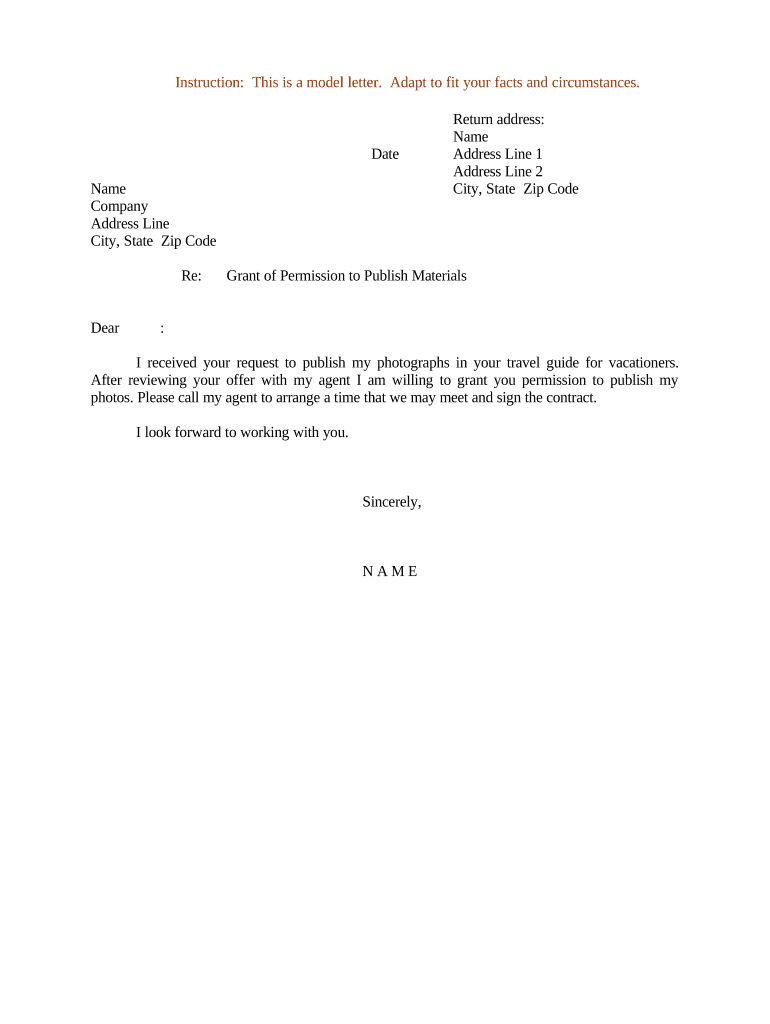
A Letter Granting Permission to Publish Materials is a written authorization from a rights holder that permits another party to reproduce, distribute, display, or otherwise publish specified text, images, audio, video, or other creative materials. The letter defines the scope of permitted uses, duration, any territorial limits, and whether rights are exclusive or non-exclusive. It records consideration, attribution requirements, and any restrictions on modification. For many organizations, a clear permission letter reduces copyright risk and documents consent for downstream distribution and archiving.

Why a Clear Permission Letter Matters

A concise permission letter creates legal certainty by documenting consent, scope, and duration of publication rights. It minimizes copyright disputes, clarifies attribution and payment terms, and supports compliance with institutional policies or licensing obligations.

Why a Clear Permission Letter Matters

Who Typically Prepares and Signs These Letters

Common preparers and signers include creators, publishing professionals, and institutional officers responsible for rights management.

  • Individual creators and authors who license excerpts, images, or recordings to publishers or websites.
  • Publishers, editors, and content platforms that require written rights clearance before distribution.
  • Universities, museums, and media departments granting or receiving rights for scholarly or promotional publication.

Core Elements to Include in a Professional Permission Letter

A complete Letter Granting Permission to Publish Materials contains clear, enforceable provisions. Include explicit language rather than vague terms, name the materials precisely, and describe all limitations to avoid downstream ambiguity or disputes.

Parties

Identify the rights holder and the recipient by legal name and role, and state whether the signer is an agent acting for an organization.
Materials

Describe each item being licensed (title, date, file name, exhibit number) so the scope of permission is specific and reproducible.

Scope of Use

Specify permitted actions (publish, reproduce, modify), media (print, web, broadcast), and any geographic or language limitations.

Duration

State exact effective and expiry dates or make the grant perpetual; include conditions for early termination if needed.

Compensation

Describe payment terms, royalty rates, one-time fees, or indicate that permission is granted without compensation.

Attribution & Restrictions

Set required credit lines, moral rights waivers, prohibition on sublicensing, and any content modification restrictions.

Step-by-Step: How to Prepare and Execute the Letter

Follow these steps to create a clear, enforceable permission letter and complete signatures for publishing use.

  • 01
    Draft the scope: Define materials, uses, media, territory, and duration.
  • 02
    Confirm authority: Verify the signer has rights or is authorized to grant permission.
  • 03
    Add consideration terms: Include payment, credit requirements, or state 'no compensation.'
  • 04
    Sign and retain: Execute signatures, date the document, and store copies securely.

Essential Information to Record

Signer Identity: Full legal name
Entity Details: Organization name
Material ID: Title or file name
Usage Rights: Permitted actions
Effective Date: MM/DD/YYYY
Signature Data: Signed and dated

Where to Send, File, and Store the Letter

Decide recipient routing and recordkeeping before execution so copies reach all stakeholders and legal teams for future reference.

  • Send to Publisher: Deliver an executed copy to the publishing party.
  • Rights Holder File: Keep a signed original in the rights holder’s records.
  • Legal/Contracts: Provide counsel a copy for contract repository.
  • Archive Backup: Store a digital copy in a secure archive.

Configuring an Online Workflow for Permission Letters

Set up a repeatable digital workflow to collect permissions, track approvals, and retain audit trails for compliance and discovery.

Field Mapping Auto-fill signer name, date, and material ID from template
Authentication Use email + SMS or KBA for signer identity verification
Template Library Save standard permission letter templates for reuse
Notifications Enable reminders and status updates for pending signatures
Retention Policy Configure automatic archiving and audit-trail retention

Digital Signing and eSubmission Considerations

Ensure the chosen eSignature platform supports legal validity, audit trails, and formats that your publisher and legal team accept.

  • File Formats: PDF and DOCX widely accepted
  • Authentication Options: Email, SMS, or KBA available
  • Integrations: Connects with common storage and CRM systems

Common Mistakes to Avoid When Preparing Permission Letters

  • Using vague descriptions of materials – this creates disputes over what was licensed and when.
  • Failing to confirm signatory authority – agent signatures without proof may be invalidated.
  • Omitting effective and expiration dates – leaves duration open to conflicting interpretations.
  • Neglecting attribution or modification terms – leads to unauthorized edits or missing credits.

Risks and Potential Consequences of an Improper Letter

Copyright Infringement: Liability risk
Contract Dispute: Damages and injunctions
Reputational Harm: Loss of trust
Regulatory Exposure: HIPAA or FERPA penalties
Invalid Consent: Publication must be halted
Statutory Penalties: State or federal fines

Practical Tips for Accurate and Efficient Completion

Follow these practices to minimize errors, streamline approvals, and preserve legal effect when publishing materials.

Use precise identifiers
Reference file names, exhibit numbers, or timestamps for each item so rights are tied to specific digital assets and avoid later ambiguity about what was granted.
Document authority
If someone signs on behalf of an organization, append a corporate resolution or written proof of authority to show the signer can bind the entity.
Standardize templates
Maintain a vetted template with required fields and optional clauses to speed approvals and reduce the need for attorney review on routine grants.
Preserve audit trails
Capture signer identity, timestamp, IP address, and signature method to support admissibility and resolve later disputes efficiently.

Typical eSignature Pricing and Feature Comparison for Permission Letters

Comparing eSignature vendors helps decide where to prepare and execute permission letters. signNow leads on price and envelope limits; evaluate HIPAA needs and bulk-send features when choosing a plan.

signNow DocuSign Adobe Sign PandaDoc HelloSign
Starting Price $8/user/mo $15/user/mo $14/user/mo $19/user/mo $15/user/mo
Free Trial 7-day free trial Varies Varies Varies Varies
Bulk Send Yes Yes Yes Yes No
Audit Trail Yes Yes Yes Yes Yes
HIPAA Compliant Yes Yes Yes No No
Envelope Cap No cap 100 envelopes/user/year Varies Varies Varies

Frequently Asked Questions About Permission Letters and eSigning

Answers address common legal, technical, and procedural questions when creating or executing a Letter Granting Permission to Publish Materials.


Need help? Contact support

be ready to get more
Join over 28 million airSlate SignNow users