Establishing secure connection…Loading editor…Preparing document…

Condolence Letter

This template is fully customizable. Edit the text, fill out the fields, and send it for signature. Give it a try!
Condolence Letter

What a Condolence Letter Is and When It’s Used

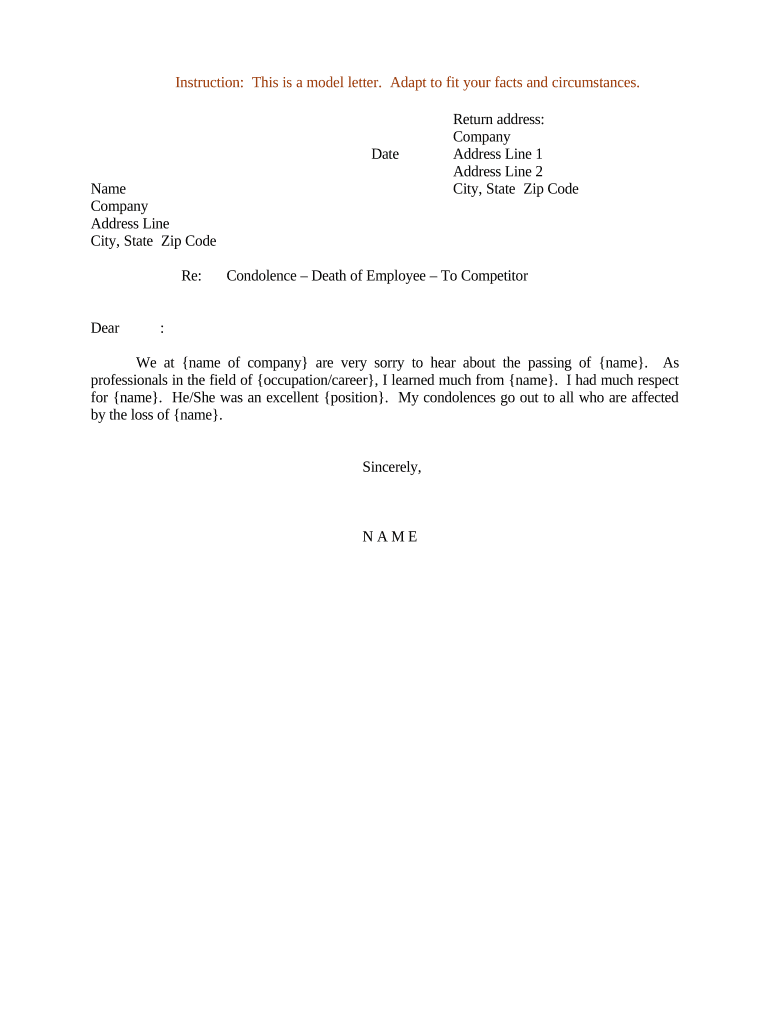
A Condolence Letter is a written expression of sympathy delivered to someone grieving the death of a person they knew. It can be an informal personal note or an organizational communication from an employer, institution, or service provider. The letter typically acknowledges the loss, offers condolences and brief memories or support, and provides any practical information about next steps or assistance while remaining respectful and appropriate for the relationship.

Why a Thoughtful Condolence Letter Matters

A well-crafted Condolence Letter provides comfort, preserves a respectful record of communication, and clarifies any practical assistance being offered. For organizations, a standardized approach reduces inconsistency and potential privacy missteps while documenting employer or institutional outreach.

Why a Thoughtful Condolence Letter Matters

Who Typically Sends or Receives Condolence Letters

Condolence Letters are used by individuals and organizations across personal and professional contexts.

  • Family members and friends sending personal sympathy and memories to next of kin or close contacts.
  • Employers and HR teams notifying colleagues and offering support to an employee’s family or bereaved team members.
  • Institutions (schools, churches, clubs) communicating condolences and logistical details to families and affected communities.

Tone and content should be tailored to the sender’s relationship with the deceased and the recipient’s privacy expectations.

Core Elements to Include in a Professional Condolence Letter

A concise structure helps ensure sensitivity and clarity while avoiding unnecessary detail or legal exposure.

Opening

A brief, sincere expression of sympathy that names the deceased and acknowledges the recipient’s loss in one or two sentences.
Personal Memory

A short, respectful memory or quality about the deceased that demonstrates genuine regard without oversharing private facts.

Offer of Support

A clear, specific offer (eg, practical help, a meal, time off) rather than vague phrases; indicate any organizational assistance available.

Practical Details

When appropriate, include logistics such as funeral coordination contacts or points of contact for organizational benefits and next steps.

Closing

A respectful closing line that reiterates sympathy, such as expressing thoughts or continued support, matched to the sender–recipient relationship.

Signature

Full printed name, relationship or job title for organizations, and contact information if follow-up assistance is offered.

Stepwise Process for Drafting and Sending a Condolence Letter

Follow a short, respectful sequence to create a considerate letter while minimizing errors.

  • 01
    Prepare: Confirm recipient details and the appropriate level of formality for this relationship.
  • 02
    Compose: Write a sincere opening, brief memory, offer of support, and a short closing.
  • 03
    Review: Check names, dates, and privacy-sensitive content before sharing with a colleague if organizational.
  • 04
    Deliver: Choose the delivery method (physical mail, email, or organizational channel) that best respects privacy and timing.

How to Configure an Online Condolence Letter Workflow

Set up fields and delivery options to preserve tone and control access when using a digital template or form.

Field Configuration
Name Fields Require separate sender, recipient, and deceased name fields to avoid confusion.
Privacy Settings Restrict access to named users; enable password or link expiration where needed.
Authentication Use email verification or SMS code for organizational sign-off when official acknowledgment is required.
Delivery Options Allow selection of physical mail, email, or internal distribution channels with attachment support.

Where to Send or File a Condolence Letter

Choose delivery and filing locations based on confidentiality and the nature of the relationship.

  • Physical Mail: Send a printed, signed letter to the recipient’s home or funeral home address when privacy is a priority.
  • Email Delivery: Use email for timely delivery; avoid including sensitive medical details in the body of the message.
  • Organizational File: Retain a copy in secure HR or organizational records when benefits, time-off, or follow-up actions are involved.
  • Funeral Coordinator: Provide contact details to the funeral home for inclusion with memorial notes if the family requests it.

Technical Considerations for Digital Condolence Letters

Digital templates and e-delivery require attention to file formats, integrations, and access control.

  • File Formats: PDF, DOCX supported
  • Integrations: Works with CRM and cloud storage
  • Security: Encryption and access controls

Use secure storage and limit distribution lists. When integrating with HR or case management systems, verify access controls and audit logging.

Timing Considerations and Recommended Timeframes

There are no statutory deadlines for sending a Condolence Letter, but timing affects perceived sincerity and usefulness.

Immediate Acknowledgement:

Send within a few days when possible to acknowledge the loss promptly.

Organizational Notices:

Internal employer notifications should be coordinated within 24–72 hours for operational clarity.

Follow-Up Contact:

Offer further assistance and follow up within two to four weeks if appropriate.

Funeral Logistics:

Coordinate with family or funeral home before sharing details outside immediate contacts.

Late Notes:

A thoughtful letter months later is acceptable; explain the delay and keep tone respectful.

Common Mistakes to Avoid When Preparing a Condolence Letter

  • Using overly clinical or formal language that feels impersonal; match tone to your relationship to the recipient.
  • Including speculative medical details or unverified causes of death that may breach privacy or cause distress.
  • Sending to the wrong recipient or misspelling names, which undermines sincerity and can create additional hurt.
  • Offering unwanted advice or platitudes instead of concrete support or respectful acknowledgment of the loss.

Risks and Privacy Concerns to Watch For

Privacy Breach: Disclosing health details may violate privacy expectations and laws.
HIPAA Exposure: Including protected health information can trigger HIPAA obligations.
Reputational Harm: Insensitive wording may damage personal or organizational reputation.
Incorrect Recipient: Sending to the wrong person can compound grief and liability.
Unauthorized Release: Sharing internal condolences externally may breach confidentiality.
Recordkeeping Error: Failure to retain copies where required can hinder follow-up actions.

Real-World Examples of Condolence Letter Use

Two brief scenarios illustrate typical organizational and healthcare approaches to sending Condolence Letters.

Employer Notice

A company HR lead sends a short letter to an employee’s family expressing sympathy and offering bereavement leave details.

  • The letter names the deceased, notes the employee’s role, and lists HR contact information.
  • The family receives the letter by mail and is given clear instructions for benefits and leave assistance while privacy is preserved.

Hospital Communication

A hospital patient liaison sends a condolence message with funeral coordination contacts when authorized by next of kin.

  • The note avoids clinical details and references only approved information.
  • The hospital logs the communication in a secure record and provides a named contact for spiritual care and bereavement resources.

Practical Tips for Accurate, Respectful Condolence Letters

Adopt consistent practices to ensure letters are appropriate, accurate, and privacy-conscious.

Match Tone to Relationship
Adjust wording to reflect closeness; personal recollections are appropriate for close friends and family, while organizations should remain concise and supportive.
Verify Names and Dates
Confirm spellings and important dates with a trusted source; errors can cause additional distress and undermine credibility.
Limit Sensitive Details
Avoid discussing medical cause of death or other private facts unless explicit permission has been provided by the family.
Document Distribution
Record where and when letters were sent and who authorized organizational communications for audit and follow-up purposes.

eSignature Vendor Snapshot for Condolence Letter Delivery

If you plan to send Condolence Letters electronically, here is a concise vendor comparison of common capabilities and starting prices.

signNow DocuSign Adobe Sign PandaDoc HelloSign
Starting Price $8/user/mo $15/user/mo $14/user/mo $19/user/mo $15/user/mo
Free Trial 7-day free trial Varies by plan Varies by plan Varies by plan Varies by plan
Bulk Send Yes Yes Yes Yes No
Audit Trail Yes Yes Yes Yes Yes
HIPAA Compliant Yes Yes Yes No No
Envelope Cap No cap 100 envelopes/user/year Varies by plan Varies by plan Varies by plan

Frequently Asked Questions About Condolence Letters

Answers to common questions about content, privacy, electronic delivery, and retention for Condolence Letters.


Need help? Contact support

be ready to get more
Join over 28 million airSlate SignNow users