Establishing secure connection…Loading editor…Preparing document…

Letter Requesting Refund

This template is fully customizable. Edit the text, fill out the fields, and send it for signature. Give it a try!
Letter Requesting Refund

What a Letter Requesting Refund Is and When to Use It

A Letter Requesting Refund is a formal written notice submitted to a vendor, service provider, government agency, or merchant asking for repayment of money paid in error, for a disputed charge, or for an overpayment. The letter states the reason for the refund request, identifies the transaction and parties involved, and specifies the amount requested and preferred refund method. It serves as a documented record that preserves dates, evidence, and the requester’s intent to recover funds, and may be required before escalation to collections, chargeback, or legal remedies.

Why a Clear, Professional Refund Letter Matters

A well‑written Letter Requesting Refund provides a concise legal and paper trail that supports your claim, reduces processing delays, and clarifies expectations for both parties.

Why a Clear, Professional Refund Letter Matters

Who Typically Sends or Receives a Refund Letter

Use a refund letter when you need a written record and precise remediation instructions; combine with supporting evidence for faster resolution.

  • Consumers disputing an incorrect credit card or billing charge with a merchant or service provider.
  • Accounting or AR teams requesting vendor overpayments or duplicated invoices be returned.
  • Taxpayers or payors asking government agencies for refund of fees, deposits, or overwithheld taxes.

Primary Signers and Requesters

Individual Consumer

A private person who paid a merchant, service, or utility and seeks reimbursement for an incorrect charge; must supply account details, receipt, and identity information to validate the request.

Accounts Receivable

A corporate or nonprofit AR clerk or manager who identifies an overpayment, attaches invoice copies and proof of payment, and issues a standardized refund request on company letterhead to the vendor.

Elements to Include in a Professional Letter Requesting Refund

Include clear identification, transaction details, the refund amount requested, a reason, supporting evidence, and a polite deadline for response to make the request actionable.

Header

Sender name, address, phone, email, and date placed at the top for formal identification and future correspondence.
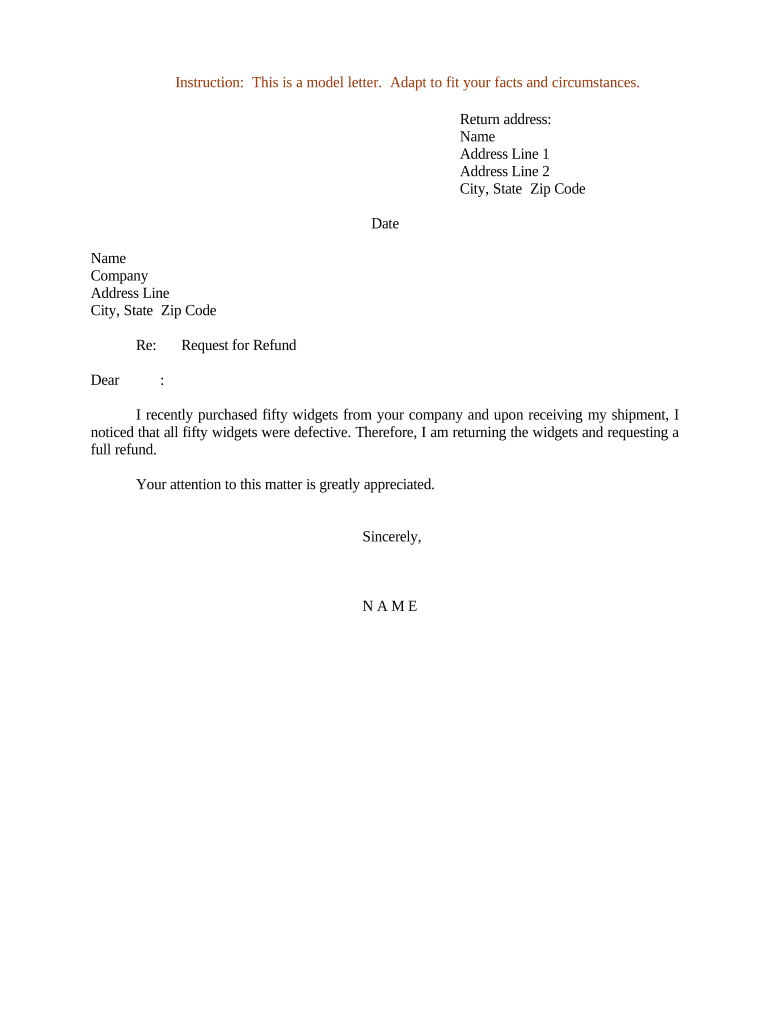
Recipient Details

Payee name, billing department, address, account or invoice number, and any internal reference to route the request quickly.

Transaction Info

Date of payment, payment method, amount paid, and the invoice or transaction ID to precisely identify the charge being disputed.

Reason

Concise factual explanation for the refund request—error, duplicate payment, returned goods, or service not provided—with dates and key facts.

Requested Remedy

State the exact refund amount and the preferred refund method (original payment method, check, ACH) with account details if needed.

Attachments

List supporting documents such as receipts, invoices, proof of return, screenshots, or bank statements that substantiate the claim.

Step-by-Step: How to Prepare and Send Your Refund Letter

Follow these four steps to create a complete, verifiable refund request that speeds internal processing and reduces follow-up.

  • 01
    Gather Evidence: Collect receipts, invoices, and correspondence that prove the payment and the reason for refund.
  • 02
    Draft Letter: Write a concise letter with transaction details, reason, amount, attachments, and a response deadline.
  • 03
    Send Securely: Deliver by the vendor’s required channel—email with attachment, secure portal, certified mail, or eSubmission.
  • 04
    Track Response: Log the submission date, follow up if necessary, and escalate if the vendor misses the stated deadline.

Typical Processing Flow After You Submit a Refund Letter

Knowing the common processing steps helps you set realistic expectations and provide any additional information promptly.

  • Receipt Acknowledgment: Vendor records the request and issues an acknowledgment or ticket number.
  • Verification: Accounts or support reviews attachments and reconciles the transaction.
  • Approval Decision: Finance determines whether the refund is approved, adjusted, or denied.
  • Payment or Notice: Approved refunds are issued; denials are explained with next-step instructions.

How to Configure an Electronic Workflow for Refund Letters

Set up these fields and steps when using an eSubmission system to automate routing, approvals, and recordkeeping.

Field Configuration
Requester Contact Required field; email and phone with validation
Transaction ID Mandatory; unique identifier with pattern check
Attachment Upload Allow PDFs and images; require at least one file
Approval Route Sequential routing to AR then Finance with reminders

Delivery Channels and Digital Signing Options

When using electronic signatures or portals, ensure the method meets ESIGN/UETA requirements and preserves an audit trail for future disputes.

  • Email Attach: Common, but verify recipient policy
  • Portal Upload: Preferred by many vendors for tracking
  • Certified Mail: Useful for legal proof of delivery

Timing Considerations and Typical Response Expectations

Understand statutory and practical deadlines to preserve rights and plan escalations if a refund is not processed promptly.

Immediate Action Window:

Submit as soon as the error is discovered to retain chargeback or dispute options.

Vendor Response Time:

Many vendors respond within 7–30 days; check contract or terms for specific timelines.

Chargeback Deadlines:

Card network and bank deadlines vary; initiate disputes quickly to preserve rights.

Escalation:

If unresolved after stated response, escalate to AR manager or regulator.

Record Retention:

Keep records until refund cleared plus applicable retention period for your industry.

Risks and Consequences of an Inaccurate or Incomplete Refund Letter

Delayed Refund: Incomplete details slow verification and processing.
Denial Risk: Missing proof or incorrect amounts may lead to a denial.
Loss of Chargeback Rights: Delayed submission can forfeit bank or cardholder dispute windows.
Accounting Errors: Unclear documentation complicates reconciliation and audit trails.
Potential Fees: Some vendors charge processing or administrative fees.
Legal Exposure: False claims or fraudulent requests can trigger penalties.

Common Mistakes That Slow Refund Processing

  • Omitting the transaction ID or including the wrong date forces manual reconciliation and delays the refund decision.
  • Failing to attach receipts, bank statements, or proof of return often prompts additional vendor requests and extends resolution time.
  • Using informal language or an unclear requested amount leads to misinterpretation and can result in partial refunds or denial.
  • Sending to the wrong department or contact causes routing delays; verify the vendor’s billing or refunds address first.

Comparing eSignature Options for Submitting a Letter Requesting Refund

Basic pricing and feature availability vary by vendor; signNow is listed first for side‑by‑side comparison of common capabilities.

signNow DocuSign Adobe Sign PandaDoc HelloSign
Starting Price $8/user/mo $15/user/mo $14/user/mo $19/user/mo $15/user/mo
Free Trial 7-day free trial Varies Varies Varies Varies
Bulk Send Yes Yes Yes Yes No
Audit Trail Yes Yes Yes Yes Yes
HIPAA Compliant Yes Yes Yes No No

Frequently Asked Questions About a Letter Requesting Refund

Answers to common questions about format, timing, electronic submission, and next steps if a refund is denied.


Need help? Contact support

be ready to get more
Join over 28 million airSlate SignNow users